by Anitra Pavlico
Most of the modern revival of Stoicism has centered on the works of Seneca, Epictetus, and Marcus Aurelius–all from the “Late Stoa,” or the third phase in the history of Stoicism. No complete works survive from either the early or middle period.
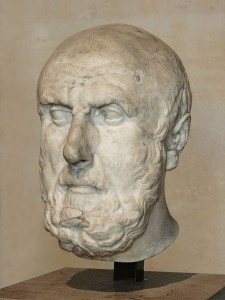
Chrysippus (c. 279-206 B.C.E.) was one of the most influential early Stoics. He studied with Cleanthes, who studied directly with Zeno, who founded the school in 262 B.C.E. You won’t see his quotes on any inspirational desktop art, but Chrysippus was perhaps the one most responsible for keeping Stoicism alive in its early years. A later Stoic saying was, “If Chrysippus had not existed, neither would the Stoa.”
Chrysippus was prolific, having reportedly written over 705 books. No single book remains, and today we only have around 475 fragments. He was the second great logician, after Aristotle. Diogenes Laertius reported in his Lives of the Philosophers that most people believed that if the gods were to pursue dialectic, they would adopt Chrysippus’ system alone. The seemingly airtight logic of many Stoic approaches to life, as they have filtered down to us, stems directly from Chrysippus. The Stoic philosophy featured three branches: logic, physics, and ethics. The scope of logic also included the analysis of argument forms, rhetoric, grammar, propositions, perception, and thought. [1] Josiah Gould points out that Chrysippus felt that logic should be studied before the other two branches of the philosophy. [2] While Gould notes that it is lamentable that we do not have a single full logic treatise when they have such “tantalizing” titles as On Negative Propositions, An Introduction to the Study of Ambiguity, On Imperatives, and Reply to Those Who Think that a Proposition Can be Both False and True, he maintains that we can reconstruct some of his views based on the fragments we possess. Read more »


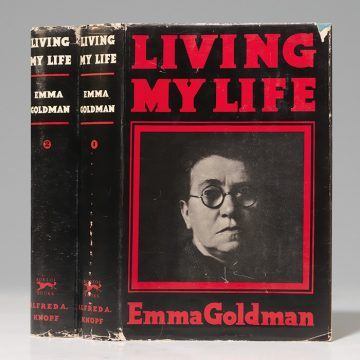 In a political era where many of the ‘isms’ in radical politics: Marxism, socialism, communism, anarchism, Trotskyism have either been discredited or have lost their appeal and force in western democracies, I found it refreshing to visit the life of one individual deeply involved in shaping those radical movements in the twentieth century: the anarchist, Emma Goldman, in her autobiography Living My Life.
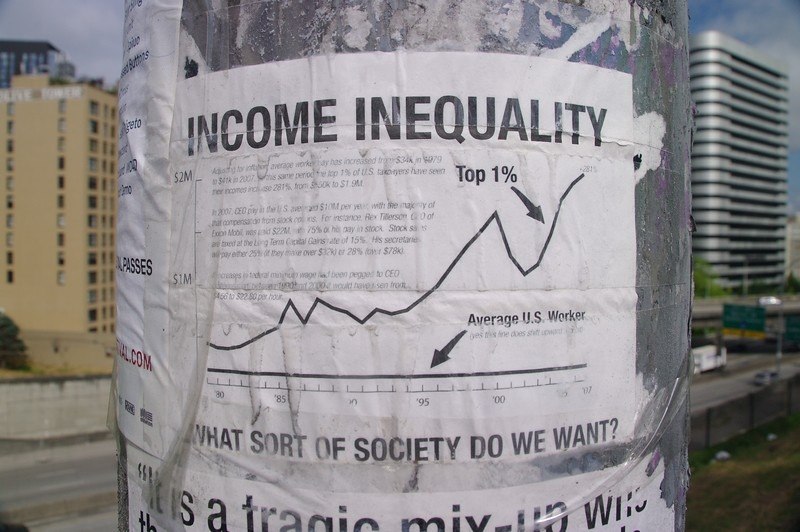 There is widespread concern about increasing or high economic inequality in many countries, both rich and poor. At a global level, according to the World Inequality Report 2018, the richest 1% in the world reaped 27% of the growth in world income between 1980 and 2016, while bottom 50% of the population got only 12%. Over roughly the same period, however, absolute poverty by standard measures has generally been on the decline in most countries. By the widely-used World Bank estimates, in 2015 only about 10 per cent of the world population lived below its common, admittedly rather austere, poverty line of $1.90 per capita per day (at 2011 purchasing power parity), compared to 36 per cent in 1990. This decline is by and large valid even if one uses broader measures of poverty that take into account some non-income indicators (like deprivations in health and education) for the countries for which such data are available.
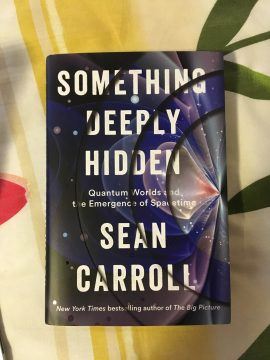 For me, a highlight of an otherwise ill-spent youth was reading mathematician John Casti’s fantastic book “
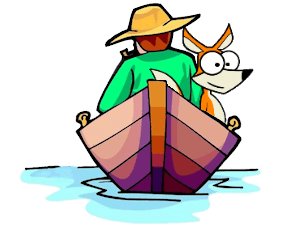 Have you ever been in this situation where you had to get a group of 3 men and their sisters across a river, but the boat only held two and you had to take precautions to ensure the women got across without being assaulted?

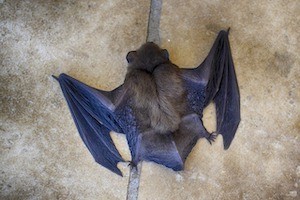 Last weekend, a bat got into my house somehow. I first heard it in the small hours of Friday night as it scratched around somewhere near the furnace flue. I didn’t know if it was an animal settling into a new home in my attic, or if perhaps it was going out periodically to get food and bringing it back to feed babies in an established nest. All became clear very late the next night, when the bat managed to get out of the enclosure around the flue and then exit the closet where the furnace is. After some drama that I need not recount here, it flew out the front door, and I stopped gibbering on my front walk and went back inside.
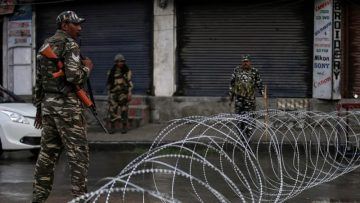 Trapped