Sarah Larson in The New Yorker:
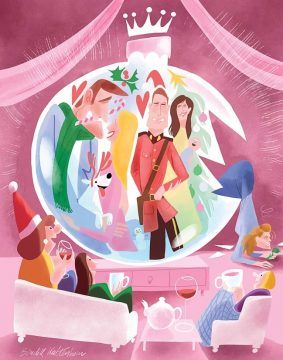 This year, Hallmark made headlines when it announced that it would produce two holiday movies with Hanukkah themes. In both, however, Christmas is the star. In “Holiday Date,” Brooke (Brittany Bristow) brings an actor, Joel (Matt Cohen), to Whispering Pines, her home town, for the holidays, to pose as her boyfriend—a common phenomenon on Hallmark, and perhaps less so in real life. One afternoon in September, I visited the set, in a house outside Vancouver. The downstairs was festooned with pine sconces, ornaments, and bows. “Tree on the move!” a crew member said. “I’ve never done Hallmark,” Cohen told me. For a decade, he’d played scary roles, including Lucifer, on shows like “Supernatural.” “I committed to the dark side and it paid the bills,” he said. “But this is who I really am. I’m a goofball.”
As “Holiday Date” unfolds, it’s revealed that Joel doesn’t know how to decorate a tree, or hang Christmas lights: he’s Jewish. The family is “surprised but unfazed,” Bristow explained. They incorporate latkes and a menorah into their festivities and teach Joel to deck the halls. “I’ve never celebrated Christmas, but I always wanted to,” he says. In the movie’s trailer, “Silent Night” plays in the background.
That afternoon, I watched as a scene was filmed in which Joel, handsome in a Santa-red sweater, helps Brooke’s young niece, Tessa (Ava Grace Cooper), rehearse for a Christmas pageant. On the monitor, I could see three Christmas trees in the frame. Tessa’s self-absorbed parents, played by the recurring Hallmark bro Peter Benson and the Hallmark villain Anna Van Hooft, walked by, looking at their phones, and opened the front door, obscuring a tree but introducing a wreath. The living room was a riot of Yuletide splendor: trees and garlands. A fire roared in the fireplace, and a row of Christmas stockings hung on the mantel. Above them, a string of blue-and-white letters spelled out “happy hanukkah.” Tessa’s pageant line was about family togetherness: “ ’Cause that’s what Christmas is all about.” Cohen beamed. “Perfect,” he said.
More here.

 The numbers of people dying, week in, week out, tell us more about the four countries of the UK than we could ever hope to learn from the attention given to Brexit. This is a kingdom falling apart.
 As the title indicates, this is a book about liberalism and The Economist’s propagation of it. But as the great Professor Joad would have said, ‘It all depends what you mean by liberalism.’ These days there is much talk of the differences between political liberalism, economic liberalism and social liberalism. In the 19th century, when The Economist was establishing its reputation, its commitment to free trade and capitalism was such that, with regard to the humanitarian 1844 Factory Act, it could opine: ‘the more it is investigated, the more we are compelled to acknowledge that in any interference with industry and capital, the law is powerful only for evil, but utterly powerless for good.’
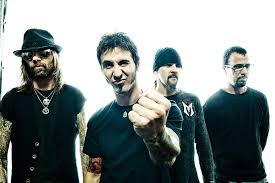 Godsmack is part of an aggressive, no-cowards-allowed milieu of hard rock known as “post-grunge” (or pejoratively “butt rock”), which was at its most lucrative during the late 1990s and throughout the aughts, when it dominated both the rock and pop charts. Obscuring the stylistic boundaries between neighboring genres—country, grunge, and the genre which grunge supposedly killed, hair metal—post-grunge is characterized by its dragging tempos, down-tuned chord progressions, sporadic twanginess, and overly passionate vocals. If you took an eighties power ballad’s major key and turned it minor, you’d have a post-grunge song more or less. Even today, as its pop appeal has vanished, it remains viable in the realm of mainstream rock, selling out amphitheaters and filling up the playlists on “Alt Nation”-type stations. It soundtracks WWE pay-per-views; it’s what plays over the loudspeakers in Six Flags food courts.
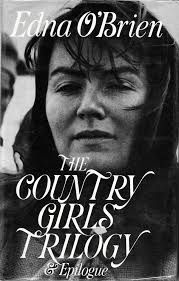 It is unusual to find a writer of 88 embarking on a dramatic change of style and taking pains to justify it, but O’Brien still cares what people think. The week we met, she’d won the David Cohen Prize for Literature, a major recognition of a lifetime’s work which has, for other winners, been followed by a Nobel Prize. But she is still stung by a New Yorker profile from October in which, over the course of 10,000 words, the staff writer Ian Parker took the decision to put under the microscope the colourful, heightened way she has told her life story. O’Brien remembered a preacher denouncing the provocative (some said “filthy”) The Country Girls in the pulpit of the church near her home in Tuamgraney, then burning it: Parker said no one in the village recalled the same. And her relationship with her mother may not have been as hostile as she’s made out, he suggested – Lena O’Brien speaks affectionately in much of their correspondence…
 2019 will be remembered as the year humanity captured the
 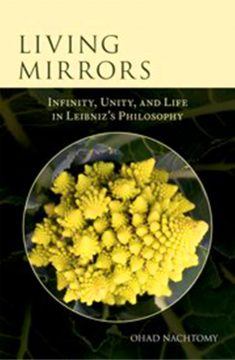 There are several billion microorganisms in a typical teaspoon of soil: not an infinite number, but more than any finite mind could hope to count one by one. Leibniz did not know the precise nature of soil microbes, nor did he have any empirical proof of their existence, but he was convinced that they, or something like them, must exist, and this for deep philosophical reasons. Whatever there is in the world must be underlain by real soul-like unities or centers of action and perception, analogous to whatever it is we are referring to when we speak of “me”. But any such center of action must be outfitted with a body, and this body must be such that no amount of decomposition or removal of parts could ever take the being in question out of existence. Thus there is nothing in the physical world but what Leibniz called “organic bodies” or “natural machines”, that is to say infinitely complex mechanical bodies. Considered together with the active, perceiving unities that underlie them, these organic bodies are best described as “corporeal substances”, of which animals and plants are the varieties we here on the surface of the earth know best. Everything is alive, in short.
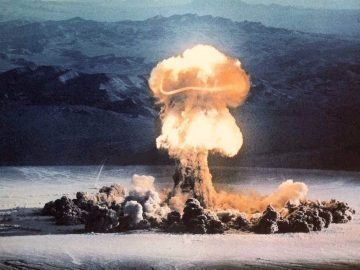 Why have nuclear weapons not been used since 1945? The more time passes, the more the question becomes relevant and even puzzling for pessimists. Most strategists of the 1960s would be stunned to hear that as of 2017, there still has yet to be another nuclear use in anger. The prospects of a “nuclear weapons ban” or recurring proposals for “de-alerting”—instituting changes that can lengthen the time required to actually use the weapons—make the question even more relevant. Has mankind really stood “on the brink” several times since Nagasaki, and have we avoided nuclear catastrophe mostly because of pure “luck”? Recent books, articles, and reports, as well as two wide-audience documentaries, say yes.

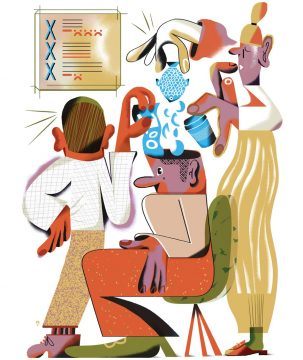 Three years ago, a team of psychologists challenged 180 students with a spatial puzzle. The students could ask for a hint if they got stuck. But before the test, the researchers introduced some subtle interventions to see whether these would have any effect. The psychologists split the volunteers into three groups, each of which had to unscramble some words before doing the puzzle. One group was the control, another sat next to a pile of play money and the third was shown scrambled sentences that contained words relating to money. The study, published this June
 It’s a sunny autumn morning in the Jordaan, Amsterdam’s chocolate-boxiest district. Over tea in a modishly renovated maisonette, a voluble Australian 72 year-0ld wearing round glasses and fashionable denim is regaling me with his new-year plans, which involve “an elegant gas chamber” stationed at a secret location in Switzerland and “a happily dead body”. My host’s name is Philip Nitschke and he’s invented a machine called Sarco. Short for sarcophagus, the slick, spaceship-like pod has a seat for one passenger en-route to the afterlife. It uses nitrogen to enact a pain-free, peaceful death from inert-gas asphyxiation at the touch of a button. With the help of his wife and colleague, the writer and lawyer Dr Fiona Stewart, Nitschke is ushering the death-on-demand movement towards a dramatic new milestone – and their enthusiasm is palpable.
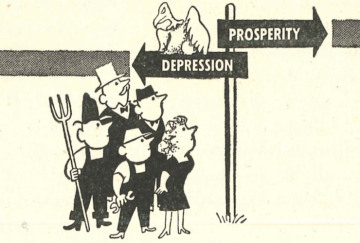 Robert Manduca in Boston Review:
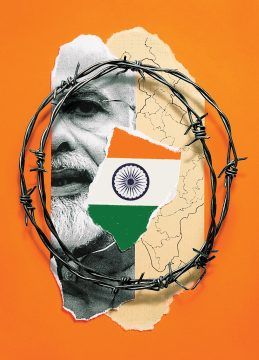 Dexter Filkins in The New Yorker:
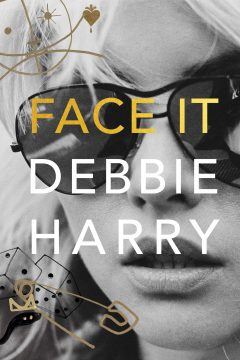 Jenny Turner in the LRB: