
Archa Fox in The Scientist:
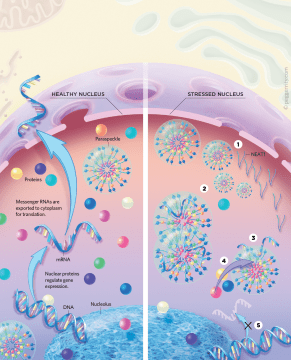 I have a clear memory of presenting my initial results about a “failed” protein at a lab meeting with my postdoctoral advisor Angus Lamond at the University of Dundee in Scotland and the rest of his group. It was the summer of 2000, and for the first few months of my postdoc I had been fusing green fluorescent protein with novel proteins that had recently been identified by mass spectrometry as residing in the nucleolus. I engineered HeLa cells to produce copious amounts of these fusion proteins, and watched where they went. Most migrated to the nucleolus, as expected, but one protein steadfastly refused. Instead, it formed nuclear dots that were much smaller than the large and obvious nucleoli. I was really worried about the messiness of this result, but also intrigued. To my relief, instead of being disappointed that the protein was not doing what we had expected, Angus and my lab mates encouraged me to explore it further. The group had access to antibodies against many cellular structures, so I quickly established that these nuclear dots were different from any known nuclear bodies. But having generated much of my data with overexpressed protein, it was critical to make sure that the endogenous form of the protein also localized to the same nuclear dots, and that what I had seen were not simply artifacts of my approach.
We created an antibody against the protein and incubated it with HeLa cells. It was an incredibly nerve-wracking moment looking down the microscope to see what the antibody had stained. Thankfully, it worked. I was ecstatic when I saw that it had picked out the same small nuclear dots that I had identified with GFP. In 2002, I published a manuscript introducing the scientific community to paraspeckles— orbs of protein and nucleic acid 360 nanometers in diameter, squeezed next to the more famous and larger structures called nuclear speckles. Since then, paraspeckles have become an established part of cell biology; there are more than 250 articles on them, and they have already found their way into some textbooks. We now know they are membraneless organelles seeded by a long noncoding RNA (lncRNA), formed through a well-characterized physical phenomenon known as liquid-liquid phase separation, and composed of numerous proteins and RNA molecules. We also know that they can alter gene regulation when cells get stressed, an important mechanism for maintaining cell homeostasis and one that appears to be disrupted in many diseases.
More here.
 Holly Case in Aeon:
 Adolph Reed Jr. in The New Republic:
 J. Daniel Elam in Public Books:
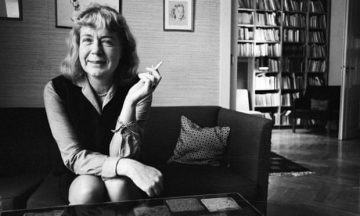 “A
“A You can take the writer out of California but you can’t take California out of the writer — or at least so I prefer to imagine, in my romantic fashion, during these dark days in which everything beautiful about the Golden State seems to be burning.
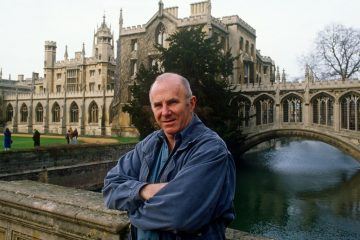 “A sense of humor is just common sense, dancing,” he wrote. “Those who lack humor are without judgment and should be trusted with nothing.”
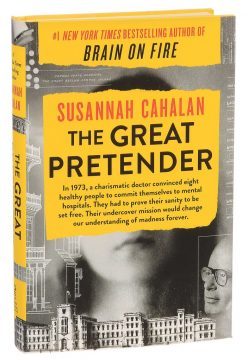 Books about mental illness often reflect on how reality is experienced. In addition to the standard questions — What do we know, and how do we know it? — is another layer of inquiry: What do we know about our own minds, and what if it isn’t true? In her first book,
 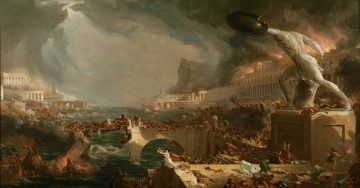 The warming of the planet currently spread across seven continents, four oceans, and twenty-four time zones is the product of a fossil-fueled capitalist economy that over the past two hundred years has stuffed the world with riches beyond the wit of man to marvel at or measure. The wealth of nations comes at a steep price—typhoons in the Philippine Sea, Category 5 hurricanes in the Caribbean, massive flooding in Kansas and Uttar Pradesh, forests disappearing in Sumatra and Brazil, unbearable heat in Paris, uncontrollable wildfires in California, unbreathable air in Mexico City and Beijing. The capitalist dynamic is both cause of our prosperous good fortune and means of our probable destruction, the damage in large part the work of
 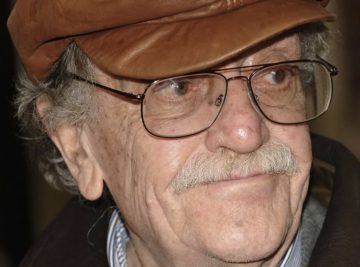 1. HE MET HIS FIRST WIFE IN KINDERGARTEN.
 Food is a many-splendored thing, and its meanings too are manifold. It upholds the life of both our higher and lower selves, and most things in between. Indeed, the ways we think about our food might well be taken as a rough index of what we consider those two words
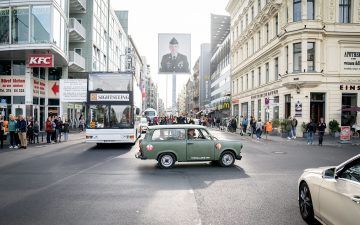
 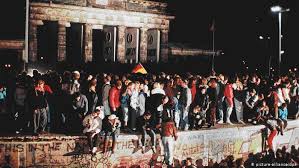 Looking and listening around today, one sometimes gets the impression that the ‘historical moment’ of 1989, with all its excitement and happiness, never occurred – that the event witnessed by many of us has vanished under a mountain of interpretation and reflection; that ‘in fact’ all that happened on the streets of Berlin, Prague, Warsaw, Bucharest and elsewhere was mere self-deception, an illusion, surreality. Despite all the documentaries, the newsreels and interviews, the experience of people appears to have largely been forgotten – people who first crossed the open border, striding enthusiastically or strolling, exploring a world that had been closed to them their entire lives, the thrill of liberty, of the freedom of movement, of reading newspapers they never had access to before, of visiting relatives in the West.
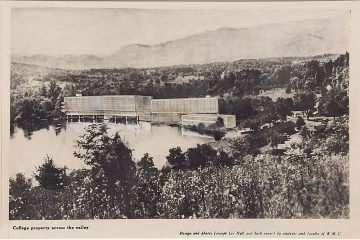 Grouping writers into “schools” has always been problematic. The so-called Black Mountain poets never identified themselves as such, but the facts of their union spring from a remarkable instance of artistic community: Black Mountain College and the web of interactions the place occasioned. Founded in the mountains of western North Carolina in 1933 and closed by 1956, the college was one of the most significant experiments in arts and education of the twentieth century. In recent years, a number of international exhibitions and publications have showcased the range of artwork produced at the college’s two campuses, the first situated in the YMCA Blue Ridge Assembly, and the second at Lake Eden in the Swannanoa Valley. The list of famous names associated with Black Mountain is as impressive as it is unlikely, given that the college never housed more than a hundred students and faculty at a time, often far fewer.
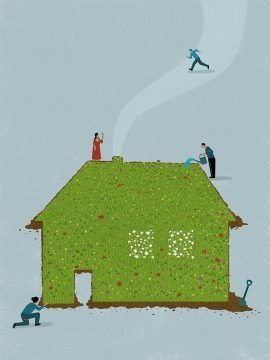 Today, the problem of existential homelessness has become acute. Growing rates of anxiety, loneliness, and suicide offer statistical confirmation. Facebook and Amazon are among the largest and most powerful corporations on the planet, yet the realization is dawning that social media “friends” are poor substitutes for the real thing and that man cannot live by online shopping alone. (See “
 Simone de Beauvoir spent more time talking about inauthentic love than authentic. But that is because she thought authentic love is so hard to achieve. From the vantage point of 2017, aspects of Beauvoir’s view of authentic love look rather dated and pessimistic: for one thing, it presents men and women in binary terms that are unlikely to resound with many readers. Today’s women have greater access to education and employment than women did in 1949, and may be less likely to see love as life, as Beauvoir charged, instead of a part of life. Although structural inequality persists, relationships between men and women – or men and men, or women and women, etc. – theoretically have better chances of proceeding on an equal footing. But nevertheless many cultural portrayals of love (from Puccini to pop) continue to depict it as a game between unequals – as conquest or domination, seduction or entrapment – where the boundaries are drawn along distinctly gendered lines. Such dynamics, on Beauvoir’s view, make authenticity in love impossible – but why?