
Ryu Spaeth in The New Republic:
 There is a certain kind of liberally inclined writer who sees Donald Trump’s America as a nation in crisis. At every turn, in every tweet, she is confronted by the signs of an ongoing catastrophe, from which it may be too late to escape. An ugly, vicious intolerance spread on social media; the collapse of norms once considered sacred; a crass narrow-mindedness surreally celebrated by some of this country’s most powerful institutions—these are all elements in the gathering storm of a new, distinctly American fascism. The twist is that this crisis has its source, she contends, not in the person of Trump, but in his frothing-mouthed opposition: the left.
That, roughly speaking, is the thesis of a group of writers who, since Trump’s election in 2016, have chastised the left for its supposedly histrionic excesses. Their enemies extend well beyond the hashtag resistance, and their fire is aimed, like a Catherine wheel, in all directions, hitting social justice warriors, elite universities, millennials, #MeToo, pussy hat–wearing women, and columnists at Teen Vogue. Everyone from Ta-Nehisi Coates down to random Facebook commenters is taken to task, which makes for a sprawling, hard-to-define target. These writers might call their bugbear “woke culture”: a kind of vigilance against misogyny, racism, and other forms of inequality expressed in art, entertainment, and everyday life.
More here.
 It’s the year of John Ruskin. 2019 is the bicentennial of his birth and there continues to be events to mark it. Perhaps the celebrations will prove to be a turning point for him. For though during his lifetime, and for a generation or so afterwards, Ruskin was hugely influential, his achievements have now been neglected for decades. His collected works run to 39 volumes; he wrote around 250
 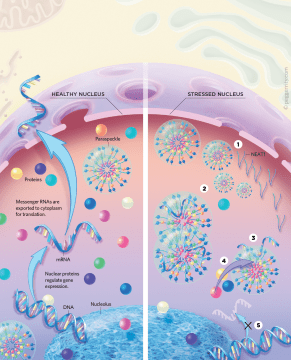 I have a clear memory of presenting my initial results about a “failed” protein at a lab meeting with my postdoctoral advisor
  Holly Case in Aeon:
 Adolph Reed Jr. in The New Republic:
 J. Daniel Elam in Public Books:
 “A
“A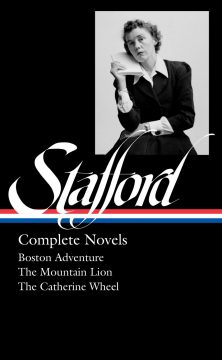 You can take the writer out of California but you can’t take California out of the writer — or at least so I prefer to imagine, in my romantic fashion, during these dark days in which everything beautiful about the Golden State seems to be burning.
 “A sense of humor is just common sense, dancing,” he wrote. “Those who lack humor are without judgment and should be trusted with nothing.”
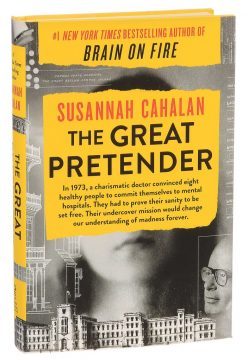 Books about mental illness often reflect on how reality is experienced. In addition to the standard questions — What do we know, and how do we know it? — is another layer of inquiry: What do we know about our own minds, and what if it isn’t true? In her first book,
 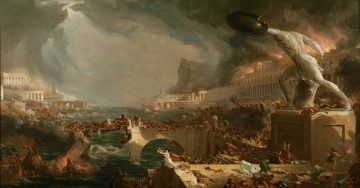 The warming of the planet currently spread across seven continents, four oceans, and twenty-four time zones is the product of a fossil-fueled capitalist economy that over the past two hundred years has stuffed the world with riches beyond the wit of man to marvel at or measure. The wealth of nations comes at a steep price—typhoons in the Philippine Sea, Category 5 hurricanes in the Caribbean, massive flooding in Kansas and Uttar Pradesh, forests disappearing in Sumatra and Brazil, unbearable heat in Paris, uncontrollable wildfires in California, unbreathable air in Mexico City and Beijing. The capitalist dynamic is both cause of our prosperous good fortune and means of our probable destruction, the damage in large part the work of
  1. HE MET HIS FIRST WIFE IN KINDERGARTEN.
 Food is a many-splendored thing, and its meanings too are manifold. It upholds the life of both our higher and lower selves, and most things in between. Indeed, the ways we think about our food might well be taken as a rough index of what we consider those two words