
Jan Ellen Spiegel in Undark:
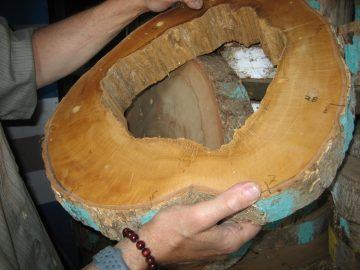 Bob Marra navigated his way to the back of a dusty barn in Hamden, Connecticut, belonging to the state’s Agricultural Experiment Station. There, past piles of empty beehives, on a wall of metal shelves, were stacks of wooden disks — all that remains of 39 trees taken down in 2014 from Great Mountain Forest in the northwest corner of the state.
These cross-sections of tree trunks, known as stem disks — or more informally as cookies — are telling a potentially worrisome tale about the ability of forests to be critical hedges against accelerating climate change. As anyone following the fires burning in the Amazon rainforest knows by now, trees play an important role in helping to offset global warming by storing carbon from atmospheric carbon dioxide — a major contributor to rising temperatures — in their wood, leaves, and roots. The worldwide level of CO2 is currently averaging more than 400 parts per million — the highest amount by far in the last 800,000 years.
But Marra, a forest pathologist at the Experiment Station with a Ph.D. in plant pathology from Cornell University, has documented from studying his fallen trees that internal decay has the capacity to significantly reduce the amount of carbon stored within.
More here.

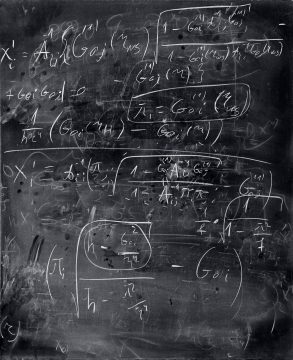 “I think I can safely say that nobody really understands quantum mechanics,” observed the physicist and Nobel laureate Richard Feynman. That’s not surprising, as far as it goes. Science makes progress by confronting our lack of understanding, and quantum mechanics has a reputation for being especially mysterious.
 The sleek blue-glass building of the Infosys corporation sits like an intruding spaceship amid the unpaved side streets and half-completed residential structures that surround it. Its giant porthole windows offer a peek into a Jetsons-esque world of workers gliding between floors on elevated moving sidewalks. For now, 19-year-old Nishank Nachappaa toils in the shadows of Infosys and the other high-tech companies that, like him, call the Electronic City section of Bangalore home. The high school graduate helps out at two dormitories for tech workers – one for young men, the other for young women – that his parents manage. His father maintains the buildings and his mother prepares meals for the 120 male and 30 female residents. Walk a block or two from the dorms and other corporate structures loom with multinational names such as Emerson and Yokogawa, Altametrics and Hewlett Packard.
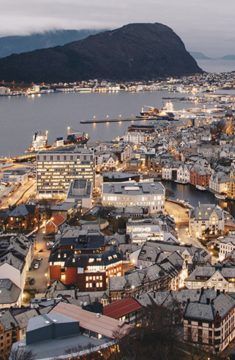 Like many other nations, Canada is blessed with enormous resource wealth. We are the 7th largest oil-producing nation in the world (Norway is the 15th), with vast forests, mineral deposits and prime farming land. The Canadian province of Alberta legally controls almost 80 percent of the country’s fossil fuel production, has a similar population to Norway yet somehow managed to end up with a
 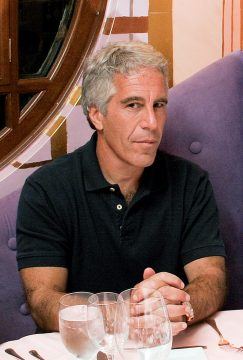 The M.I.T. Media Lab, which has been embroiled in a scandal over accepting donations from the financier and convicted sex offender Jeffrey Epstein, had a deeper fund-raising relationship with Epstein than it has previously acknowledged, and it attempted to conceal the extent of its contacts with him. Dozens of pages of e-mails and other documents obtained by The New Yorker reveal that, although Epstein was listed as “disqualified” in M.I.T.’s official donor database, the Media Lab continued to accept gifts from him, consulted him about the use of the funds, and, by marking his contributions as anonymous, avoided disclosing their full extent, both publicly and within the university. Perhaps most notably, Epstein appeared to serve as an intermediary between the lab and other wealthy donors, soliciting millions of dollars in donations from individuals and organizations, including the technologist and philanthropist Bill Gates and the investor Leon Black. According to the records obtained by The New Yorker and accounts from current and former faculty and staff of the media lab, Epstein was credited with securing at least $7.5 million in donations for the lab, including two million dollars from Gates and $5.5 million from Black, gifts the e-mails describe as “directed” by Epstein or made at his behest. The effort to conceal the lab’s contact with Epstein was so widely known that some staff in the office of the lab’s director, Joi Ito, referred to Epstein as Voldemort or “he who must not be named.”
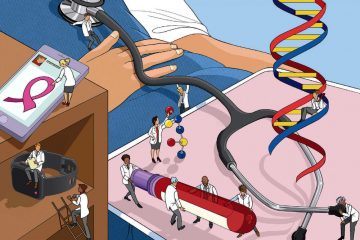 AS A MEDICAL STUDENT
 Ted Mann in Tablet:
 Elizabeth Chatterjee in the LRB:
 Clive Cookson in the FT:
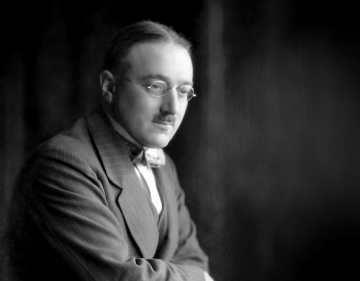 In the 20th century an unfortunate gulf opened up in philosophy between the “continental” and “analytic” schools. Even if you’ve never studied the subject, you might well have heard of this one split. But as the British moral philosopher Bernard Williams once pointed out, the very characterisation of this gulf is odd—one school being characterised by its qualities, the other geographically, like dividing cars between four-wheel drive models and those made in Japan.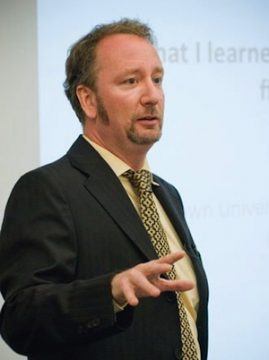

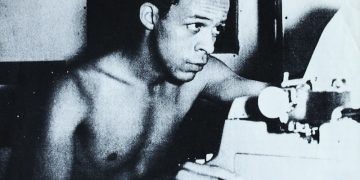 Charles Wright refused to audition as a hatchet man contestant in the Manhattan token wars in which only one Black writer is left standing during a given era. When I asked George Schuyler, author of the classic novel Black No More, why he, at the time, hadn’t received more recognition, he said he wasn’t a member of The Clique. Tokenism deprives readers of access to a variety of Black writers and smothers the efforts of individual geniuses like Elizabeth Nunez, J. J. Phillips, Charles Wright, and William Demby, whose final novel, King Comus, I published.
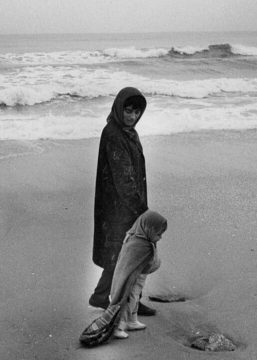 One of the most wonderful things about Varda and her camera was the way she circled back, again and again, to previous sites and subjects of her films. Among others, she maintained bonds with the fishermen of La pointe courte, in 2008 performing an anniversary tribute to honor their part in the film. She captured the scene in The Beaches of Agnès, and mutual gratitude hangs in the salt air. Around Demy’s 1990 death from AIDS, Varda not only filmed his childhood memories; she also returned to Rochefort with the cast of a film Demy shot there, making The Young Girls Turn 25 to honor The Young Girls of Rochefort. Through her returns, Varda gave these stories rich new layers. The reciprocal vulnerability between the artist and her subjects extends to viewers when, at the end of Faces Places, we see our bowl cut-rocking cat lady auteur weep in disappointment when Godard isn’t home to receive the pastries she brought him. When has a visionary drawn us in this close?