
Shelly Fan in Singularity Hub:
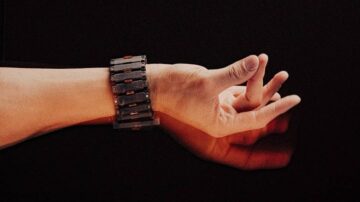 In an iconic scene in the cyberpunk classic Minority Report, the protagonist dons specialized gloves and uses a variety of hand gestures to display and manipulate different tabs on a wall-sized screen—without ever physically touching it. Now the film’s sci-fi technology is coming to the real world. This week, Meta revealed a wristband that decodes finger movements using electrical signals in the wrist. The movements are familiar to anyone with a smartphone: Pinching, swiping, tapping, and even writing. An onboard computer translates these signals into commands on a laptop screen. Without training or calibration, users tackled a range of tests, like moving a cursor to a target, playing a Pacman-like game, and writing words and phrases—“hello world”—by drawing their index fingers across a tabletop.
Meta has long teased a muscle-reading wristband, with an early version that could translate computer clicks. The new device has broader capability. Powered by neural networks and trained on data from over 6,000 volunteers, the wristband achieved up to 90 percent accuracy in some tests. On average, participants could write roughly 21 words per minute, and they improved as they became more familiar with the device.
More here.
Enjoying the content on 3QD? Help keep us going by donating now.
 Alone figure stands at the edge of the Universe and hurls a spear into the unknown, only to find the edge wasn’t an edge after all. A demon tells a chronically ill person that every moment of their life — every high, every hardship — will repeat forever, exactly as it is. A 16-year-old boy tries to travel alongside a beam of light, hoping to catch up, but no matter how fast he goes, it never slows. Someone is offered the chance to live in a simulated paradise, but there’s a catch: Once inside, they’ll forget it isn’t real. And a human falls in love with a consciousness that has no body, no boundaries, and no need for them.
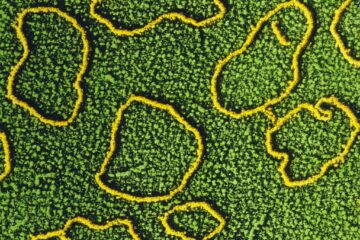 At the heart of all life is a code. Our cells use it to turn the information in our DNA into proteins. So do maple trees. So do hammerhead sharks. So do shiitake mushrooms. Except for some minor variations, the genetic code is universal.
 While Netanyahu and Trump bombed Iran, dozens of prominent Iranian Americans
  T
T S
S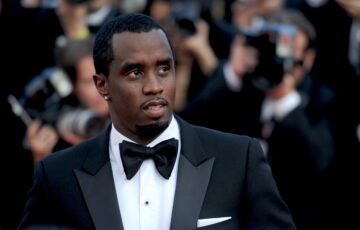 Prisons are American tourist attractions, and criminals who become fugitives or inmates our outlaw heroes—Al Capone, Alcatraz, Charles Manson, Sing Sing, Angola, Luigi Mangione, O. J. Simpson, Diddy, né Sean Combs. A collective underdog fetish means that the image of a civilian outwitting, outrunning, or confronting “the man” is enough to negate his trespasses. Maybe achieving the apotheosis of success in the United States requires becoming a convict, being threatened with or facing real incarceration and exile, doing time, paying dues, and making a grand comeback. At that finale you can sell that story to restore your fortunes, dignity, and maverick glory. Combs is the latest public figure to go from celebrated to disgraced to tentatively redeemed in some eyes by a show trial and the masculine compulsion to cheer when men get away with terrorizing women. The rapper Jay Electronica stood outside of the courtroom with his two Great Danes on the day the verdict was delivered, and announced, “I’m just here supporting my brother.” He looked half-ashamed, half-deviant about it, like he was both courting and afraid of backlash. Others call Diddy’s comeuppance a legal lynching, insinuating he’s a survivor of a because-he’s-black character assassination, since other powerful, abusive men have yet to be held accountable. It’s a truly American malfunction, this belief that the once oppressed should have the freedom to become as evil and ruthlessly decadent as their oppressors. This is what is sold to the public as prestige, and imitations of it exist at every stratum. With this in mind, Diddy’s story could be construed as a bootstraps tale—from Harlem to Howard to Hollywood endings. His recent downward spiral might be just another buoy, one that will help him ascend anew.
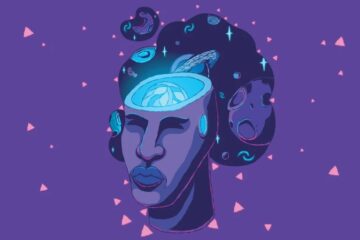 One morning in 2009, Jacqueline Tabler woke up with the solution to a laboratory problem that had been plaguing her for months. She got out of bed, grabbed her notebook, and started sketching out an experiment that had come to her in a dream.
 O
O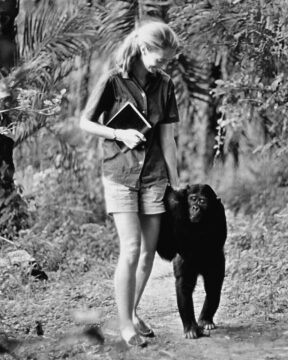 On 14 July 1960, 65 years ago this week, a young English woman with no formal scientific background or qualifications stepped off a boat at the Gombe Stream Game Reserve in Tanzania to begin what would become a pioneering study of wild chimpanzees. Her discoveries would not just revolutionise our understanding of animal behaviour but reshape the way we define ourselves as
 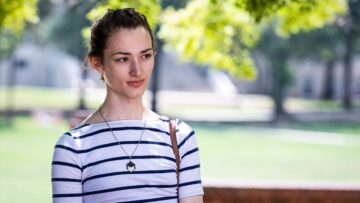 It’s not that anyone ever said sophisticated math problems can’t be solved by teenagers who haven’t finished high school. But the odds of such a result would have seemed long.
 I have had early access to GPT-5