
Soni Wadhwa in Asian Review of Books:
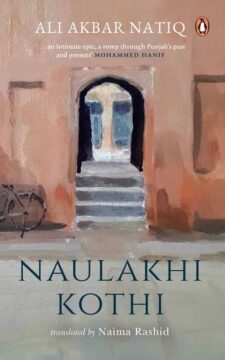 South Asian fiction based on the Partition of 1947 is generally concerned with specific incidents of trauma and violence. Urdu writer Ali Akbar Natiq’s Naulakhi Kothi, recently translated into English by Naima Rashid, adds a different dimension to the existing ways of narrating fiction. Its story begins several years before the partition and ends several years later, thereby using partition to frame a much longer narrative.
The novel has three interrelated stories. One concerns William, an heir to the eponymous Naulakhi Kothi near Jalalabad in today’s Punjab Pakistan, the mansion that cost the veritable fortune of nine lakhs, as the Hindi/Urdu “naulakha” has it, to make. It was a house built by his father: William grew up here, before being sent to England for an education. The plot opens with his memories as he returns “home”; he expects to be transferred to the district where his mansion is located. But as he gets closer to his home, he realizes things have changed. Politically motivated killings keep making things worse for the colonial administration (and thereby for him), and constitute the second story or subplot: the animosity between Ghulam Haider and Saudha Singh, the factions that keep fighting over control of land in the region. The third strand is the story of the cleric Maulvi Karamat (and subsequently his son and grandson), narrating the story of rags-to-power in what later becomes Pakistan.
More here.
Enjoying the content on 3QD? Help keep us going by donating now.