
Cyril Josh Barker in Amsterdam News:
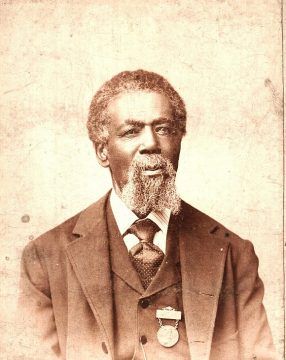 On Feb. 3, 1870, the Fifteenth Amendment was ratified prohibiting “the federal government and each state from denying a citizen the right to vote based on that citizen’s race, color, or previous condition of servitude” giving Black men the right to vote across the nation. Just under a month later the first African American vote was cast in Perth Amboy, N.J. on March 31, 1870 by Thomas Mundy Peterson. Born in 1824 in Metuchen, N.J., Peterson was the son of ex-slave Lucy Green. Peterson worked as a janitor and handyman in Perth Amboy. After the Fifteenth Amendment was enacted, Peterson participated in Perth Amboy’s local election held at city hall over the city’s charter. A member of the Republican and Prohibition Parties, he cast his ballot in favor of revising the existing charter, making him the first African American to vote in any election in the nation. Along with being the first Black person to vote in America, he was also the first Black person in Perth Amboy to serve on a jury. Peterson would go on to be one of seven people appointed to make amendments to the charter’s revisions he voted in favor of.
In 1884, in honor of his history-making ballot, the Perth Amboy community raised the equivalent of $1,800 in modern dollars to buy Peterson a gold medallion featuring Abraham Lincoln’s profile. “Presented by the citizens of Perth Amboy, N.J. to Thomas Peterson the first colored voter in the provisions of the 15th Amendment at an election held in that city March 31st 1870,” the medallion’s inscription states. Peterson died in 1904 at the age of 79. The medallion Peterson received is housed at the historically Black Xavier University of Louisiana in New Orleans. In 2017, the university loaned the medallion to the City of Perth Amboy for a presentation at St. Peter’s Episcopal Church. “During the 19th century, and even up to the present day, many communities have attempted to stop African Americans from voting. Perth Amboy is different, that is, we encouraged the right to vote,” said local businessman and historian John Kerry Dyke. “The Thomas Mundy Peterson medal is more than just an award. It represents the efforts of all good people that want to enfranchise America’s voters. It embodies the concept that all men are created equal.”
More here. (Note: Throughout February, at least one post will honor The Black History Month. This year’s theme is “African Americans and the Vote.” Readers are encouraged to send in their suggestions)
 Samuel Moyn in The LRB:
 As late as the 20th century, grafting a monkey’s testicle on to your scrotum was considered a plausible cure for impotence and general sluggishness. As early as 1139, it was signed into canonical law that impotence was grounds for the annulment of a marriage, so you can see why the try-anything approach persisted, when a person could be unmade by physical failure, publicly ejected from the organising bond of society. Dough has reminded humans of sex, one way or another, pretty much since the cultivation of wheat began; any loaf of bread worth its salt was originally designed to resemble either a penis or a vagina. But much of the significance of food, especially in the early modern period, was not its erotic redolence but its mediating role in the bewitchery of carnal urges. So a wife might increase her husband’s ardency by keeping a live fish in her vagina for two days, then roasting it and feeding it to him. Or she might, conversely, set out to kill him by covering herself in honey and rolling in wheat, before grinding the wheat and turning it into bread, which she then fed to him. But she’d have to remember to mill it in the opposite direction to the sun, whatever that means.
 For those who don’t know about America’s involvement in Laos, which at the time U.S. officials called the “
 The early years of the American nuclear program were dominated by men in the mold of
  Getting rid of Trump means taking seriously “shit-life syndrome”—and its resulting misery, which includes suicide, drug overdose death, and trauma for surviving communities. My state of Ohio is home to many shit-life syndrome sufferers. In the
 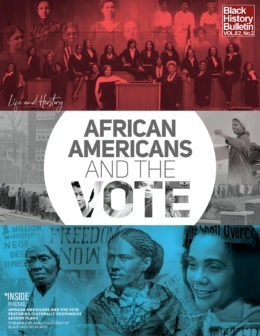 When Carter G. Woodson established Negro History week in 1926, he realized the importance of providing a theme to focus the attention of the public. The intention has never been to dictate or limit the exploration of the Black experience, but to bring to the public’sattention important developments that merit emphasis. For those interested in the study of identity and ideology, anexploration of ASALH’s Black History themes is itself instructive. Over the years, the themes reflect changes in how people of African descent in the United States have viewed themselves, the influence of social movements on racial ideologies, and the aspirations of the black community. The changes notwithstanding, the list reveals an overarching continuity in ASALH–our dedication to exploring historical issues of importance to people of African descent and race relations in America.
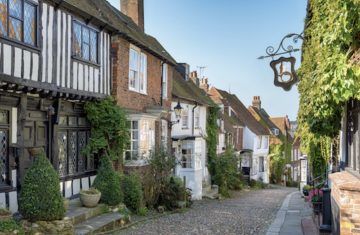 It’s happened. You’ve finally taken that dream trip to England. You have seen Big Ben, Buckingham Palace, and Hyde Park. You rode in a London cab and walked all over the Tower of London. Now you’ve decided to leave the hustle and bustle of the city and stretch your legs in the verdant countryside of these green and pleasant lands. You’ve seen all the shows. You know what to expect. You’ll drink a pint in the sunny courtyard of a local pub. You’ll wander down charming alleyways between stone cottages. Residents will tip their flat caps at you as they bicycle along cobblestone streets. It will be idyllic.
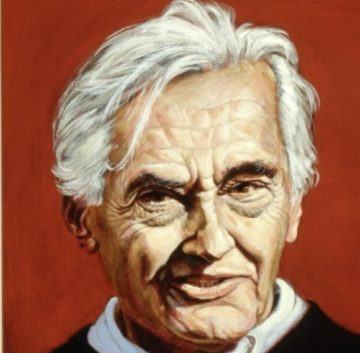 January 27th marks the 10th anniversary of the death of the great historian and activist
 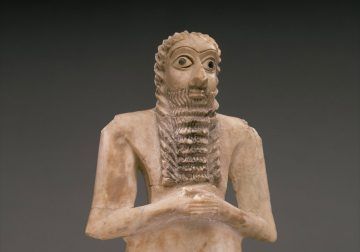 Art historian Jean M. Evans (the current Chief Curator and Deputy Director of the Oriental Institute) writes in The Lives of Sumerian Sculpture: An Archeology of the Early Dynastic Temple that the “eerie effect of the enlarged eyes… has often arisen as a question. These eyes are perplexing.” Several hypotheses have been tendered over the decades as to why the Tal Asmar figurines, and other Sumerian votive statues, have this distinctive characteristic. Wide eyes, especially those absurdly large ones on these idols, could convey an emotion of surprise, or of ecstasy, or pupil-engorged intoxication. Evans gives several examples of modern interactions viewers have had with the figurines, quoting the American painter Willem de Kooning who commented that the Metropolitan Museum of Art had a cache of Sumerian statues with “huge staring goggle eyes” that were “wild-eyed,” and the psychologist George Frankl writing in The Social History of the Unconsciousness that these spheres of obsidian and opal convey a “sense of awe and apprehension which obviously indicated the anxiety those people felt in the presence of the gods.” Regardless of the intent (or multiple purposes) of the statues’ creators, Evans makes the point that the artworks have become “the subjects and objects of gaze.” Consider the first of these functions when deciding why the creatures’ pupils are so wide–it’s because they’re looking at you.
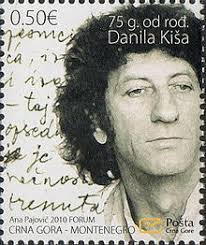 Through the language of his ‘troubling strangeness’,
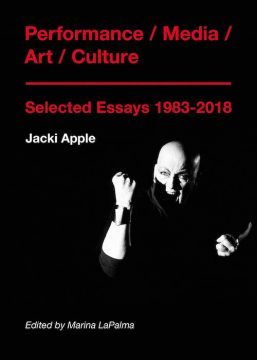 AMONG THOSE L.A. RESIDENTS who have listened (patiently) over the years to KPFK-FM, our local — and at times volatile — Pacifica-based radio station, many will recall my erstwhile colleague at the station Jacki Apple and her excellent performance art program, Soundings, which ran from 1982 to 1995. Since that was an era long before the crucial turning point of 2012–’13, when humanity finally reached its potential as walking appendages of electronic devices (a development actually prophesied by some of those performance artists), Jacki was an essential, one-woman dervish of activity in this city, a writer-observer who avidly promoted the furthest fringes of performance art and experimental music in the Southland, through both the printed word (in the pages of High Performance and Artweek) and that unlikely 20th-century medium of radio.
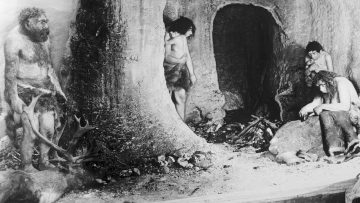 Forty thousand years ago in Europe, we were not the only human species alive – there were
 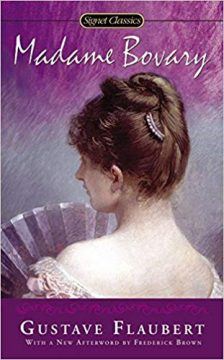 In her just-published “
 The scientific work that I do on the brain basis of consciousness is sometimes misunderstood – a misunderstanding which I think comes mainly from the political divide between mystics and materialists. I am a materialist, and reactions to my work tend to follow along the lines of: ‘keep your scientific hands off my consciousness mystery’.