
Letter from My Ancestors
We wouldn’t write this,
wouldn’t even think of it. We are working
people without time on our hands. In the old country,
we milk cows or deliver the mail or leave,
scattering to South Africa, Connecticut, Missouri,
and finally, California for the Gold Rush—
Aaron and Lena run the Yosemite campground, general
store, a section of the stagecoach line. Morris comes
later, after the earthquake, finds two irons
and a board in the rubble of San Francisco.
Plenty of prostitutes need their dresses pressed, enough
to earn him the cash to open a haberdashery and marry
Sadie—we all have stories, yes, but we’re not thinking
stories. We have work to do, and a dozen children. They’ll
go on to pound nails and write up deals, no musings.
We document transactions. Our diaries record
temperatures, landmarks, symptoms. We
do not write our dreams. We place another order,
make the next delivery, save the next
dollar, give another generation—you,
maybe—the luxury of time
to write about us.
by Krista Benjamin
from The Best American Poetry 2006
Scribner Poetry, 2006
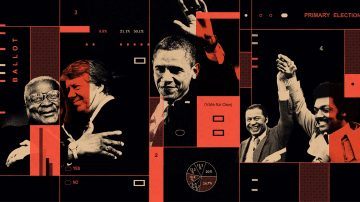 Not that long ago, they were just a slender fraction of the party, one kept at arm’s length by presidential candidates. But today, black voters have emerged as a muscular political force and one of the most intensely courted constituencies in Democratic politics. In 2020, they are likely to account for at least one out of every four ballots cast in the party’s presidential primaries, more than tripling — and perhaps even quadrupling — the share they accounted for just a few decades ago. It’s a political and demographic revolution over the course of 40 years that we are able to document here through exit polling, which major media organizations have been sponsoring on a wide scale in every Democratic presidential primary race since 1976. But until now, much of this data has been hard to come by, unavailable online, walled off in academic archives, even discarded by the news media outlets that sponsored it.
 The
The  The
The  As we enter what feels like the second or third decade of the 2020 presidential campaign, a question hovers menacingly over American politics: Can liberals get a grip? Three years into the Trump era, it cannot have escaped anyone that the country’s political system is in the throes of a major crisis. Yet the mainstream of the Democratic Party remains bogged down, lurching back and forth between melancholy and hysteria. “The Republic is in danger!” the Rachel Maddows of the world intone, but aside from a Trump impeachment that has no hope of actually removing him from office, the solutions on offer stay the same as they were three, ten, fifteen years ago: means-tested tweaks to what little remains of the welfare state, limp appeals to civility and tolerance for (meaning accommodation to) opposing political views, and a “muscular” but gloomy foreign policy that envisions our forever wars stretching on for decades. For more than half a century, the political program that is now called American liberal centrism remade much of the world in its own image and turned the US into the preeminent military and economic power. Today, centrists’ best idea for a bold, young candidate is a millennial Harvard robot who worked for the odious consulting firm McKinsey before, as a midwestern mayor, apparently alienating every single black resident of South Bend. This is an ideology suffering from a failure of imagination.
 Reichert’s body of work is characterized by consistent themes across fifty years of nonstop production. They are films about the lives of ordinary working people in America, often women, usually set in the Midwest. The films are grounded in deep research and driven by a commitment to social justice. They methodically explore a situation or issue, with close, respectful observation and interviews that are always conducted by Reichert herself. These films were often designed within a context of social movements and intended to have demonstrable effects in the world.
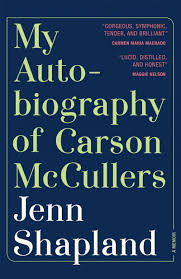 I struggle with biography as a genre, because I’m deeply interested in life writing, but allergic to anything that starts with “So-and-so was born in 1946.” Who is this third person claiming omniscience about someone else’s life? Why must we begin with birth, which no one remembers, or with ancestors, and move chronologically? The written record about Carson tries to sandwich her into a conventional, straight biography, wherein a person is born, comes of age, marries, and dies. That’s just not how her life went, or that’s not a way to capture the really exciting stuff, like her relationships with women that happened while she was married, her getting divorced and remarrying and abandoning the same guy, living with the queer cadre at February House, meeting Mary Mercer in her forties and falling in love, coming of age late in life. Queer narratives are all over the place, and queer people frequently take a long time to figure shit out. They live many lives in the space of one life, often with different identities, genders, pronouns, bodies, and styles. Queer narratives demand new forms, and I would love to see more queer writing that fucks with all different genres and literary conventions.
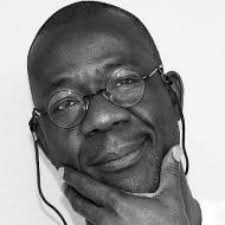 In the 1980s, the Guardian newspaper in Lagos published a weekly Literary Series, including full-length essays on notable writers as well as poems, stories and short reviews. Those essays were later collected into the two-volume Perspectives on Nigerian Literature, edited by Yemi Ogunbiyi. Of the 53 essays in the second volume, Teju wrote eight, the most contributions by a single person in that volume.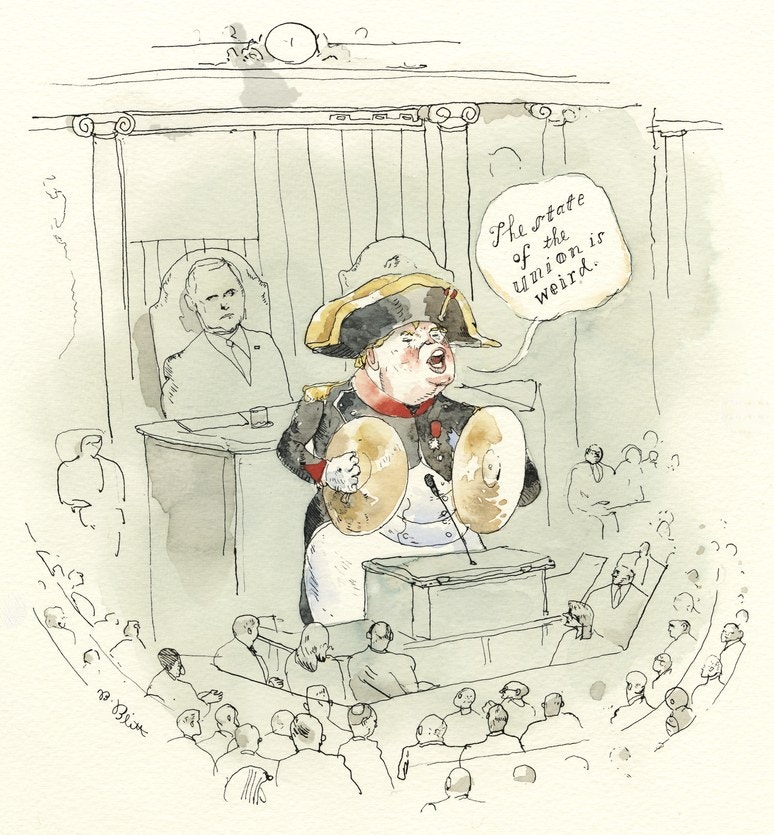
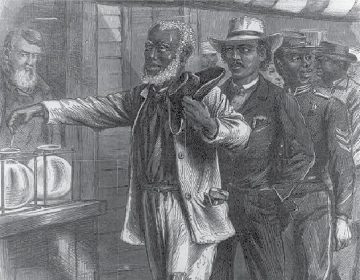 The Voting Rights Act is a historic civil rights law that is meant to ensure that the right to vote is not denied on account of race or color.
 As a technology entrepreneur, when I am approached by startup founders for fundraising advice, I ask: “What would the world look like if you got everything you’re asking for?” It’s a test to see whether they are setting out to solve the right problem or whether they are choosing their preferred course of action and justifying retrospectively.
 It’s done. A triumph of dogged negotiation by May then, briefly, Johnson, has fulfilled the most pointless, masochistic ambition ever dreamed of in the history of these islands. The rest of the world, presidents Putin and Trump excepted, have watched on in astonishment and dismay. A majority voted in December for parties which supported a second referendum. But those parties failed lamentably to make common cause. We must pack up our tents, perhaps to the sound of church bells, and hope to begin the 15-year trudge, back towards some semblance of where we were yesterday with our multiple trade deals, security, health and scientific co-operation and a thousand other useful arrangements.
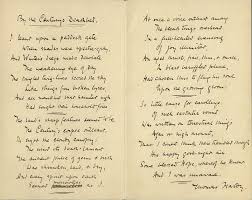 The integrating power of the erotics of poetry was on Heaney’s mind when he decided to take on the task of producing a modern English version of the quintessentially Anglo-Saxon Beowulf. Contemplating a version distinguished by many Hiberno-English uses, Heaney concluded, as he wrote in “The Irish Poet and Britain”, ‘So, so be it. Let Beowulf now be a book from Ireland.’
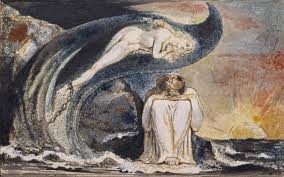 In 1944, in Warsaw, German soldiers scrawled numbers on the buildings in white paint and then systematically demolished the city, while the Soviet army watched and waited across the Vistula. After the war, the Poles returned to Warsaw and, living in the rubble, began to rebuild. Devastated cities across Europe faced the same choices. Should the ruins be left in view, like the cathedral at Coventry, with new buildings erected beside them, a permanent memorial? Should the rubble (with its dead) be hidden and a new, modern city built on top of it? Or perhaps, as the Poles decided, the old city should be replicated, rebuilt in the same place, in every last detail—every cornice, lamppost, and windowsill—an act of defiance and despair, the fiercest response to the fact that we can’t bring back the past, we can’t bring back the dead. In this replication was a kind of terror—the calling forth of spirits and the speaking aloud of a harrowing, unanswerable doubt: that the replica might erase precisely what it was meant to memorialize.
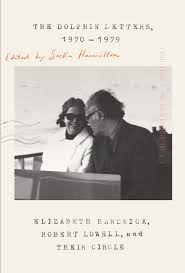 ‘Sometimes I think I am the enemy of womankind,’ Lowell told Hardwick. He hurt all three of his wives grievously, but he believed in their greatness as writers, enriched them creatively and improved their sense of self-worth. He gave the first, Jean Stafford, lifelong facial disfigurement after crashing the car they were in while drunk at the wheel, and later broke her nose during a drunken row in New Orleans. He also encouraged her during the writing of her first novel, Boston Adventure, which sold over 400,000 copies following its publication in 1944. The novel that Hardwick wrote after marrying Lowell, The Simple Truth, is a big improvement on its predecessor, and the novel she wrote as a response to The Dolphin after his death, Sleepless Nights, is her best. ‘Everything I know’, she attested, ‘I learned from him.’
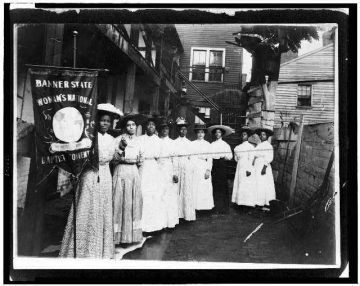 During the 19th and 20th centuries, Black women played an active role in the struggle for universal suffrage. They participated in political meetings and organized political societies. African American women attended political conventions at their local churches where they planned strategies to gain the right to vote. In the late 1800s, more Black women worked for churches, newspapers, secondary schools, and colleges, which gave them a larger platform to promote their ideas.