
Maya Salam at the New York Times:
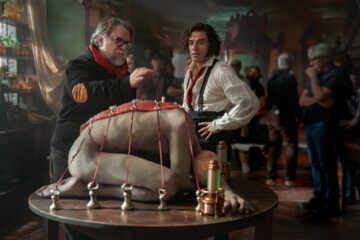 Guillermo del Toro has been shaping his vision for Victor Frankenstein’s monster since he was 11 years old, when Mary Shelley’s classic 1818 Gothic novel became his Bible, as he put it in a conversation in August.
“Why is it made of many parts?” he recalled wondering as a boy. “I started thinking about the logic of that.”
Now, the filmmaker, with three Oscars to his name, has finally manifested his dream. His “Frankenstein” (out Oct. 17 in theaters and Nov. 7 on Netflix), reinterprets both the myth and the monster, which unlike many before it, feels newly born rather than repaired. Yes, that means no stitches.
“We didn’t want it to feel like an accident victim,” he said, referring to his collaboration with Mike Hill, also a “Frankenstein” acolyte and the film’s creature designer. “We wanted it to have the purity or translucency of almost like a newborn soul,” del Toro said, “to follow it from being a newborn soul into being — an ‘I think therefore I am’ sort of a human.
More here.
Enjoying the content on 3QD? Help keep us going by donating now.
 Many of the molecules in our bodies are
 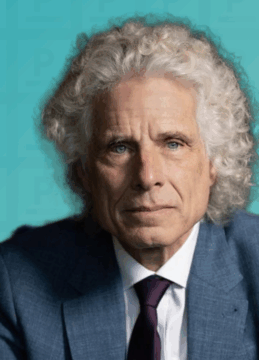 Steven Pinker: I’m using it in a technical sense, which is not the same as the everyday sense of conventional wisdom or something that people know. Common knowledge in the technical sense refers to a case where everyone knows that everyone knows something and everyone knows that and everyone knows it, ad infinitum. So I know something, you know it, I know that you know it, you know that I know it, I know that you know that I know it, et cetera.
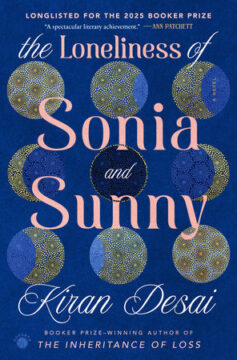 Almost
 At its core, The Ba***ds of Bollywood is a razor-sharp look at the dazzling yet treacherous world of
  The Ig Nobels were founded in 1991 by Marc Abrahams, editor of satirical magazine
  As its September meeting approaches, the US Federal Reserve is once again coming under political pressure to lower rates. President Donald Trump has been calling for such a move for months – sometimes demanding cuts as large as
 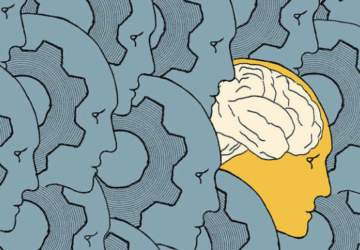 My life’s mission has been to create safe, beneficial AI that will make the world a better place. But recently, I’ve been increasingly concerned about people starting to believe so strongly in AIs as conscious entities that they will advocate for “AI rights” and even citizenship. This development would represent a dangerous turn for the technology. It must be avoided. We must build AI for people, not to be people.
 An omnipresent feature of liberal chronicles of the occupation is a fixation on how much was wasted: the $2.13 trillion spent and the 176,000 people who died. Surveying the destruction wreaked on Afghanistan, these accounts conclude, unsurprisingly, that the war was a total failure. The Taliban are once again in control of Kabul. Al Qaeda runs gold mines in Badakhshan and Takhar provinces. The Afghan army is a distant memory. This humiliation is often presented as a mystery. How could so much money—more than was spent on the Marshall Plan—and “goodwill,” in the New Yorker’s words, have achieved so little?
 I
I  One of the most striking features of insect societies is that they contain “neuter castes” of organisms that do not reproduce (worker bees, for example). That created a problem for Darwin, who conceptualized his theory of natural selection in terms of one individual outreproducing other members of its species. He solved the problem by saying that it is individual “families” (in this case, individual colonies), not just individual organisms, that reproduce differentially. Darwin treated groups composed of organisms—families, tribes, colonies—as units that get selected. In the case of the neuter castes, he reasoned, it is an advantage to such communities to have sterile members who spend their time and energy working for the prosperity of the colony as a whole rather than bearing offspring.
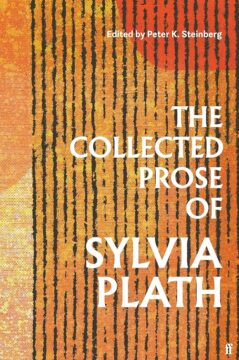 Although Sylvia Plath is best known for the cutting lyricism of Ariel (1965) and for her autobiographical novel, The Bell Jar (1963), her career goal as a writer was threefold: to write poetry, novels, and short stories. As detailed in her journals, she devoted equal time to poetry and fiction, shifting her focus to stories when she felt stalled as a poet, then returning to poetry when she lost confidence in herself as a fiction writer. More than a record of her experiences, the journals document her clear-eyed assessments of her strengths and weaknesses as a writer, her resolve to improve through relentless practice, and, especially for the short fiction, her ongoing study of markets she sought to crack: literary venues such as The New Yorker, The Atlantic Monthly, and The London Magazine; women’s magazines such as Mademoiselle, Woman’s Day, Ladies’ Home Journal; and even pulp monthlies such as True Story. As these last examples suggest, Plath’s objective as a short story writer, beginning in high school when she submitted work to Seventeen Magazine, was to make money, initially to supplement her college scholarships, and then to earn a living as a professional writer—and sustain her career as a poet—without having to teach. To expand her range of genres and contribute to the income stream, Plath also wrote nonfiction.
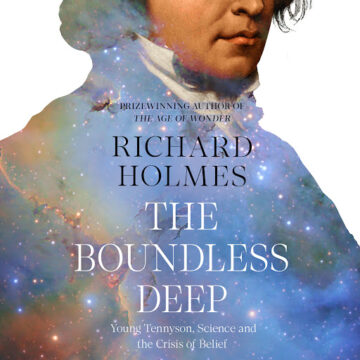 Edward FitzGerald long remembered the heavenly spectacle of his younger contemporary Alfred Tennyson at Cambridge. ‘At that time he looked something like the Hyperion shorn of his Beams in Keats’s Poem’, FitzGerald wrote fifty years later, ‘with a Pipe in his mouth.’ In fact, it was not Keats that he was invoking, but Milton’s description of the recently fallen Satan – ‘Archangel ruined’, yet retaining some of his angelic glory, ‘as when the sun new-risen/Looks through the horizontal misty air/Shorn of his beams’. It is a telling connection for FitzGerald’s subconscious to have made. Charles Lamb had adduced the same passage when he described the middle-aged Coleridge, a man broken by self-obstruction and opium but still possessing some vestige of the young genius whom Lamb had so loved and revered. Coleridge’s gifts were immense but imperfectly exploited. FitzGerald seems to have seen in Tennyson a similar case.