
Sean Carroll in Preposterous Universe:
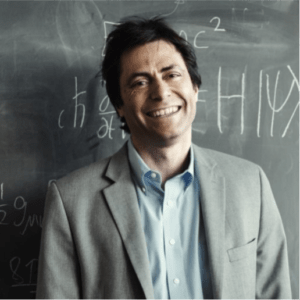 We’ve talked a lot recently about the Many Worlds of quantum mechanics. That’s one kind of multiverse that physicists often contemplate. There is also the cosmological multiverse, which we talked about with Brian Greene. Today’s guest, Max Tegmark, has thought a great deal about both of those ideas, as well as a more ambitious and speculative one: the Mathematical Multiverse, in which we imagine that every mathematical structure is real, and the universe we perceive is just one such mathematical structure. And there’s yet another possibility, that what we experience as “reality” is just a simulation inside computers operated by some advanced civilization. Max has thought about all of these possibilities at a deep level, as his research has ranged from physical cosmology to foundations of quantum mechanics and now to applied artificial intelligence. Strap in and be ready for a wild ride.
More here.
 Impeachment has a way of bringing out a president’s worst instincts — and the world could end up paying the price.
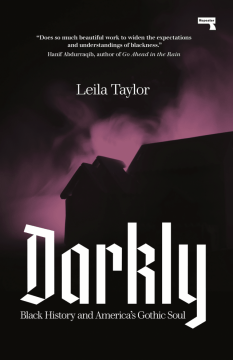 In Darkly, Leila Taylor offers a racially-minded revision of the Gothic canon, from Walpole to the present, with a particular focus on its American incarnations. But two things make this compendium a vital addition to the existing commentary. First is the fact that Taylor is no reductionist, and isn’t tempted, say, to dismiss the entire Gothic canon as irredeemably racist. Instead, Darkly makes a compelling and subtle argument: on the one hand, that the American Gothic is not simply a transplanting of an inherently European aesthetic, but a symptom of America’s (ongoing) legacy of racial oppression; on the other, that the American Gothic also promises a cure, a means of resisting that very oppression — that by allowing ourselves to be haunted by its texts, we can hope to terminate the legacy which produced them. Second is Taylor’s unapologetic use of the first person, her extensive reference to her subjective experience. That experience is directly related to the book’s argument: as Darkly makes clear, the legacy of racial oppression in America is something which Taylor has encountered — and continues to encounter — on a daily basis. But the inclusion of Taylor’s “I” here lends more than, say, credibility to her case (that case is already so tight, it would stand irrespective of who made it); it also ensures that Darkly, like the 43rd Capricho, is a self-portrait. By discussing how it feels for her to watch, say, Romero’s Night of the Living Dead — with its appropriations of Haitian folklore, and with the indiscriminate slaughter of the Black protagonist in its final scenes — Taylor forces us to participate in her experience. Darkly, then, to paraphrase something that Beckett once said of Joyce, is not just about the uncanny, it is uncanny.
 Last June, I interviewed Wardlow at a maximum-security prison called the Polunsky Unit, located 80 miles northeast of Houston, where he is waiting for his execution on death row. He has been incarcerated for a quarter of a century, but the state has now set a date for his death: April 29, 2020. His lawyers, Richard Burr and Mandy Welch, having gotten to know him well in the 23 years that they have represented him, told me they are convinced that time has shown the jury to have been wrong in determining Wardlow posed a future danger. The more I have read about his case and his life, the more I think they are right. Wardlow stands out as someone the legal system has wronged repeatedly, especially in deciding his punishment.
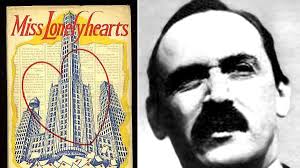 It was at this point I discovered Nathanael West. Although all his books had been published in the 1930s, they seemed to anticipate the America that was throbbing all around me, with its violence and disappointments, its spiritual emptiness, its foolishness and its freaks.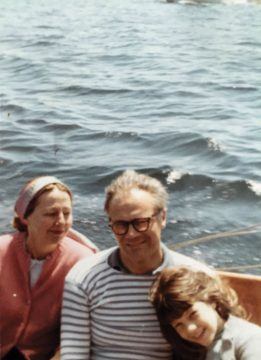
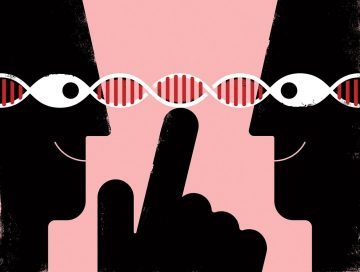 When Adam Siepel was building algorithms for evolutionary genomics as part of his PhD, he wasn’t thinking about visualization. But, as a graduate student in the laboratory of computational biologist David Haussler, at the University of California, Santa Cruz (UCSC), he happened to sit next to the software engineers who were building and maintaining a tool called the UCSC Genome Browser. These engineers helped Siepel to make his algorithms publicly available as a track, or data overlay, that anyone could explore. Genome browsers are graphical tools that display the genome sequence, usually as a horizontal line. Other sequence-associated data are aligned and stacked above and below that line in ‘tracks’, for instance to illustrate the relationship between gene expression, DNA modification and protein-binding sites.
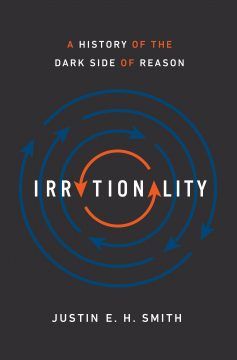 Justin Smith’s Irrationality is one of many books provoked by the political eruptions of 2016. Trump is a recurring preoccupation, but so is the internet and the carnival of quickfire nonsense it hosts. Taking these two themes together – the absurd liar in the White House, and the sarcastic meme culture that helped put him there – suggests that something distinctly new and dangerous has arisen. Trump, it seems, outstrips any previous conspiracy theorist or demagogue. His election means ‘the near-total disappearance of a shared space of common presuppositions from which we might argue through our differences’. In 2016, we saw ‘the definitive transformation of the internet, from vehicle of light to vehicle of darkness’. Trump’s pre-eminence forces us to defend principles and institutions we shouldn’t have to defend. We find ourselves having to assert that good reasons are better than bad reasons, that rational government policies are better than irrational ones. Distinctions between scientific fact and conspiracy theory now have to be explained and justified. These are tasks that many rationalists, in the ‘new atheist’ tradition of Steven Pinker and Richard Dawkins, have been happy to pursue. Arguing as much with (what they perceive as) the relativism of the left as with the dogmatism of the right, these bombastic defenders of Western reason exhibit a spirit of hostility towards anyone daring to question the benefits and rectitude of the natural sciences. Dawkins in particular has converted a defence of scientific method into a defence of cultural hierarchy, with ‘the West’ at the top. Pinker clings to a form of Benthamism, in which statistical data prove that modernity is still on the right track, regardless of what political or cultural anguish might be at large.
 On the evening
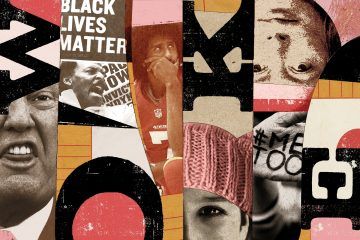 There is a certain kind of liberally inclined writer who sees Donald Trump’s America as a nation in crisis. At every turn, in every tweet, she is confronted by the signs of an ongoing catastrophe, from which it may be too late to escape. An ugly, vicious intolerance spread on social media; the collapse of norms once considered sacred; a crass narrow-mindedness surreally celebrated by some of this country’s most powerful institutions—these are all elements in the gathering storm of a new, distinctly American fascism. The twist is that this crisis has its source, she contends, not in the person of Trump, but in his frothing-mouthed opposition: the left.
 It’s the year of John Ruskin. 2019 is the bicentennial of his birth and there continues to be events to mark it. Perhaps the celebrations will prove to be a turning point for him. For though during his lifetime, and for a generation or so afterwards, Ruskin was hugely influential, his achievements have now been neglected for decades. His collected works run to 39 volumes; he wrote around 250
 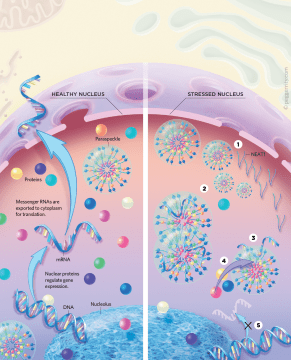 I have a clear memory of presenting my initial results about a “failed” protein at a lab meeting with my postdoctoral advisor
  Holly Case in Aeon:
 Adolph Reed Jr. in The New Republic: