
MG Devasahayam in India Legal:
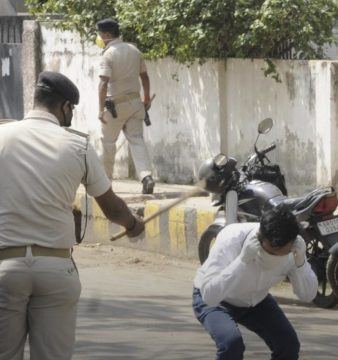 The Covid-19 lockdown on the largest population on earth with the shortest possible notice has completed five weeks. Overnight, a medical pandemic was made into an economic and humanitarian disaster of immense proportions. It is time we took stock.
First, let us see the way the lockdown was imposed in India. Even a 1,000-man infantry battalion of our professional army, always prepared and ready-for-action, gets four hours’ notice to move into operation. But here, within four hours, a 135-crore civilian population that was totally unprepared and chaotic was ordered to lock down, halting and abandoning everything. Given the immense life-livelihood hardships this has brought about, one wonders who the government was at war with—the virus or the people, particularly the marginalised.
Equally shocking was the way the lockdown was enforced—with baton-wielding police entirely in charge, taking orders from an authoritarian political leadership. There were horror stories of citizens being hounded, beaten up and subjected to all kinds of indignities. The massive number of urban migrants, mostly poor and penniless, was despised because they could be carrying the virus. So they were stopped, sprayed with chemicals and put in isolation barracks with no food or water so that they didn’t spread the disease. Many migrants, including pregnant women and tender kids, were forced on a long march home, crying for food and water en route.
More here.
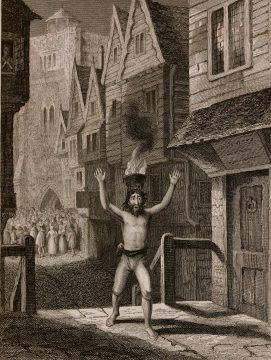 ISTANBUL — For the past four years I have been writing a historical novel set in 1901 during what is known as the third plague pandemic, an outbreak of bubonic plague that killed millions of people in Asia but not very many in Europe. Over the last two months, friends and family, editors and journalists who know the subject of that novel, “Nights of Plague,” have been asking me a barrage of questions about pandemics. They are most curious about similarities between the current coronavirus pandemic and the historical outbreaks of plague and cholera. There is an overabundance of similarities. Throughout human and literary history what makes pandemics alike is not mere commonality of germs and viruses but that our initial responses were always the same. The initial response to the outbreak of a pandemic has always been denial. National and local governments have always been late to respond and have distorted facts and manipulated figures to deny the existence of the outbreak. In the early pages of “A Journal of the Plague Year,” the single most illuminating work of literature ever written on contagion and human behavior, Daniel Defoe reports that in 1664, local authorities in some neighborhoods of London tried to make the number of plague deaths appear lower than it was by registering other, invented diseases as the recorded cause of death.
 Over at Columbia University’s Weatherhead East Asian Institute:
 Chris Lehman in TNR:
 Dirk Philipsen in Aeon:
 In 1937 the art critic
  Perhaps more important than the way Dryer’s paintings have continued to live in the memories of those who saw them in the Eighties and early Nineties is the way her name has lived on as a kind of password among certain younger abstract painters who may never, or only rarely, have had a chance to see her work in person. In an article published in the Brooklyn Rail in 2012, the English painter and critic David Rhodes recalled his impression, reading in London about Dryer’s work years before, “that New York had done it again; a tradition was being recoined and revitalized,” thanks to her “taking a long look at abstraction and quickly coming up with something fresh and new.” Her reputation continued to circulate, sub rosa, among painters hoping to work with abstraction without bombast or the illusion of progress, to paint in ways that might be at once more intelligent and more full of feeling, more playful and yet more earnest.
 HBO’s “Bad Education,” coming out on Saturday, is a dramatization of a real-life school-district scandal that occurred on Long Island. I took note of the scandal when it first unfolded, in the early two-thousands, because I graduated from the institution at its center, Roslyn High School, three decades earlier (though my family connection to the town was already long over). What’s fascinating and significant about the film, which is written by Mike Makowsky and directed by Cory Finley, is that it takes a serious look not at Roslyn’s idiosyncrasies (“Bad Education” doesn’t dwell on local curiosities) but at the traits that Roslyn shares with more or less every prosperous suburb in America. It’s a story of aspirations and dreams, of the striving for wealth and the perpetuation of its privileges, and of the systems by which that process of heightened stratification, of upward mobility for those already on top, is sustained. It’s also a movie that exemplifies the unchallenged movie convention of distilling a complex story into information snippets, each with its own specific emotional orientation, that fit together so precisely and so tightly that, rather than exploring its implications, it seals them out.
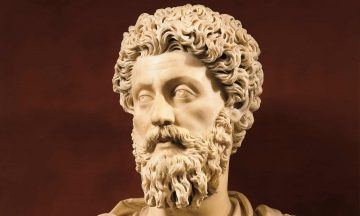 The Roman emperor Marcus Aurelius Antoninus was the last famous Stoic philosopher of antiquity. During the last 14 years of his life he faced one of the worst plagues in European history. The Antonine Plague, named after him, was probably caused by a strain of the smallpox virus. It’s estimated to have killed up to 5 million people, possibly including Marcus himself. From AD166 to around AD180, repeated outbreaks occurred throughout the known world. Roman historians describe the legions being devastated, and entire towns and villages being depopulated and going to ruin. Rome itself was particularly badly affected, carts leaving the city each day piled high with dead bodies.
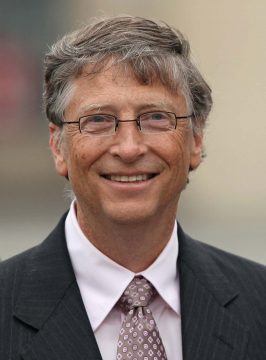 The coronavirus pandemic pits all of humanity against the virus. The damage to health, wealth, and well-being has already been enormous. This is like a world war, except in this case, we’re all on the same side. Everyone can work together to learn about the disease and develop tools to fight it. I see global innovation as the key to limiting the damage. This includes innovations in testing, treatments, vaccines, and policies to limit the spread while minimizing the damage to economies and well-being.
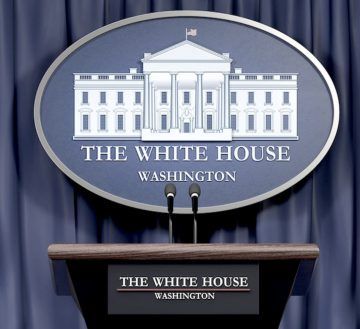 Someone must have been telling lies about Jared K., for one fine morning without having done anything wrong, or right for that matter—without having done anything save run a major metropolitan newspaper into the ground and kick thousands of poor people out of their apartments—he was put in charge of the nation’s pandemic response. This had never happened to K. before. Except for that time he was put in charge of the border wall. And opioids. And prison reform. And presidential pardons. And the Middle East peace process. “I’d better get someone in authority to help me,” K. said. But there was no one.
 CH: Yes. I’m not sure atheism, as we now know it, was generally available as an option for 17th-century thinkers. By “atheism” I mean a total rejection of any sort of divine being. There may have been a few real radicals who proclaimed such a belief, but encountering them in those days must have been like meeting someone today who denies the existence of electrons. Some sort of divinity metaphysics was woven into the very fabric of metaphysics back then – maybe the biblical God, maybe a less specific divine person, maybe an impersonal divine force, maybe something falling between these notions. But to think that there wasn’t some sort of special being ushering into existence the world with its laws of nature must have seemed like a non-starter. Even Hume, in the next century, couldn’t shake the idea that there probably was some sort of Big Designer, if we take the conclusion of his dialogues to represent his view. It’s not until the 19th century, with the postulation of deep time, that atheism in our sense becomes really thinkable.