
Kenan Malik in Pandaemonium:

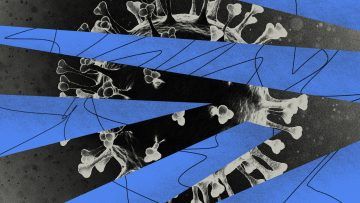
Last week, in Oxford, the first volunteers in the first European human trial were injected with a potential coronavirus vaccine. At the same time, Pakistan’s National Institute of Health received an offer from the Chinese pharmaceutical firm Sinopharm International Corp to take part in a trial of another potential coronavirus vaccine.
The two events reveal twin aspects of the global process of drug trials and development. On the one hand, there is the ingenuity and drive that allow a potential vaccine to emerge in a fraction of the time it would normally take, as well as the courage and selflessness shown by the volunteers risking their health to test it. On the other, the increasing use of poorer nations as testing grounds for new medicines, in trials in which the subjects often have, because of poverty and lack of access to health provision, little choice about whether to take part.
The details of the proposed Chinese trial are still unclear, but it is part of what many call the ‘globalisation of clinical trials’. Until the end of the last century, virtually all clinical trials by Western pharmaceutical companies were conducted in Europe or America. The majority still are. Over the past 20 years, however, US, European and, increasingly, Chinese companies have taken to offshoring trials to low- and middle-income countries.
More here.
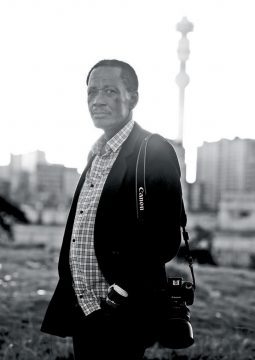 THERE IS A CERTAIN PROFUNDITY—a profundity that can only be qualified and quantified as tautology—a deep profundity in Santu Mofokeng’s work, which thrusts the viewers, if they are willing to listen to the images carefully, into a space of timelessness. A timelessness that speaks of the elasticity of time beyond time, beyond geography. A deep time. Not in the geological, Huttonian sense of deep time, but as in time’s transience and transcendentality. A time beyond the temporality of the lived imagination. I have found myself in this time-space often when looking at and listening to Santu’s photographic series, particularly “Landscapes,” 1988–2010; “Poisoned Landscapes,” 2008; “Townships,” 1985–87; “Child-Headed Households,” 2007; “Train Church,” 1986; “Landscapes of Trauma,” 1997–2004; “Chasing Shadows,” 1996–2006; and “Ishmael,” 1984–2005.
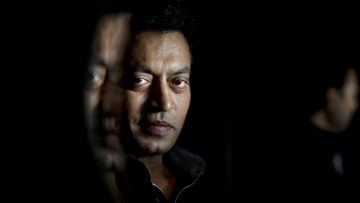 In 1986, when the director Mira Nair was scouting for her film Salaam Bombay! at the National School of Drama in New Delhi, she fixed her gaze on a young man from Jaipur. “I noticed his focus, his intensity, his very remarkable look—his hooded eyes,” she
 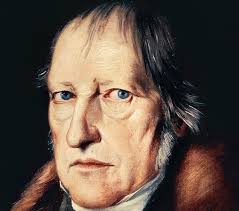 Although the nineteenth-century philosopher G.W.F. Hegel is known as a defender of bourgeois society and so of what came to be known after him as capitalism, I think the evidence suggests that his answer to these questions is far more negative than is widely recognized, and this in a distinctive sense that remains relevant today. I want to try to explain this counterintuitive claim. Hegel, of course, writing in Germany in the early nineteenth century, had no idea of the full scope of the industrial capitalism to come, but he certainly saw that a largely agricultural and artisanal/craft/predominantly homebound economy was changing into a wage-labor economy, and his worries about that alone are apposite. What makes him especially worth returning to in our present circumstances, however, is that while material inequalities and the resulting systematic unfairness were important to him, Hegel’s principal focus was on the experiences of ourselves and others inherent in the ordinary life required by such a productive system. These issues are often misleadingly marginalized as “psychological,” but as recent events have shown, they are crucial to the possibility of the social bonds without which no society can survive.
 The ongoing coronavirus disease 2019 (COVID-19) pandemic has renewed academic and clinical interest in an old vaccine,
 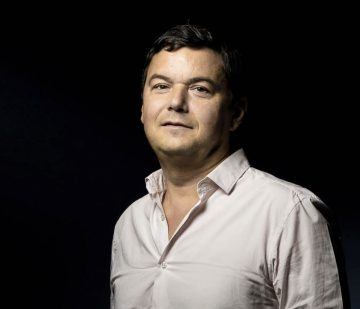 Piketty’s 753-page book Capital in the Twenty-First Century, published in 2013, sold 2.5 million copies worldwide and helped put inequality on the global agenda. But his latest, the even thicker Capital and Ideology, may prove still more influential. The book is nothing less than a global history of inequality and the stories that societies tell to justify it, from premodern India to Donald Trump’s US. It arrives just as anger about inequality (some of it generated by Piketty’s work) approaches a boiling point, and was channeled by a contender for the White House, Bernie Sanders.
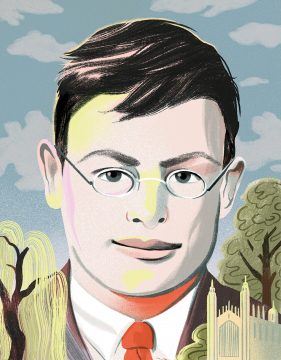 The world will never know what has happened—what a light has gone out,” the belletrist Lytton Strachey, a member of London’s Bloomsbury literary set, wrote to a friend on January 19, 1930. Frank Ramsey, a lecturer in mathematics at Cambridge University, had died that day at the age of twenty-six, probably from a liver infection that he may have picked up during a swim in the River Cam. “There was something of Newton about him,” Strachey continued. “The ease and majesty of the thought—the gentleness of the temperament.”
 Last week,
  In 2011, McSweeney coined the term
 Toward the end of his life, the humanistic psychologist Abraham Maslow was developing
  Why do some people
  The virus has punctured the dream that any built item in our world just wondrously appears, in our stores or on our screens. Instead, like the casing coming off an enormous clock, we see how our way of life relies on millions of people, working together. Like cogs in that clock, tipping over the edge of a cliff.