
Madhuri Sastry in Guernica:
 Megha Majumdar’s polyphonic debut novel, A Burning, follows the loosely intertwined lives of Jivan, Lovely, and PT Sir in Kolkata, during a time of rising Hindu Nationalist sentiment. Jivan, a Muslim girl, happens to be present at a train station during a terrorist attack that ends with a locomotive in flames. Soon after, she makes a Facebook comment critical of police inaction, and government’s consequent complicity in the deaths of innocent people. She writes: “If the police watched them die, doesn’t that mean that the government is also a terrorist?” She is arrested and imprisoned for her “anti-national” comment, her religious identity serving as ostensibly irrefutable evidence of her disloyalty to the Indian state. Before her arrest, Jivan taught English to Lovely, a transgender woman with silver-screen dreams. Lovely has information that could exonerate Jivan, but her Bollywood dreams hinge on the role she will play in Jivan’strial. PT Sir, the Physical Education teacher at Jivan’s school who occasionally shares food with her out of pity, taps into political aspirations he didn’t even know he had, rising steadily through the Jana Kalyan Party ranks and accumulating power at great costs, including to Jivan.
Majumdar’s novel — and our conversation about it — centers on the oppressive nature of systemic marginalization, and how it affects individual existence and political participation.
More here.
 If you could shrink small enough to descend the genetic helix of any animal, plant, fungus, bacterium or virus on Earth as though it were a spiral staircase, you would always find yourself turning right — never left. It’s a universal trait in want of an explanation.
 Annexation looks like the executioner of the two-state solution. Israel has changed the facts on the ground, with the rapid growth of settlements rendering that goal less and less viable. But the declaration of sovereignty over parts of the occupied territories, in putting a formal seal on physical realities, will be a new and terrible moment, and above all a fresh injustice to Palestinians.
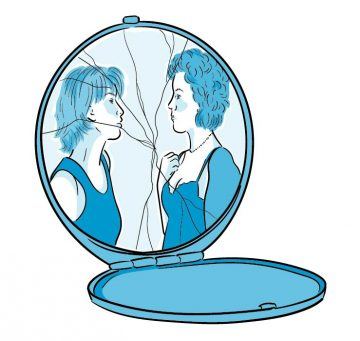 T
T
 The second-worst thing about cancer chairs is that they are attached to televisions. Someone somewhere is always at war with silence. It’s impossible to read, so I answer email, or watch some cop drama on my computer, or, if it seems unavoidable, explore the lives of my nurses. A trip to Cozumel with old girlfriends, a costume party with political overtones, an advanced degree on the internet: they’re all the same, these lives, which is to say that the nurses tell me nothing, perhaps because amid the din and pain it’s impossible to say anything of substance, or perhaps because they know that nothing is precisely what we both expect. It’s the very currency of the place. Perhaps they are being excruciatingly candid.
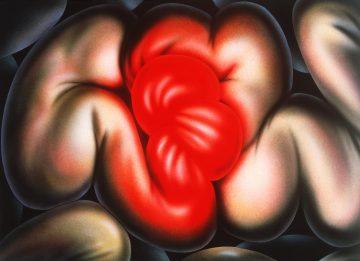 In 2005, Barry Marshall, an Australian gastroenterologist and researcher, shared the Nobel Prize in Medicine for the discovery that peptic ulcers are caused not by stress, as was commonly thought, but by a bacterium called
 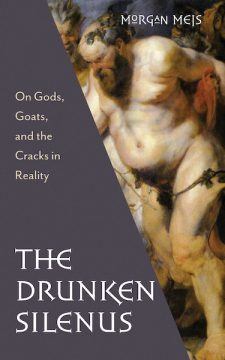 In his new book, The Drunken Silenus,
 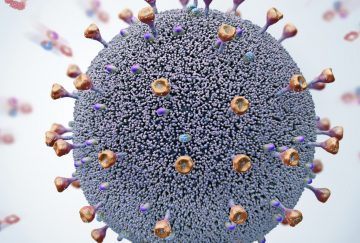 A pair of studies published this week is shedding light on the duration of immunity following COVID-19, showing patients lose their IgG antibodies—the virus-specific, slower-forming antibodies associated with long-term immunity—within weeks or months after recovery. With COVID-19, most people who become infected do
  On Saturday, the
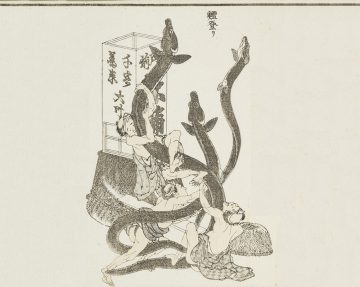 In one of the twentieth century’s most memorable scenes from literature, a man is standing on a beach, pulling on a long rope that stretches out to sea. The rope is covered in thick seaweed. He yanks and tugs, and out of the foaming waves comes a horse’s head. It’s black and shiny and lies there at the water’s edge, its dead eyes staring while greenish eels slither from every orifice. The eels crawl out, shiny and entrails-like, more than two dozen of them; when the man has shoved them all into a potato sack, he pries open the horse’s grinning mouth, sticks his hands into its throat, and pulls out two more eels, as thick as his own arms.
 Until I read Howard Means’s Splash! and Bonnie Tsui’s Why We Swim, my main encounter with the history of the sport had been a Victorian-inspired swimming gala organised by members of my local team at north London’s Parliament Hill Lido. We competed in novelty races that predated the streamlining of swimming into a competitive sport, swimming upright holding umbrellas in one race, wearing blindfolds in another. We jumped into the pool in vintage dresses to see what it was like to swim hampered by heavy fabrics.
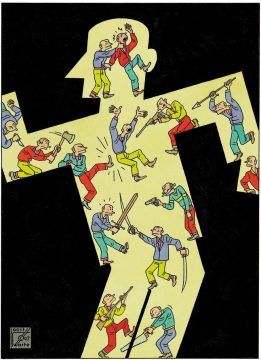 Nothing—not even the Plague—has posed a more persistent threat to humanity than viral diseases: yellow fever, measles, and smallpox have been causing epidemics for thousands of years. At the end of the First World War, fifty million people died of the Spanish flu; smallpox may have killed half a billion during the twentieth century alone. Those viruses were highly infectious, yet their impact was limited by their ferocity: a virus may destroy an entire culture, but if we die it dies, too. As a result, not even smallpox possessed the evolutionary power to influence humans as a species—to alter our genetic structure. That would require an organism to insinuate itself into the critical cells we need in order to reproduce: our germ cells. Only retroviruses, which reverse the usual flow of genetic code from DNA to RNA, are capable of that. A retrovirus stores its genetic information in a single-stranded molecule of RNA, instead of the more common double-stranded DNA. When it infects a cell, the virus deploys a special enzyme, called reverse transcriptase, that enables it to copy itself and then paste its own genes into the new cell’s DNA. It then becomes part of that cell forever; when the cell divides, the virus goes with it. Scientists have long suspected that if a retrovirus happens to infect a human sperm cell or egg, which is rare, and if that embryo survives—which is rarer still—the retrovirus could take its place in the blueprint of our species, passed from mother to child, and from one generation to the next, much like a gene for eye color or asthma.
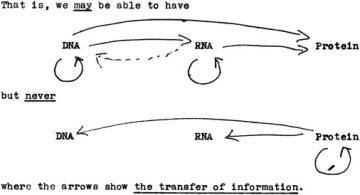 On May 13, 1961, two articles appeared in Nature, authored by a total of nine people, including Sydney Brenner, François Jacob and Jim Watson, announcing the isolation of messenger RNA (mRNA)
  In Theory of the Gimmick (Harvard University Press, 2020), Ngai tracks the gimmick through a number of guises: stage props, wigs, stainless-steel banana slicers, temp agencies, fraudulent photographs, subprime loans, technological doodads, the novel of ideas. Across its many forms, the gimmick arouses our suspicion. When we say something is a gimmick, we mean it is overrated and deceptive, that you would have to be a sucker to fall for it. Yet gimmicks exert a strange hold on us. As with a magic show, we can enjoy the gimmick even while we know we are being tricked.