
Andy Martin in The Independent:
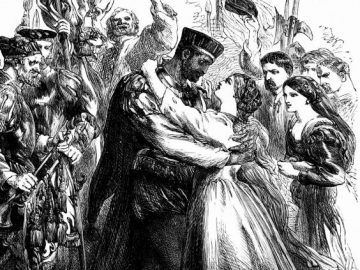
We weren’t always racists. We were always mean, murderous bastards, of course. Rape, slaughter, and slavery were once fairly normal and frequent. The plot of Taken has been rehearsed over and over again throughout history. Rousseau’s “noble savage” was a loner, self-sufficient, a hunter roaming about the woods having little contact with anyone else. But the point about the noble savage is that she did not exist. It’s a recent invention, a retrospective myth. The truly solo human just doesn’t survive for very long. We’ve always been tribal. We had to be if we wanted to stay alive. And the main problem for tribes was other tribes. Hell is other peoples, plural.
The Ramayana, the ancient Sanskrit epic, tells of a beautiful young woman being abducted. The hero of the story, Rama, has to go kill a lot of bad guys to get her back again. Homer’s Iliad, composed around the same era, tells of Helen being taken by Paris to Troy and the Greeks launching a war against the Trojans to get her back again. The greatest fighter according to Homer is Achilles (played by Brad Pitt in the movie).
But it should be noted that Achilles refuses to fight for most of the epic poem on account of Agamemnon (who is on his side) taking possession of his woman Briseis, whom Achilles has already acquired elsewhere in a previous successful raid.
More here.
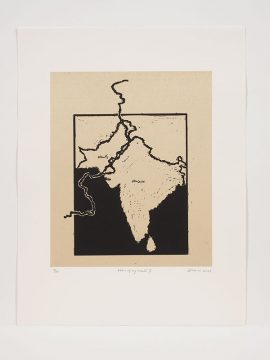 In a short video documentary produced by the Tate Modern in London, the artist talks about her exhibition, “Letters from Home,” which opened on 28 March 2013. Through personal letters, the exhibition illustrates an immigrant’s disconnection from his or her homeland. In the
 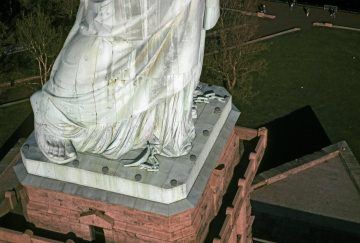 The real saga of the Statue of Liberty—the symbolic face of America around the world, and the backdrop of New York’s dazzling Fourth of July fireworks show—is an obscure piece of U.S. history. It had nothing to do with immigration. The telltale clue is the chain under Lady Liberty’s feet: she is stomping on it. “In the early sketches, she was also holding chains in her hand,”
 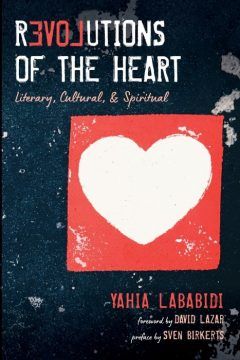 The first thing that strikes the reader about Yahia Lababidi’s
  Robert Brenner in New Left Review:
 An interview with Wendy Brown in The Drift:
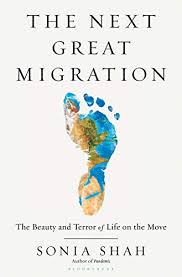 Perhaps the most groundbreaking discoveries of recent years have been in genetic history. It has already been several decades since the study of DNA revealed how little substance there was to claims of racial difference. Study of genetic material found in ancient bones also suggests that, rather than a single migration out of Africa, humans populated the globe in waves that intermingled, coming back as well as going forwards. “We weren’t migrants once in the distant past and then again in the most recent era,” Shah writes. “We’ve been migrants all along.”
 Angela said she had read Cusk’s newest book on the plane over. It slowly dawned on her that the essays in that collection contemplate a variety of ostracisms: from being given the silent treatment by one’s own parents to the exclusion of women writers from the literary canon. Aftermath, Medea, the Outline trilogy – they’re all about being cast out into the wilderness. In an essay called ‘Coventry’ Cusk characterises such exile as ‘ejection from the story’. The only thing to do once you’re ‘living amidst the waste and shattered buildings, the desecrated past’ is to search ‘for whatever truth might be found amid the smoking ruins’.
 As a philosopher turned GP myself,
 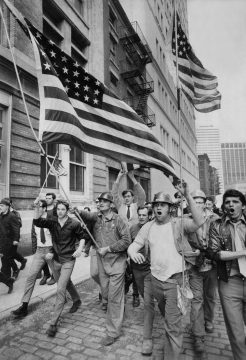 Kuhn, who has written before about white working-class Americans, builds his book on long-ago police records and witness statements to recreate in painful detail a May day of rage, menace and blood. Antiwar demonstrators had massed at Federal Hall and other Lower Manhattan locations, only to be set upon brutally, and cravenly, by hundreds of steamfitters, ironworkers, plumbers and other laborers from nearby construction sites like the nascent World Trade Center. Many of those men had served in past wars and viscerally despised the protesters as a bunch of pampered, longhaired, draft-dodging, flag-desecrating snotnoses.
 Megha Majumdar’s polyphonic debut novel,