Katie Mack in aeon:
 Space, as they say, is big. In The Hitchhiker’s Guide to the Galaxy (1979), Douglas Adams elaborates: ‘You may think it’s a long way down the road to the chemist, but that’s just peanuts to space.’ It’s hard to convey in everyday terms the enormity of the cosmos when most of us have trouble even visualising the size of the Earth, much less the galaxy, or the vast expanses of intergalactic space. We often talk in terms of light-years – the distance light can travel in a year – as though the speed of light is somehow more intuitive than a number written in the trillions of kilometres. We give benchmarks in the same terms (it takes light 1.3 seconds to travel between the Earth and the Moon) but, in our everyday experience, light is instantaneous. We might as well talk about the height of a building in terms of stacking up atoms.
Maybe, if we’re feeling more adventurous, we use analogies based on personal experience. The distance to the Moon is 32 million school buses! If you could drive there in one of those school buses, going at 60 miles per hour, it would take you 166 days! I’m not sure that helps.
I wish I could say that astronomers have a better intuitive grasp of all this. We don’t. Brains don’t really work that way. So we cheat with numbers. We use longer yardsticks to talk about bigger spaces: kilometres, light-years, parsecs, kiloparsecs, megaparsecs, gigaparsecs. We get comfortable with exponents (1,000 is 103; 1 trillion is 1012) and think in logarithmic intervals, where each successive step is a new power of 10. At some point, distance stops being a straightforward concept entirely. Here in the Solar System, space and time are both more or less well-behaved, but when you have to deal with the cosmos as a whole, you have to factor in the fact that it refuses to sit still for its fitting.
Space is expanding. It has been since the Big Bang, and it’s not stopping any time soon. If you look at a galaxy far, far away, not only do you have to factor in that the image you’re looking at is old, you have to account for the fact that it’s no longer where it was when you saw it. Let’s say you see a supernova go off, in a galaxy a billion light-years away. Did the supernova just go off, or did it go off a billion years ago? You can say the latter, because the light has been travelling to us for a billion years, but since there was no way to observe it back then, what does saying that it went off in the past even mean? And that billion-light-year-distant galaxy – how far away is it, really? Maybe a billion years ago it was a billion light-years away, but the Universe has been expanding all that time, so now it must be much farther. Which distance do we use?
More here.

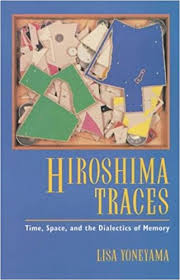 In her 1999 book Hiroshima Traces, the anthropologist Lisa Yoneyama describes the hibakusha’s intense relationship with the dead differently from Lifton’s ‘death in life’. Yoneyama sees the hibakusha as giving the bomb’s victims life after death. She writes that the hibakusha have developed ‘testimonial practices’ that can be compared to ‘a shamanistic ritual that summons dead souls’, to ‘resurrect the deceased and endow them with voices’.
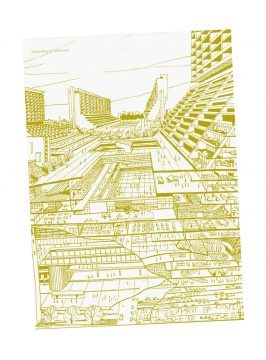 As in a fairy tale, the cities, to defend themselves from an invisible yet powerful enemy, have disappeared: they have gone into exile. They have declared themselves banned, outlawed, and now they lie before us like inside an archaeological museum or a diorama.
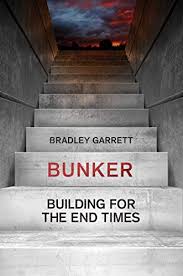 But the word ‘bunker’ also has the scent of modernity about it. As Bradley Garrett explains in his book, it was a corollary of the rise of air power, as a result of which the battlefield became three-dimensional. With the enemy above and equipped with high explosives, you had to dig down and protect yourself with metres of concrete. Garrett’s previous book, Explore Everything, was a fascinating insider’s look at illicit ‘urban exploration’, and he kicks off Bunker with an account of time spent poking around the Burlington Bunker, which would have been used by the UK government in the event of a nuclear war. The Cold War may have ended, but governments still build bunkers, as Garrett shows: Chinese contractors have recently completed a 23,000-square-metre complex in Djibouti. But these grand, often secret manifestations of official fear are not the main focus of the book. Instead, Garrett is interested in private bunkers and the people who build them, people like Robert Vicino, founder of the Vivos Group, who purchased the Burlington Bunker with the intent of making a worldwide chain of apocalypse retreats.
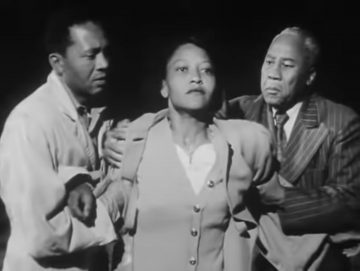 “The Well” is distinctive in the sheer fact of its characterizations and dramatizations—it depicts, alongside its white characters, a wide variety of Black characters in a wide range of settings (work, school, home, government offices, street life), speaking substantially (if briefly) about the trouble at hand and their views of it. From the start, the movie dispels all ambiguity: Carolyn, who loved flowers, walks through an empty field on the way to school and falls into a long-abandoned well. Her teacher, a white woman, reports her absence to Carolyn’s mother, Martha (Maidie Norman), who informs the town’s sheriff, Ben Kellog (Richard Rober), a white man. Despite the frank assertion of Carolyn’s uncle, Gaines (Alfred Grant), that the police won’t be looking very hard for a Black child, Ben sharply declares and clearly displays his authentic concern, energetically and devotedly sending more or less the entire police force—all white men—to scour the town for Carolyn.
 Each of us has been affected by the changes wrought by COVID-19 in different ways. For some, the period of isolation has afforded time for contemplation. How do the ways in which our societies are currently structured enable crises such as this? How might we organise them otherwise? How might we use this opportunity to address other pressing global challenges, such climate change or racism?
 “What is it,” the Austro-Hungarian novelist Joseph Roth asked rhetorically in 1927, in a preface to his book The Wandering Jews, “that allows European states to go spreading civilisation and ethics in foreign parts but not at home?” Forty years later, as American cities burned while American bombs rained down on Vietnam, James Baldwin made a similar point, though reversing Roth’s formulation. “A racist society,” he wrote, “can’t but fight a racist war – this is the bitter truth. The assumptions acted on at home are also acted on abroad.”
  To end the pandemic, the virus must either be eliminated worldwide — which most scientists agree is near-impossible because of how widespread it has become — or people must build up sufficient immunity through infections or a vaccine. It is estimated that 55–80% of a population must be immune for this to happen, depending on the country
 In the mid-2010s, a curious new vocabulary began to unspool itself in our media. A data site,
  Most animals that change color to match their surroundings can see what these surroundings look like. But the peppered moth caterpillar can do this with its eyes closed, according to a new study, and scientists have figured out how.
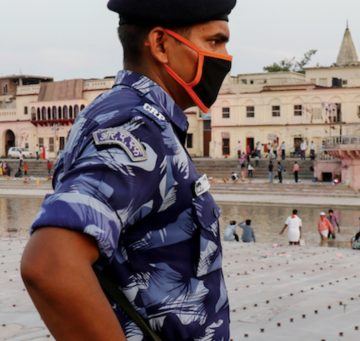 Kashmir’s new Domicile Law is a cognate of India’s new blatantly anti-Muslim Citizenship Amendment Act (CAA) passed in December 2019 and the National Register of Citizens (NRC) that is supposed to detect ‘Bangladeshi infiltrators’ (Muslim of course) who the home minister has called ‘termites’. In the state of Assam, the NRC has already wreaked havoc. Millions have been struck off the citizens register. While many countries are dealing with a refugee crisis, the Indian government is turning citizens into refugees, fuelling a crisis of statelessness on an unimaginable scale.
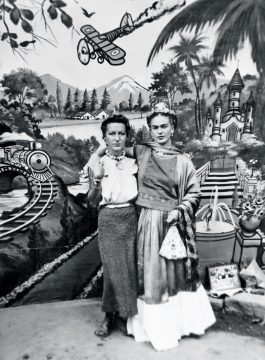 We also fall in love again with the irreverent, brilliant Kahlo, who is both charming and insolent in every anecdote. She feels Breton’s accommodations and manners are beneath her and ends up sexually entangled with his wife, Jacqueline Lamba (Breton gets to watch). And there is much delight to be had in Kahlo’s repeatedly expressing her disdain for French culture, especially its artistic circles. “I [would] rather sit on the floor in the market of Toluca and sell tortillas, than to have anything to do with those ‘artistic’ bitches of Paris.” (Bitches seems to be her favorite word for Parisians!) Indeed, the French seem to misunderstand her; the poet Robert Desnos says to Petitjean’s father at one point, “Your friend’s pretty, she could have stepped right out of a display at your Museum of Ethnography.” But we are assured Petitjean is “more attracted to her personality and her culture than her exotic ‘ethnic’ appearance.” In normal circumstances, this would seem shaky, but given the character of Michel, we buy it. Both Petitjeans gain our trust so fully that we don’t question their Occidentalist magnanimity at certain awkward points; while France and the French are belittled by our French author, Kahlo’s Mexico is championed as a center for the arts.
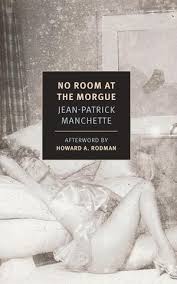 No Room at the Morgue and its sequel, Que d’os!, are the only two of Manchette’s novels to feature a private eye as protagonist. Though in Manchette there’s never a shortage of killers for hire, killers for the hell of it, casual psychotics, mercenaries, and the corruption of each and every institution, there are relatively few police in his policiers, and very little mystery about the who in whodunit. The Tarpon novels are in some sense a throwback to a time when the genre was more tightly defined, its tropes less problematic. We’ve got a down-at-heels PI here, and bad guys, and a femme-more-or-less-fatale, and a couple of cops either of whom could be played by Lino Ventura. But Manchette certainly isn’t slumming, or doing a genre turn to please his fans. As Manchette asks, “What do you do when you re-do [the classic American crime novels] at a distance—distant because the moment of that something is long gone? The American-style polar had its day. Writing in 1970 meant taking a new social reality into account, but it also meant acknowledging that the polar-form was finished because its time was finished: re-employing an obsolete form implies employing it referentially, honoring it by criticizing it, exaggerating it, distorting it from top to bottom.” Or as he put it more bluntly (and more flamboyantly): “The overtures of the ‘neo-detective novel’ have been progressively conquered by literary hacks (of Art) or by Gorbachev-loving Stalino Trotskyist racketeers.”