Oreskes and Conway in Scientific American:
 It is a truism among scientists that our enterprise benefits humanity because of the technological breakthroughs that follow in discovery’s wake. And it is a truism among historians that the relation between science and technology is far more complex and much less linear than people often assume. Before the 19th century, invention and innovation emerged primarily from craft traditions among people who were not scientists and who were typically unaware of pertinent scientific developments. The magnetic compass, gunpowder, the printing press, the chronometer, the cotton gin, the steam engine and the water wheel are among the many examples. In the late 1800s matters changed: craft traditions were reconstructed as “technology” that bore an important relation to science, and scientists began to take a deeper interest in applying theories to practical problems. A good example of the latter is the steam boiler explosion commission, appointed by Congress to investigate such accidents and discussed in Scientific American’s issue of March 23, 1878.
Still, technologists frequently worked more in parallel with contemporary science than in sequence. Technologists—soon to be known as engineers—were a different community of people with different goals, values, expectations and methodologies. Their accomplishments could not be understood simply as applied science. Even in the early 20th century the often loose link between scientific knowledge and technological advance was surprising; for example, aviation took off before scientists had a working theory of lift. Scientists said that flight by machines “heavier than air” was impossible, but nonetheless airplanes flew.
When we look back on the past 175 years, the manipulation of matter and energy stands out as a central domain of both scientific and technical advances. Techno-scientific innovations have sometimes delivered on their promises and sometimes not. Of the biggest advances, three really did change our lives—probably for the better—whereas two were far less consequential than people thought they would be. And one of the overarching impacts we now recognize in hindsight was only weakly anticipated: that by moving matter and energy, we would end up moving information and ideas.
More here.
 It is the nature of progress that what is now cutting-edge will, with the passing of time, become traditional. And it is the nature of human beings to remake and refine what has worked in the past, and call it new.
 Not too long ago nobody carried a mobile phone; now almost everybody does. That’s the kind of rate of rapid progress we’re seeing with our ability to directly edit genomes. With the use of
  Jack Gallant never set out to create a mind-reading machine. His focus was more prosaic. A computational neuroscientist at the University of California, Berkeley, Dr. Gallant worked for years to improve our understanding of how brains encode information — what regions become active, for example, when a person sees a plane or an apple or a dog — and how that activity represents the object being viewed.
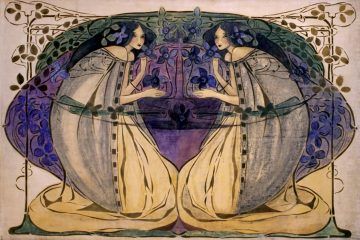 Most people have heard of Art Nouveau, but few remember two of the most influential figures in its conception. (No, not Gustav Klimt.) They were a pair of sisters named Margaret and Frances MacDonald, who, along with their Glasgow School of Art classmates Charles Rennie Mackintosh and Herbert MacNair, comprised the Glasgow Four. Art Nouveau wouldn’t be what it is without them.
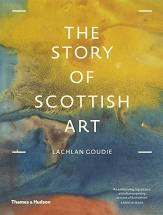 The painter and broadcaster Lachlan Goudie could not introduce The Story of Scottish Art in a more personal fashion. His preface begins, ‘My father, Alexander Goudie, was a painter; I grew up surrounded by Scottish art, I’ve been depicted in it and I’ve spent my adult life trying to add in some small way to its legacy. I am not, however, an academic, and this is not a textbook.’ Whether those words are meant to offer relief or be a warning is unclear, but I think the implication is that academics are pedantic and textbooks dry. Fairly often, alas, academics do not seem to be aware that they might treat language as a collaborator, even a medium, and textbooks, unless written exclusively in symbols and figures, in which case I must trust that they are beautiful, are unintelligible.
 In their long-running effort to defeat cancer, medical researchers have made a startling discovery: A lot of the time, they have no idea how their anti-cancer drugs work. And, strange as it may sound, that is actually great news for future therapies. “We’re not saying these drugs aren’t good,” explains Ann Lin, a geneticist at Stanford University. They really do kill cancerous cells, often quite well; they just don’t do the job the way that their developers believed, she finds. Her work highlights how much of anticancer drug discovery is still based on trial-and-error searches. It’s as if your auto mechanic learned to fix your car by kicking the fenders and smacking the hood until it started. That technique might get the job done, but there would be no way to improve it or to figure out what went wrong if it failed the next time. Similarly, oncologists have often been forced to rely on drugs without a clear understanding of their mechanism of action, Lin notes; in essence, they were kicking and smacking the tumors at a molecular level.
 Columns of smoke “spread their veils / Like funeral crape upon the sylvan robe / Of thy romantic rocks, pollute thy gales, / And stain thy glassy floods”. Poet Anna Seward wrote these lines in 1785, after seeing the forges, furnaces and lime kilns of Coalbrookdale in England — the cradle of the Industrial Revolution. It is among the first descriptions of industrial emissions as ‘pollution’, a term that invoked moral impurity, the corruption of the countryside. More than two centuries later, humanity’s polluting activities have devastating impacts on biodiversity, agricultural productivity and human health. Will it take a radical reimagining of our lifestyles and sociopolitical systems to end these disastrous mistakes? Or is it already too late to avoid even greater catastrophe?
 3:16: What made you become a philosopher?
 Quick: Rate how much you agree with each of these items on a scale of 1 (“not me at all”) to 5 (“this is so me”):
 The U.S. presidential election has so far involved and will undoubtedly continue to involve a clash over voting strategy for the left. A significant array of left commentators, for example, Cornel West, AOC, Angela Davis, and Noam Chomsky have been and will likely continue urging all progressives to vote for Biden at least in swing states, even if they can’t stand his personal history and his stated and implied policies. Another array of left commentators, for example Chris Hedges, Glenn Greenwald, Krystal Ball, and Howie Hawkins, has been and will likely continue asserting that instead all progressives should vote their true preferences, for example for the Green candidate, or not vote, but in any event not vote for someone they despise, like Joe Biden.
 For decades, the Federal Bureau of Investigation has routinely warned its agents that the white supremacist and far-right militant groups it investigates often have links to law enforcement. Yet the justice department has no national strategy designed to protect the communities policed by these dangerously compromised law enforcers. As our nation grapples with how to reimagine public safety in the wake of the protests following the police killing of George Floyd, it is time to confront and resolve the persistent problem of explicit racism in law enforcement.
 On 13 December 1807, in fashionable Weimar, Johanna Schopenhauer picked up her pen and wrote to her 19-year-old son Arthur: ‘It is necessary for my happiness to know that you are happy, but not to be a witness to it.’ Two years earlier, in Hamburg, Johanna’s husband Heinrich Floris had been discovered dead in the canal behind their family compound. It is possible that he slipped and fell, but Arthur suspected that his father jumped out of the warehouse loft into the icy waters below. Johanna did not disagree. Four months after the suicide, she had sold the house, soon to leave for Weimar where a successful career as a writer and saloniste awaited her. Arthur stayed behind with the intention of completing the merchant apprenticeship his father had arranged shortly before his death. It wasn’t long, however, before Arthur wanted out too. In an exchange of letters throughout 1807, mother and son entered tense negotiations over the terms of Arthur’s release. Johanna would be supportive of Arthur’s decision to leave Hamburg in search of an intellectually fulfilling life – how could she not? – including using her connections to help pave the way for his university education. But on one condition: he must leave her alone. Certainly, he must not move to be near her in Weimar, and under no circumstances would she let him stay with her.