
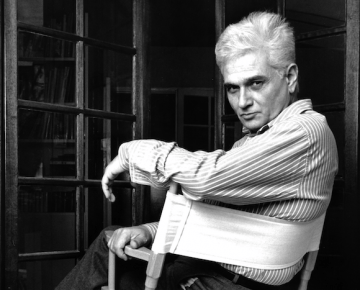
 Julian Baggini makes the case in Prospect:
In May 1992, academics at the University of Cambridge reacted with outrage to a proposed honorary degree from their venerable institution to Jacques Derrida. A letter to the Times from 14 international philosophers followed, protesting that “M Derrida’s work does not meet accepted standards of clarity and rigour.”
Depending on your viewpoint, the incident marked the zenith or nadir of Anglo-American analytic philosophy’s resistance to what it saw as the obfuscation and sophistry of its continental European cousin. To them Derrida was a peddler of “tricks and gimmicks,” a cheap entertainer whose stock in trade was “elaborate jokes and puns.”
The irony is that the protests showed a shocking lack of rigour themselves. As Peter Salmon points out in his brilliant biography An Event, Perhaps, Derrida had never used the puerile pun “logical phallusies” that the letter writers attributed to him. This was remarkably sloppy since “it is not as though neologisms ripe for their sort of mockery are hard to find.” Salmon concludes that “none of them had taken the time to read any of Derrida’s work.”
It would have been understandable if some had tried but quickly given up. One of Derrida’s examiners at his prestigious high school, the Lycée Louis-le-Grand, wrote of his work: “The answers are brilliant in the very same way that they are obscure.” His work as an undergraduate was no easier to decipher. Louis Althusser said that he could not grade his dissertation because “it’s too difficult, too obscure.” Michel Foucault could do little better, remarking: “Well, it’s either an F or an A+.”
The Derrida portrayed by Salmon would have shared these doubts. His “nagging fear that those who saw him as a charlatan were right never left him.”
More here.
 Neil Fligstein and Steven Vogel in Boston Review:
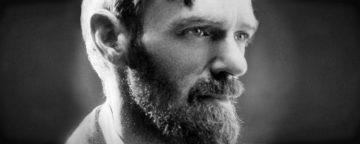 America meant all sorts of things to Lawrence, many of them adumbrated in his Studies in Classic American Literature (1923). In The Bad Side of Books, there’s an essay called “Pan in America” (1924), which starts from the cry that echoed around the Mediterranean as paganism faded: “The Great God Pan is dead!” What that meant, according to Lawrence, was that the possibility of life lived in spontaneous unison with nature dwindled as commerce, technology, and metaphysical religion advanced. Pan seemed still alive to Lawrence in the Indians of the Southwest, and he conjured a graphic account of the animist mind and imagination. But even there, Pan was “dying fast”; every Indian, Lawrence thought, “will kill Pan with his own hands for the sake of a motor car.” Who, given the choice the essay poses—“to live among the living, or to run on wheels”—would choose what Lawrence called “life”? Pretty much no one, he thought, though he returned to this opposition again and again.
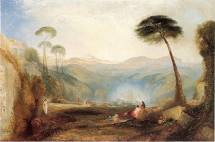 Somewhere within the storerooms of London’s staid, gray-faced Tate Gallery (for it’s currently no longer on exhibit) is an 1834 painting by J.M.W. Turner entitled “The Golden Bough.” Rendered in that painter’s characteristic sfumato of smeared light and smoky color, Turner’s composition depicts a scene from Virgil’s epic
  The election is 25 days away, and President Donald Trump’s political prognosis is not good. He’s
 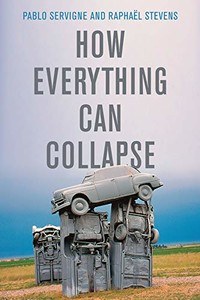 “UTOPIA HAS SUDDENLY changed camp,” write Pablo Servigne and Raphaël Stevens in How Everything Can Collapse: A Manual for Our Times, just out in an English translation by Andrew Brown. “Today, the utopian is whoever believes that everything can just keep going as before.” In 2015, when the book was first published in France, such a statement might have sounded alarmist. In 2020, Collapse feels positively prophetic. Things have not kept going as before, and it seems increasingly doubtful that they ever will again.
 Imagine a human society not so very different from our own, on which a cataclysm is about to fall. Thousands, perhaps millions, of people will die. Many others will lead shorter and less happy lives; the financial and human costs will be felt for decades, if not forever. Looking in from the outside, and thinking in terms of big ideas such as equality, justice, fairness, human rights and the rule of law, what kind of society would you want to emerge from this catastrophe? What core principles should lie at its heart?
 In 1976, twenty-five-year-old Wendy Ewald rented a small house on Ingram Creek in a remote landscape in eastern Kentucky, hoping to make a photographic document of “the soul and rhythm of the place.” As she writes in an essay included in the expanded new edition of Portraits and Dreams: Photographs and Stories By Children of The Appalachians, originally published in 1985, her camera landed on the “commonplaces” of Letcher County. Set in the Cumberland Mountains at the edge of Kentucky and Virginia, Lechter Country is in the rural, rolling, rugged, coal-mining heart of the still sprawling and still vastly misunderstood and frequently mispronounced region known as Appalachia (the correct pronunciation is Appa-LATCH-uh). More than a decade before Ewald’s arrival, the publication of Night Comes to the Cumberlands: A Biography of a Depressed Area, by local lawyer and environmental crusader Harry Caudill, had helped spur John F. Kennedy and later Lyndon B. Johnson to declare war on poverty in Letcher County and regions like it. But Ewald did not intend to photograph “poverty,” or to photograph the place in the reductive way it had come to be depicted. She was interested in the way the people pictured themselves.
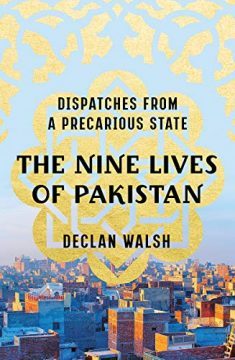 Declan Walsh begins his captivating new book on Pakistan with an account of how he came to leave the country for the first time, abruptly and involuntarily in May 2013. “The angels came to spirit me away,” is the way he puts it, using the Urdu slang for the all-powerful men of the
 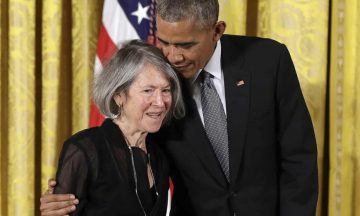 In Stanford in 2008, the Irish poet Eavan Boland told me how much she admired the work of
  Since Nature’s earliest issues, we have been publishing news, commentary and primary research on science and politics. But why does a journal of science need to cover politics? It’s an important question that readers often ask.
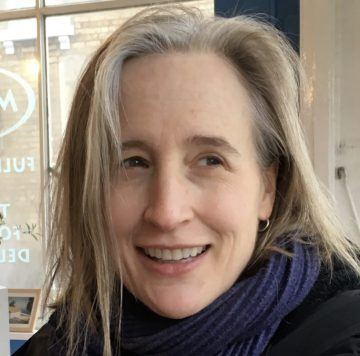 AC: I need to rephrase this question slightly in order to answer it. “Moral realism” is a label that I deliberately don’t use in describing my image of ethics. Not that, abstractly considered, the term is obviously ill-suited to capture things I believe. It is, for instance, a conviction of mine that that there are morally salient aspects of the world that as such lend themselves to empirical discovery. A case could easily be made for speaking of moral realism in this connection. But that would likely generate confusion. When I claim that, say, humans and animals have moral qualities that are as such observable, I work with an understanding of what the world is like, and of what is involved in knowing it, that is foreign to familiar discussions of moral realism. These discussions are often structured by the assumption that objectivity excludes anything that is only adequately conceivable in terms of reference to human subjectivity. Moral realism is frequently envisioned as an improbable position on which moral values are objective in this subjectivity-extruding sense while still somehow having a direct bearing on action and choice. Thus does the specter of Mackie’s “argument from queerness” still haunt the halls of moral philosophy.