
Daphne Merkin at Bookforum:
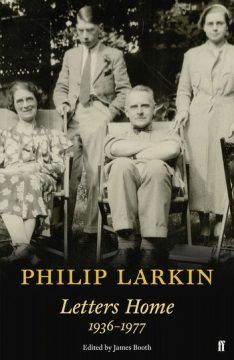 Did Larkin’s parents fuck him up? According to his sister Catherine (“Kitty”), ten years his senior, both parents “worshipped” Philip. All the same, they have undoubtedly been demonized—sometimes by the poet himself. There were the sour references he made to his childhood in his poetry (“a forgotten boredom”), and then there was his adamantine bachelor’s decision not to marry, seemingly because he did not want to replicate what appears to have been an unhappy parental union. More damning facts have emerged since Larkin died in 1985 at the age of sixty-three, a much-admired and influential figure who had turned down the position of poet laureate a year earlier. These include his father Sydney’s blithe admiration for Nazi Germany, as evidenced by his observing on the first page of his twenty-volume diary (!!) that “those who had visited Germany were much impressed by the good government and order of the country as by the cleanliness and good behavior of the people,” as well as his unrepentant anti-Semitism. As for his mother Eva, Andrew Motion’s 1993 biography of Larkin describes her as “indispensable but infuriating,” like some grating housemaid. Larkin himself characterizes her in a letter to Monica Jones, the longest-running of his several lovers, as “nervy, cowardly, obsessional, boring, grumbling, irritating, self pitying” before going on to amend his portrait: “on the other hand, she’s kind, timid, unselfish, loving.”
more here.
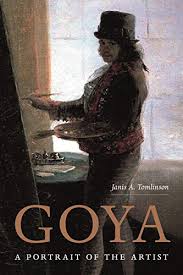 Francisco Goya y Lucientes was a mass of contradictions. He was a liberal, initially sympathetic to the French Revolution, who liked nothing better than to go hunting with successive absolutist monarchs of Spain. He was deputy director of the Royal Academy in Madrid, yet believed that traditional academic training was useless, insisting that ‘there are no rules in Painting’ and the ‘servile obligation of making all study or follow the same path is a great impediment for the Young’.
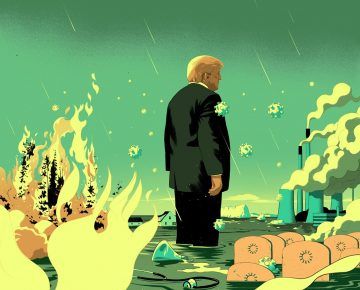 People packed in by the thousands, many dressed in red, white and blue and carrying signs reading “Four more years” and “Make America Great Again”. They came out during a global pandemic to make a statement, and that’s precisely why they assembled shoulder-to-shoulder without masks in a windowless warehouse, creating an ideal environment for the coronavirus to spread. US President Donald Trump’s rally in Henderson, Nevada, on 13 September contravened state health rules, which limit public gatherings to 50 people and require proper social distancing. Trump knew it, and later flaunted the fact that the state authorities failed to stop him. Since the beginning of the pandemic, the president has behaved the same way and refused to follow basic health guidelines at the White House, which is now at the centre of an ongoing outbreak. As of 5 October, the president was in a hospital and was receiving experimental treatments.
 “Any mans death diminishes me,”
  The 2020
 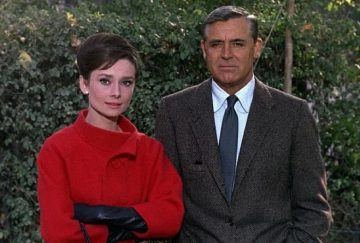 The older man coupled with the younger woman is Hollywood tradition, from a young Audrey Hepburn pursued by Cary Grant (Charade), Fred Astaire (Funny Face), or Humphrey Bogart (Sabrina) (all of the men looking overripe and easily bruised at the time of filming), to Catherine Zeta-Jones writhing in front of Sean Connery in Entrapment, or marrying her real life partner Michael Douglas, twenty-five years her elder. This age gap coupling is also a reality; around 30 percent of American heterosexual marriages consist of men at least four years older than their partners.
 Riding through the northern Chilean Andes, an incredibly rugged swath of desert that I’m sure in times gone by has tried men’s souls —- no one would ever suspect they were about to enter a prime ground-based window onto the Universe. It’s hardly the kind of landscape that evokes oohs and aahs for its beauty. But this dust-ridden land is home to some of the world’s greatest observatories. And by night, it offers an aperture onto the center of our own Milky Way and far-flung galaxies that literally stretch back to the beginning of time.
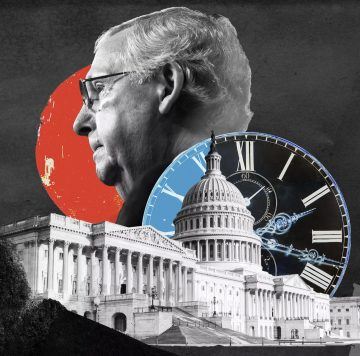 If Joe Biden wins the White House, and Democrats take back the Senate, there is one decision that will loom over every other. It is a question that dominated no debates and received only glancing discussion across the campaign, and yet it is the master choice that will either unlock their agenda or ensure they fail to deliver on their promises.
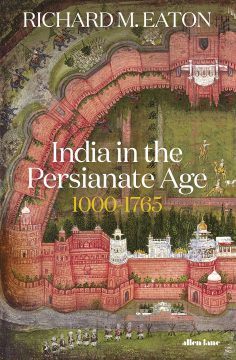 India’s golden age as the centre of the Indophilic Sanskrit cosmopolis lasted an entire millennium. From 1200 onwards, however, it was India’s fate to be drawn into a second transregional world. The first Islamic conquests of India happened in the 11th century, with the capture of Lahore in 1021. Persianised Turks, from what is now central Afghanistan, seized Delhi from its Hindu rulers in 1192. By 1323, they had established a sultanate as far south as Madurai, towards the tip of the peninsula, and other sultanates were founded all the way from Gujarat in the west to Bengal in the east.
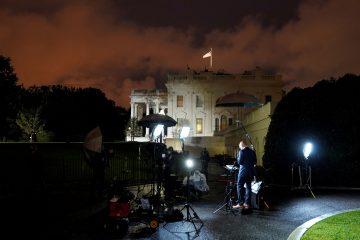 The world might be a different place if American Presidents had not been felled by disease or hidden debilitating conditions. In February, 1945, just two months before his death, President
 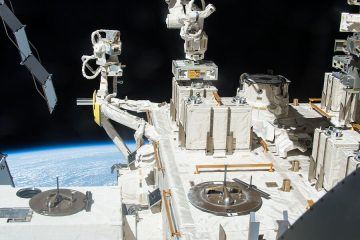 Most scientists say that Earth-life probably did originate on Earth. The standard thinking goes that somehow the conditions were ideal for just the right minerals to come together in a series of chemical reactions that yielded self-replicating molecules, that is, early life. But the particulars of that scenario have been tricky to pin down, leaving room for other possibilities. The concept of panspermia was kicked off, in part, by the humongous eruption of a volcano on the island of Krakatoa in 1883, says Dr. Melosh. The eruption completely sterilized the island, but just months later, life began to flourish anew. Naturalists explained that the miraculous regeneration came from seeds and insects floating on the winds or the tides from nearby islands, and that got some scientists thinking about the cosmos. Perhaps early Earth was like a barren island, too, they speculated, and the seeds of life or life itself drifted around space and alighted on our planet at just the right moment.
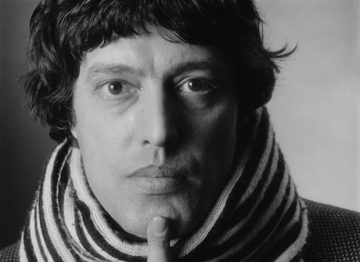 How our experience in the theatre during one of his plays relates to our lives outside is a question that has nagged at discussions of Stoppard’s standing as a writer. His kind of quantum dramatics messes with our minds and our understanding of time and we love it, but when we get home we still have to set the alarm for work the next day. Does this mean that his plays are little more than a diverting display of verbal fireworks, clever but of no significance, or are deeper themes about our experience of life being addressed? At the very least, his work reveals a constant endeavour to decipher the puzzles of existence. As Hannah, a character in one of his best-loved plays,
 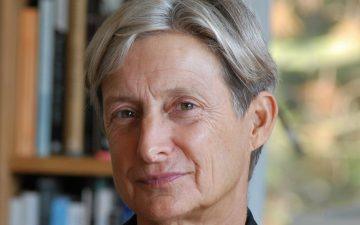 Thirty years ago, the philosopher Judith Butler*, now 64, published a book that revolutionised popular attitudes on gender.