
Karen Hao at MIT Technology Review:
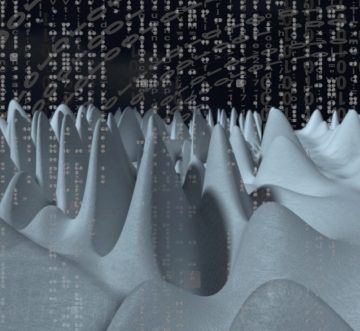 Unless you’re a physicist or an engineer, there really isn’t much reason for you to know about partial differential equations. I know. After years of poring over them in undergrad while studying mechanical engineering, I’ve never used them since in the real world.
But partial differential equations, or PDEs, are also kind of magical. They’re a category of math equations that are really good at describing change over space and time, and thus very handy for describing the physical phenomena in our universe. They can be used to model everything from planetary orbits to plate tectonics to the air turbulence that disturbs a flight, which in turn allows us to do practical things like predict seismic activity and design safe planes.
The catch is PDEs are notoriously hard to solve. And here, the meaning of “solve” is perhaps best illustrated by an example. Say you are trying to simulate air turbulence to test a new plane design. There is a known PDE called Navier-Stokes that is used to describe the motion of any fluid. “Solving” Navier-Stokes allows you to take a snapshot of the air’s motion (a.k.a. wind conditions) at any point in time and model how it will continue to move, or how it was moving before.
These calculations are highly complex and computationally intensive, which is why disciplines that use a lot of PDEs often rely on supercomputers to do the math. It’s also why the AI field has taken a special interest in these equations. If we could use deep learning to speed up the process of solving them, it could do a whole lot of good for scientific inquiry and engineering.
More here.
 Suppose you believe the state should look after the wellbeing of the poor and combat the structural forces that enrich the wealthy. Suppose you’re in a two-party electoral system, and that the party notionally aligned with your ideals made a Faustian pact with business elites to shore up the policies that perpetuate poverty – low minimum wages, tax incentives for rent-seekers, privatisation of public services, etc. What kind of ballot should you cast? You can’t vote for the party pushing things further to the Right. And if you don’t vote, or you vote for someone who’s almost certain not to win, you’re helping that same regressive party get elected. Yet lending your support to the ‘lesser of two evils’ candidate, whose platform you don’t really support, feels like an unacceptable compromise to your ideals.
 The camera costs $58,990, including a 70mm lens made by Phase One partner Rodenstock. If you want the 23mm, 32mm or 50mm lenses, expect to pony up another $11,990 each. A
  Sean Connery
 The American expat has enjoyed a storied position in culture and literature. In France, the role has been romanticized from Gene Kelly tap dancing his way through “An American in Paris” to Ernest Hemingway’s Paris-set “A Moveable Feast,” where he wrote, “There are only two places in the world where we can live happy: at home and in Paris.” Numbering around 250,000, Americans in France tend to lean Democratic and enjoy elite status, says Oleg Kobtzeff, an associate professor of international and comparative politics at the American University of Paris. “So Americans in France are themselves examples of soft power.” It’s not that they’ve been universally loved. Former President George W. Bush’s war on terror, including the Iraq War of 2003 that many allies condemned, made him as unpopular in France as President Trump is today.
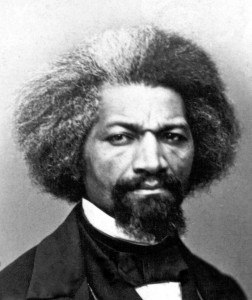 Ben Railton in US Intellectual History Blog:
 Samuel Clowes Huneke in Boston Review:
 Catherine Wilson in Aeon:
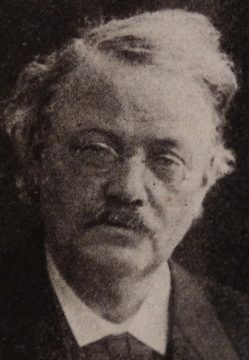 Robert Hockett in Forbes:
 For anyone with a platform,
  The cable news talking heads seem obsessed with Joe Biden’s “significant” lead over Donald Trump in the national polls – as if this lead signifies a certain coming Biden victory in the presidential election. Also feeding the narrative that Biden is likely to win are stories and film clips of millions of Americans standing in long lines to vote early in record numbers.
 B
B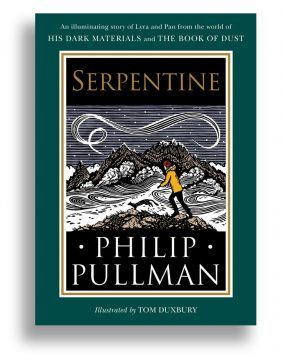 Since the last volume of “His Dark Materials” appeared in 2000, Pullman has written two more (superb) volumes of a second trilogy called “