
J. Kingston Pierce in Crime Reads:
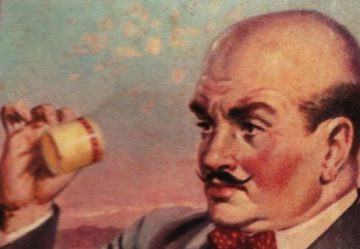 Agatha Christie was in her mid-20s when, in 1916, she took up what seemed the improbable endeavor of penning her first detective novel. It was so unlikely, in fact, that her elder sister, Madge, with whom she had always competed, dared Agatha to accomplish the feat, certain of her sibling’s eventual failure.
At the time, Christie was married to an officer in Britain’s Royal Flying Corps and working at a hospital in Torquay, England, first as a nurse and subsequently in the dispensary, preparing and providing medicines. It was in the latter job that she developed a fascination with poisons that would endure over the next six decades, supplying murderous means in many of her best-known books, including that very first one, The Mysterious Affair at Styles, which was published 100 years ago this month.
Styles was an early and influential contribution to what’s now called the Golden Age of detective fiction, a period that stretched arguably from the 1920s through the 1940s.
More here.
Laura Trethewey in The Guardian:
 On his first day as the new science director for the Monterey Bay Aquarium in California in 2016, a giant blue storage locker caught Kyle Van Houtan’s eye. The locker was obscured by a dead ficus plant and looked as if no one had opened it for years. But the label on it intrigued him: Herbarium.
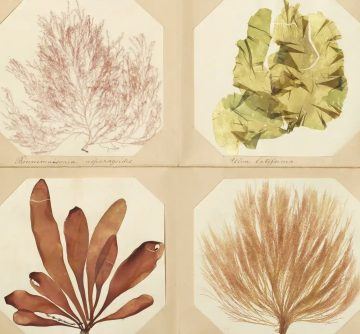
He opened it and inside found hundreds of stacked manila envelopes. Each one contained a single piece of seaweed, pressed and preserved on white paper.
The collection demonstrated a curator’s attention to detail, with neat labels in tidy handwriting that documented every seaweed’s origin and collector. And it gave Van Houtan and his colleague Emily Miller an idea.
More here.
The Editorial Board of the New York Times:
 Senator John Cornyn of Texas, locked in his own tight re-election race, recently told the local media that he, too, has disagreed with Mr. Trump on numerous issues, including deficit spending, trade policy and his raiding of the defense budget. Mr. Cornyn said he opted to keep his opposition private rather than get into a public tiff with Mr. Trump “because, as I’ve observed, those usually don’t end too well.”
Profiles in courage these are not.
Mr. Trump’s corrosive influence on his party would fill a book. It has, in fact, filled several, as well as a slew of articles, social media posts and op-eds, written by conservatives both heartbroken and incensed over what has become of their party.
But many of these disillusioned Republicans also acknowledge that their team has been descending into white grievance, revanchism and know-nothing populism for decades. Mr. Trump just greased the slide. “He is the logical conclusion of what the Republican Party has become in the last 50 or so years,” the longtime party strategist Stuart Stevens asserts in his new book, “It Was All a Lie.
More here.
Driving through a flat-out prairie
blizzard is a classic struggle between
terror and faith. Between Paynton and
the Battlefords the world disappears
horizon, buildings, trees, traffic,
the road itself, all gone. Snow,
blasted by a fierce south-easter,
obliterates equally land and sky.
On this two-way stretch of highway
we drive into the snow cloud.
As vehicles behind and in front
vanish from my sight, so too have I
from them, my hands iron vises
clinging to the steering wheel,
clinging to frail threads of reason,
clinging to little more than blind hope
as the white-out erodes confidence
and panic probes below
the thin skin of logic.
We hurtle through nothingness,
my silent prayer willing that whatever
lies on the other side of this void,
whatever other drivers are steering
the margins of their own misery,
their paths do not intersect mine.
We are, all of us, blind pilgrims
groping for some distant shrine
lost from our view, alive only
in the minds that will them.
Glen Sorestad
from Canadian Poetry Online
Sara Reardon in Nature:
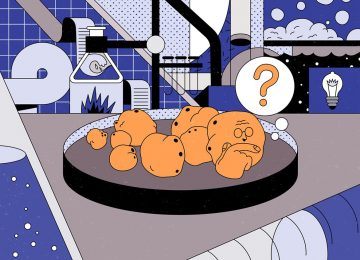 In Alysson Muotri’s laboratory, hundreds of miniature human brains, the size of sesame seeds, float in Petri dishes, sparking with electrical activity. These tiny structures, known as brain organoids, are grown from human stem cells and have become a familiar fixture in many labs that study the properties of the brain. Muotri, a neuroscientist at the University of California, San Diego (UCSD), has found some unusual ways to deploy his. He has connected organoids to walking robots, modified their genomes with Neanderthal genes, launched them into orbit aboard the International Space Station, and used them as models to develop more human-like artificial-intelligence systems. Like many scientists, Muotri has temporarily pivoted to studying COVID-19, using brain organoids to test how drugs perform against the SARS-CoV-2 coronavirus.
But one experiment has drawn more scrutiny than the others. In August 2019, Muotri’s group published a paper in Cell Stem Cell reporting the creation of human brain organoids that produced coordinated waves of activity, resembling those seen in premature babies1. The waves continued for months before the team shut the experiment down. This type of brain-wide, coordinated electrical activity is one of the properties of a conscious brain. The team’s finding led ethicists and scientists to raise a host of moral and philosophical questions about whether organoids should be allowed to reach this level of advanced development, whether ‘conscious’ organoids might be entitled to special treatment and rights not afforded to other clumps of cells and the possibility that consciousness could be created from scratch.
More here.
Waldemar Januszczak at Waldemar Januszczak:
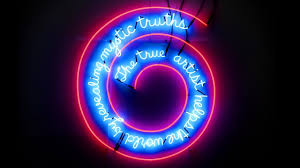 Back on planet Earth, in the show itself there is no limitless space-time, just a succession of powerful slabs of Nauman in which he swaps techniques, changes methods, explores materials, alternates moments of peace with bouts of heavy slapping, and never lets up in a madcap journey of artistic exploration usually set in darkness.
“My work comes out of being frustrated about the human condition,” he explained in 1988. “And about how people refuse to understand other people.” Fretful minimalism for the midnight hour?
What is immediately tangible is how influential he has been. It’s most obvious in the neon pieces that stud the show. Nauman started working with neon in 1965, using it to make a slippery word-art that keeps switching meanings. EAT, says a green neon sign, before changing to blue and saying DEATH.
more here.
From Phys.Org:
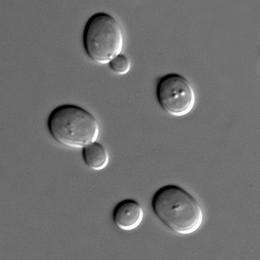 In the past two decades, researchers have shown that biological traits in both species and individual cells can be shaped by the environment and inherited even without gene mutations, an outcome that contradicts one of the classical interpretations of Darwinian theory. But exactly how these epigenetic, or non-genetic, traits are inherited has been unclear. Now, in a study published Oct. 27 in the journal Cell Reports, Yale scientists show how epigenetic mechanisms contribute in real time to the evolution of a gene network in yeast. Specifically, through multiple generations yeast cells were found to pass on changes in gene activity induced by researchers. The finding helps shed light on a longstanding question in evolutionary biology; scientists have long debated whether organisms can pass on traits acquired during a lifetime.
“Do genetic mutations have to be the sole facilitator of gene network evolution or can epigenetic mechanisms also lead to stable and heritable gene expression states maintained generation after generation?” asked Yale’s Murat Acar, associate professor of molecular, cellular & developmental biology, a faculty member at the Yale Systems Biology Institute, and senior author of the paper. During much of the last half of the 20th century, biology students were taught that mutations of genes that helped species adapt to the environment were passed on through generations, eventually leading to tremendous diversity of life. However, this theory had a problem: advantageous mutations are rare, and it would take many generations for physiological changes caused by the mutation to take root in a population of any given species.
More here.
Bernard G. Prusak at Commonweal:
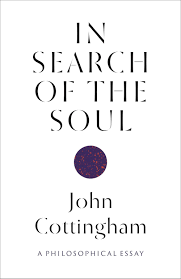 In Search of the Soul presupposes less sympathy for religion on the part of its readers than Why Believe? and How to Believe do. Nonetheless, at just about the middle of the text, Cottingham proposes that “something like a traditional theistic worldview offer[s] a more hospitable framework” for the problems under consideration than does the “materialist consensus” among many philosophers and growing numbers of “nones.” Cottingham’s work consistently exhibits great respect for the findings of the sciences. As he bluntly writes in How to Believe, “there is no future for a religious or any other outlook that tries to contradict or set aside the findings of science.” “We must start from the nature of the universe as we find it,” he states in Why Believe?—and part of what we have found from the “spectacular success” of modern science is that there is “no possibility of a return to an animistic or mythological framework for understanding the world.” There are, however, limits to scientific explanation: most fundamentally, science cannot explain why the laws of nature are what they are. In David Hume’s words, modern science does not inquire into nature’s “ultimate springs and principles.” In Search of the Soul focuses on two problems that resist scientific explanation. First, the fact that “the conscious lifeworld of the individual subject,” though realized in and through the material properties of the human body, isn’t captured by an account of those properties (the “problem of consciousness”). And second, “the fact that moral values and obligations exert an authoritative demand on us, whether we like it or not” (what philosophers call the problem of “strong normativity”). For Cottingham, theism is an interpretive framework—a favorite phrase of his—that can accommodate those problems.
more here.
Colin Grant at the NYRB:
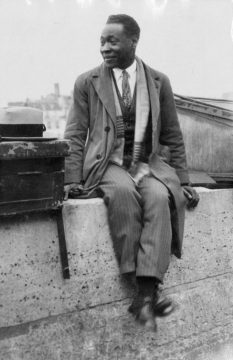
The peripatetic writer Claude McKay was born in Jamaica in 1889 but made in Harlem. As he wrote in his memoir, A Long Way from Home (1937), nothing came close to its “hot syncopated fascination.” His time there was heady and fortuitous. It was a period, recalled Langston Hughes, “when the Negro was in vogue,” and a number of competitors battled for the souls of black folk. They included wealthy, exotic-seeking white voyeurs and Afrophilic benefactors; the National Association for the Advancement of Colored People (NAACP), which aimed to marshal the arts into the service of civil rights; the Universal Negro Improvement Association, Marcus Garvey’s pan-Africanist back-to-Africa movement; and the Communists, who, in opposition to Garvey’s “race first” doctrine, argued that the working class, no matter their color, should put “class first.”
more here.
Dirk Philipsen in Aeon:
 A basic truth is once again trying to break through the agony of worldwide pandemic and the enduring inhumanity of racist oppression. Healthcare workers risking their lives for others, mutual aid networks empowering neighbourhoods, farmers delivering food to quarantined customers, mothers forming lines to protect youth from police violence: we’re in this life together. We – young and old, citizen and immigrant – do best when we collaborate. Indeed, our only way to survive is to have each other’s back while safeguarding the resilience and diversity of this planet we call home.
As an insight, it’s not new, or surprising. Anthropologists have long told us that, as a species neither particularly strong nor fast, humans survived because of our unique ability to create and cooperate. ‘All our thriving is mutual’ is how the Indigenous scholar Edgar Villanueva captured the age-old wisdom in his book Decolonizing Wealth (2018). What is new is the extent to which so many civic and corporate leaders – sometimes entire cultures – have lost sight of our most precious collective quality.
This loss is rooted, in large part, in the tragedy of the private – this notion that moved, in short order, from curious idea to ideology to global economic system. It claimed selfishness, greed and private property as the real seeds of progress.
More here.
Sean Carroll in Preposterous Universe:
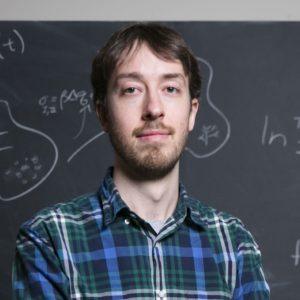 Erwin Schrödinger’s famous book What Is Life? highlighted the connections between physics, and thermodynamics in particular, and the nature of living beings. But the exact connections between living organisms and the flow of heat and entropy remains a topic of ongoing research. Jeremy England is a leader in this field, deriving connections between thermodynamic relations and the processes of life. He is also an ordained rabbi who finds resonances between modern science and passages in the Hebrew Bible. We talk about it all, from entropy fluctuation theorems to how scientists should approach religion.
More here.
Sam Lebovic in the Boston Review:
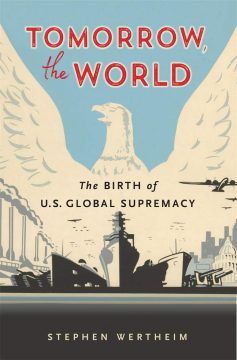 Most Americans never encounter the simple, brute fact of U.S. military supremacy. Bases are far away; wars in remote places are waged remotely; amid the general fragmentation of social life, those who serve in the military are lumped into particular demographic niches. But on the rare occasions when Americans do think about their military, they are remarkably supportive. The military routinely ranks as the most-trusted institution in polls; even after decades of cuts to all manner of other services, the ever-expanding defense budget remains sacrosanct. Amid general rancor and paranoia about their politics, Americans are overwhelmingly content not only that their military is the world’s most powerful, but also its most expensive: it costs more than the armed forces of the next ten countries combined.
In his new book, historian Stephen Wertheim seeks to explain the origins of this attitude. He zooms in on the pivotal years of World War II, focusing our attention on the frenzied and consequential planning for the postwar world order. Observing a tight network of policy-makers and intellectuals as they drafted the blueprints for what they increasingly thought of as an “American Century,” Wertheim shows that they decided to “attain armed primacy.”
More here.
Zalman Rothschild at The Marginalia Review:
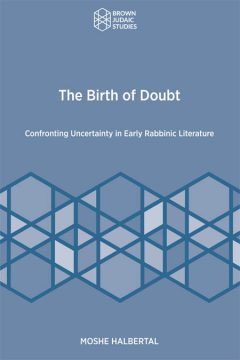 By bringing attention to the very first encounters with uncertainty in early rabbinic literature (the Mishna and Tosefta), Halbertal insightfully demonstrates the ways in which early Jewish legal authorities were keenly interested in “demarcate[ing] and limit[ing] the destabilizing power of doubt and fear of uncertainty.” The heaps of laws surrounding states of uncertainty – which Halbertal correctly describes as some of the most complex areas of Jewish law – were not designed, by virtue of their sheer volume and complexity, to increase anxiety but to quell it. Early rabbinic engagement with doubt was thus an expression of liberation, not legal bondage. Its intent was not to compound hair-splitting laws on top of likely never-to-be-experienced hypotheticals for the sake of burdening Jews with laws where none previously existed, thereby adding to their already extensive repertoire of rules. Rather, this complex system was intended to free up the Jewish practitioner.
more here.
Dustin Illingworth at the Paris Review:
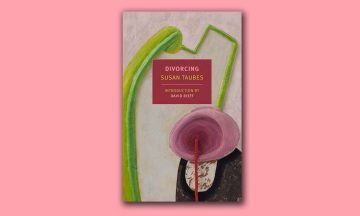 Susan Taubes’s fiction is animated by an unbearable awareness of death. Her first and only novel, Divorcing (1969), had the working title To America and Back in a Coffin. (An apt title, but deemed unmarketable and rejected by her publishers.) Like her contemporary Ingeborg Bachmann, Taubes’s fiction transposes existential mysteries with aesthetic ones. (There are other similarities between the pair: both published only one novel; both novels feature a love interest named Ivan; neither writer would live to see fifty.) Long out of print, Divorcing will finally be reissued by NYRB Classics this month. Taubes’s foreshortened oeuvre—this novel, an unpublished novella, a handful of stories—offers a range of formal precarities that mirror states of inward collapse. Fiction seemed to give shape to her own vulnerability. A lifelong depressive, she took her own life mere weeks after Divorcing was published. Her close friend Susan Sontag later suggested it was Hugh Kenner’s New York Times review that finally pushed Taubes over the edge. “Lady novelists have always claimed the privilege of transcending mere plausibilities,” he’d written. Sontag herself would identify the body.
more here.
Laura Miller in Slate:
 In this didactic cultural moment, when many judge works of art by whether they deliver the right message with perfect clarity, it can be easy to forget that the purpose of novels is not to teach us life lessons or instill in us the proper view on some issue. In other words, the novel isn’t a tool of moral instruction. Rather, it’s a way to imagine how morality plays out in life, to experience vicariously how human beings—flawed, mercurial, riddled with contradictions they often don’t perceive themselves—try and fail not only to do the right thing, but even to understand what the right thing is in the first place. Sometimes that gap between our aspirations or self-knowledge and our actions can be tragic, but just as often, depending on your perspective, it can be funny.
Tam Hunt in Nautilus:
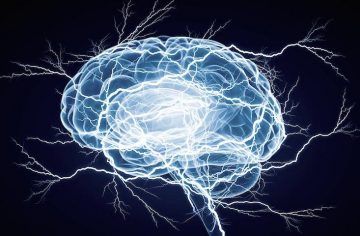 Christof Koch is a neuroscientist distinguished by his rock-solid scientific work and romantic yearning to understand consciousness. He recently closed an essay by wondering: “What is it about the brain, the most complex piece of active matter in the known universe, that turns its activity into the feeling of life itself?” No coincidence with that phrasing—The Feeling of Life Itself is his latest book. He argues that consciousness is produced by the brain but that it’s also more widespread in nature than we might suppose.
His essay described new experimental work, from Stanford neuroscientist Kieran Fox and his colleagues, that explored the effects of electrically stimulating the brain, which revealed an ordering principle. That is, the more removed from sensory input or motor output structures a brain region is, the less likely it is that it contributes to our subjective experience. The “exacting data,” Koch wrote, “provides critical causal, not just observational, evidence to identify the neuronal correlates of consciousness.”
Neuronal correlates of consciousness are the parts of the brain thought to be required for consciousness to occur. The idea that there are only neuronal correlates of consciousness, and that these correlates are the patterns of synaptic firing in specific parts of the brain, is what you might call the conventional view in neuroscience. If we peer deeply into the brain, in other words, what we’ll find is that electrochemical synapse firings—produced by neurons of various types—are responsible for, as Koch puts it, the feeling of life itself, consciousness.
More here.
believe in god, I mean
really believe, the way
you believe in the person
sitting next to you on the bus
so when he shifts positions
or spreads his knees
for a backpack you lean
a little to the side
to make room for this
stranger who inserts himself
uninvited into your life,
rules demand
you accommodate him,
let this new presence
change you, how
the moon pushes and pulls
the seas as it shoves
across the horizon
and then, when the stranger
gets up before you do,
there’s still some warmth
lingering on the seat,
something you could touch
if you wanted to, something
to prove it happened.
by Grant Clauser
from The Ecotheo Review