
Ewen Callaway in Nature:
 It works! Scientists have greeted with cautious optimism a press-release declaring positive interim results from a coronavirus vaccine trial — the first to report from the final, ‘phase III’ round of human testing. Drug company Pfizer’s announcement on 9 November offers the first compelling evidence that a vaccine can prevent COVID-19 — and bodes well for other COVID-19 vaccines in development. But the information released at this early stage does not answer key questions that will determine whether the Pfizer vaccine, and others like it, can prevent the most severe cases or quell the coronavirus pandemic. “We need to see the data in the end, but that still doesn’t dampen my enthusiasm. This is fantastic,” says Florian Krammer, a virologist at Icahn School of Medicine at Mount Sinai in New York City, who is also one of the trial’s more than 40,000 participants. “I hope I’m not in the placebo group.”
The vaccine, which is being co-developed by BioNtech in Mainz, Germany, consists of molecular instructions — in the form of messenger RNA (mRNA) — for human cells to make the coronavirus’ spike protein, the immune systems’ key target for coronaviruses. The two-dose vaccine showed promise in animal studies and early-stage clinical trials. But the only way to know if the vaccine works is to give it to large numbers of people, and then follow them over weeks or months to see if they become infected and show disease symptoms. These results are compared to those for a group of participants who are given a placebo. In the press release, Pfizer and BioNtech said that they had identified 94 cases of COVID-19 among 43,538 trial participants. The companies did not indicate how many of those cases were in the placebo group or among those that got the vaccine. But they said that the split of cases between the groups suggested that the vaccine was more than 90% effective at preventing disease, when measured at least one week after trial participants had received a second vaccine dose, three weeks after the first. The trial will continue until a total of 164 COVID-19 cases are detected, so initial estimates of the vaccines’ effectiveness could change.
More here.
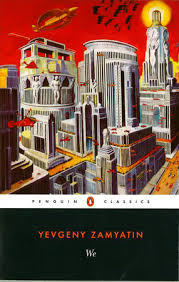 Zamyatin is among the few gifted twentieth-century writers who responded to ideological tyranny by poetically integrating mathematical science into a philosophical anthropology. Dostoyevsky’s literary topographies of the soul are the
 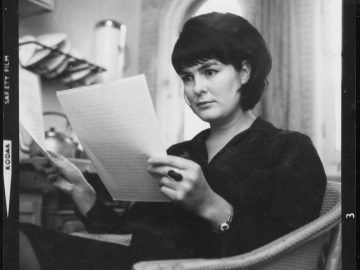 Three is the second of the four brilliant and enigma-ridden novels that Ann Quin published before drowning off the coast of Brighton in 1973 at the age of thirty-seven. The mysterious character S—the absent protagonist or antiheroine hypotenuse of this love-triangle tale—dies in similar fashion … or perhaps she’s stabbed to death by a gang of nameless, faceless men before her body washes up onshore … or perhaps the stabbed dead body that washes up onshore is someone else… It’s difficult to tell. And the telling is difficult, too. And I would submit that it’s precisely these difficulties that make this gory story normal.
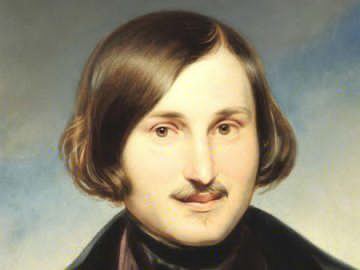 Nikolai Gogol (1809–1852), Russia’s greatest comic writer, thoroughly baffled his contemporaries. Strange, peculiar, wacky, weird, bizarre, and other words indicating enigmatic oddity recur in descriptions of him. “What an intelligent, queer, and sick creature!” remarked Turgenev; another major prose writer, Sergey Aksakov, referred to the “unintelligible strangeness of his spirit.” When Gogol died, the poet Pyotr Vyazemsky sighed, “Your life was an enigma, so is today your death.”
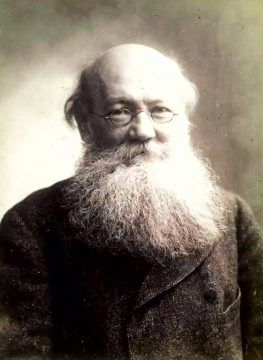 Five years had passed since Czar Alexander II promised the emancipation of the serfs. Trusting in a map drawn on bark with the point of a knife by a Tungus hunter, three Russian scientists set out to explore an area of trackless mountain wilderness stretching across eastern Siberia. Their mission was to find a direct passage between the gold mines of the river Lena and Transbaikalia. Their discoveries would transform understanding of the geography of northern Asia, opening up the route eventually followed by the Trans-Manchurian Railway. For one explorer, now better known as an anarchist than a scientist, this expedition was also the start of a long journey towards a new articulation of evolution and the strongest possible argument for a social revolution.
 Dear Dan,
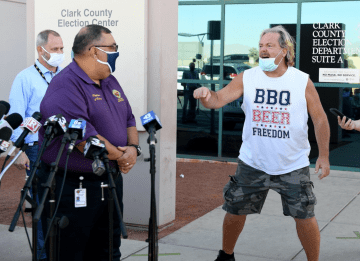 You can do whatever you want with your morals, forgive people or not. But your duties as a citizen are somewhat different than the duties you might have as, say, a Christian (the kind who strives to follow the gospel), and here forgiveness is not so much what is required as, simply, recognition of a common plight. This civic virtue overlaps, admittedly, with the moral; it is difficult to articulate it in terms that do not come across as moralising, and certainly it would be an impediment to its realisation to articulate it in the bare terms of calculative strategy. In France it is traditionally articulated in terms of fraternité, which seems to strike just the right note between strategy and moralising. We need to hold things together somehow; in a real family unit this might have to pass through an overtly moral gesture of forgiveness, but in a polity what we should perhaps expect is that people aspire at least to a recognition of their fellow citizens through a lens that represents them as brothers and sisters.
 Alexandria Ocasio-Cortez has criticised the Democratic party for incompetence in a no-holds-barred, post-election
  IN OLIVER HIRSCHBIEGEL’S
 Adam Shatz in the LRB:
 Audrey Truschke in Aeon:
 Two themes seem