
Katherine Wu in The New York Times:
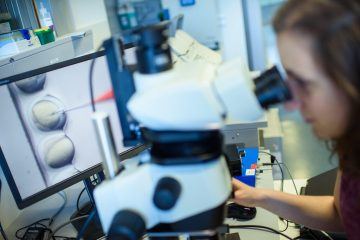 A powerful gene-editing tool called Crispr-Cas9, which this month nabbed the Nobel Prize in Chemistry for two female scientists, can cause serious side effects in the cells of human embryos, prompting them to discard large chunks of their genetic material, a new study has found. Administered to cells to repair a mutation that can cause hereditary blindness, the Crispr-Cas9 technology appeared to wreak genetic havoc in about half the specimens that the researchers examined, according to a study published in the journal Cell on Thursday.
The consequences of these errors can be quite serious in some cases, said Dieter Egli, a geneticist at Columbia University and an author of the study. Some cells were so flummoxed by the alterations that they simply gave up on trying to fix them, jettisoning entire chromosomes, the units into which human DNA is packaged, Dr. Egli said. “We’re often used to hearing about papers where Crispr is very successful,” said Nicole Kaplan, a geneticist at New York University who was not involved in the study. “But with the amount of power we hold” with this tool, Dr. Kaplan said, it is crucial “to understand consequences we didn’t intend.”
More here.
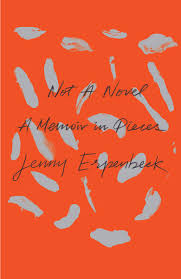 The essays explore the subjects – walls and borders, truth and silence, identity and memory and the limitations of language – present in her fiction while her autobiographical accounts give valuable context. Despite having slept through a nation’s collapse, Erpenbeck swiftly realised: “Everything that had been called the present up until then was suddenly called the past.” And so she erected another border inside herself, “made of time, between the first half of my life which was transformed into history by the fall of the wall… and the second half, which began at that same moment”. She clearly enjoyed a happy childhood. In John we learn about the lovesick schoolboy who would phone her and, refusing to reveal his identity, would quote Beatles lyrics. Years later, when Erpenbeck requested her file from the Stasi, she discovered that they had intercepted John’s daily record of who had arrived and left her apartment block. In Open Bookkeeping her mother’s death in 2008 is reduced to a poignant list of everything Erpenbeck has to find a home for, the accounts she has to close, the refunds that come in and those that don’t.
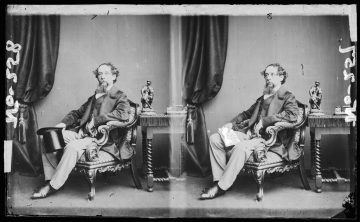 A.N. Wilson has been for many years one of England’s most formidable biographers, as well as an amazingly productive novelist — 23 novels under his belt, to match nearly the same number of nonfiction considerations of subjects ranging from Jesus and St. Paul to Milton, Darwin, Hitler, C. S. Lewis and the queen. (Along the way he spent seven years lecturing on medieval literature at Oxford.) His knowledge is wide, his writing fluent — one can only wonder why his name and reputation haven’t flourished here in America the way they have in his own country, where he is something of a Figure. Alas, I don’t believe that this is going to change with his latest book, “The Mystery of Charles Dickens,” which is appearing just in time for the Dickens anniversary. Here, to put it bluntly, is a highly peculiar biography — peculiar not for what it says about Dickens but for what it says about Wilson himself.
 Look away, America. For your own good, look away. Everything will still be there when you come back. Even once the vote counting’s done, there’ll be the recounting, and the tag-along lawsuits.
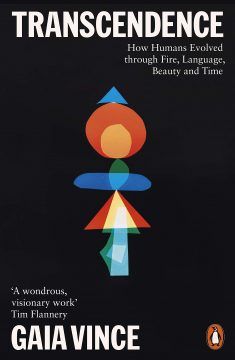 Let’s turn to Transcendence by
  France elected Emmanuel Macron president in 2017 as a symbolic barrier against the rising global tide of illiberal populism. Four years later, as the chaos fomented by U.S. President Donald Trump builds toward some sort of crescendo in the United States, domestic tensions in France threaten to define Macron’s leadership and legacy. The coronavirus pandemic is resurgent, leading the government to institute a strict new lockdown that will continue at least until early December; the mouvement des “gilets jaunes” (“yellow vest” protest movement) has been simmering since late 2018; and a crisis that began in 2015, when Islamist terrorists twice attacked Paris, never went away and has in fact returned with new intensity in recent months.
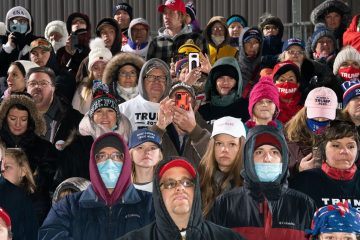 The moment every Donald Trump opponent has been waiting for is at hand: Joe Biden seems to be taking the lead. So why am I not happy? I am certainly relieved. A Biden victory would be an infinitely better result than a Trump win. If Trump were to maintain power, our child-king would be unfettered by bothersome laws and institutions. The United States would begin its last days as a democracy, finally stepping over the ledge into authoritarianism. A win for Biden would forestall that terrible possibility.
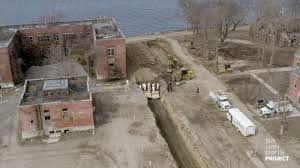 Starting in the 1870s, and every year for the past fifteen years, journalists have told and retold the “hidden history” of New York City’s Hart Island, a hundred-acre city cemetery off the coast of the Bronx. Some fields are rolling and green with little white plot markers. Others are fresh brown earth, where individual coffins are buried in communal graves. Where there are not bodies, there are dry stone walls, woodlands, wetlands, and nineteenth-century brick ruins ringed by salt marshes and rubble. For over 150 years, the cemetery has been run as an extension of the prison system, difficult to visit, and this fact tends to capture the imagination.
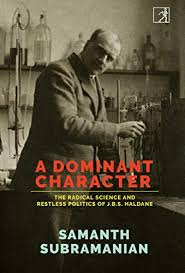 JBS Haldane – “Jack” to his family and friends – was once described as “the last man who might know all there was to be known”. His reputation was built on his work in genetics, but his expertise was extraordinarily wide-ranging. As an undergraduate at Oxford, he studied mathematics and classics. He never gained any kind of degree in science, but he could explain the latest work in physics, chemistry, biology and a host of other disciplines. He could recite great swathes of poetry in English, French, German, Latin and Ancient Greek. A big man (another description of him is “a large woolly rhinoceros of uncertain temper”), he was unafraid to take anyone on in a fight and, equally, could drink anyone under the table.
 When every legally cast vote has been counted, Joe Biden will probably have prevailed in enough states to claim victory in the presidential race, perhaps even ending up with a few more Electoral Votes than Donald Trump managed to earn four years ago. That means Trump will probably be out, defeated in his bid for re-election.
 Karachi ranks as having the worst public transport system globally, according to
 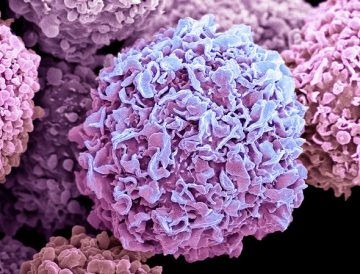 Improving early cancer detection may be the only way to really put a dent in the cancer mortality curve; however, early cancer detection is suffering from a common ailment in medicine and public health: the streetlight effect. We are looking for five cancers “over here” under the streetlight where we have early detection tests, but about