
Parul Sehgal in The New York Times:
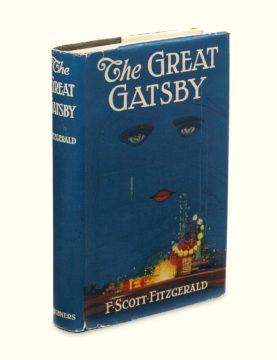 One of the pleasures of writing about a book as widely read as “The Great Gatsby” is jetting through the obligatory plot summary. You recall Nick Carraway, our narrator, who moves next door to the mysteriously wealthy Jay Gatsby on Long Island. Gatsby, it turns out, is pining for Nick’s cousin, Daisy; his glittering life is a lure to impress her, win her back. Daisy is inconveniently married to the brutish Tom Buchanan, who, in turn, is carrying on with a married woman, the doomed Myrtle. Cue the parties, the affairs, Nick getting very queasy about it all. In a lurid climax, Myrtle is run over by a car driven by Daisy. Gatsby is blamed; Myrtle’s husband shoots him dead in his pool and kills himself. The Buchanans discreetly leave town, their hands clean. Nick is writing the book, we understand, two years later, in a frenzy of disgust.
Fitzgerald was proud of what he had achieved. “I think my novel is about the best American novel ever written,” he crowed. The book baffled reviewers, however, and sold poorly. “Of all the reviews, even the most enthusiastic, not one had the slightest idea what the book was about,” Fitzgerald wrote to the critic Edmund Wilson. That matter remains unsettled. The book has been treated as a beautiful bauble, fundamentally unserious. In a 1984 essay in The Times, John Kenneth Galbraith sniffed that Fitzgerald was only superficially interested in class. “It is the lives of the rich — their enjoyments, agonies and putative insanity — that attract his interest,” he wrote. “Their social and political consequences escape him as he himself escaped such matters in his own life.”
This interpretation has been turned on its head. Both new editions make light of the book’s beauty — it’s the treatment of the grotesque that is so compelling (Morris compares the characters to the “Real Housewives”). Both make the case that the book’s value lies in its critique of capitalism. Lee describes Fitzgerald as “a fan of Karl Marx,” and writes that “Gatsby” remains “a modern novel by exploring the intersection of social hierarchy, white femininity, white male love and unfettered capitalism.” For Morris, too, there is no romance between Gatsby and Daisy but “capitalism as an emotion”: “Gatsby meets Daisy when he’s a broke soldier, senses that she requires more prosperity, so five years later he returns as almost a parody of it. So the tragedy here is the death of the heart.”
More here.
 It seems that there are all kinds of unresolved problems to do with Satyajit Ray – to do with thinking about him, with finding a language to speak about him that does not repeat the indubitable truisms about his humanism and lyricism. How does he fit into history, and into which history – the history of India; the history of filmmaking; some other – do we place him first?
 The population density of Africa is low overall, with its population being about the same as that of India, while its area is ten times larger. But Nigeria’s population density is fairly high, in fact higher than that of Italy. And its largest city, Lagos, a dense megalopolis of 20 million people living cheek by jowl, is just the kind of city where Covid-19 may be expected to spread fast.
 ‘
‘ With just three weeks left until the Inauguration of
  Editorials represent Nature’s collective voice on the week’s news, providing a commentary on a range of topics, from research discoveries to major world events involving science. And although 2020 has been dominated by just one topic, we’ve aimed to stay on top of other important developments, too.
 It’s important to see the full opportunity waiting ahead. Each planet or moon is its own world, with its own history and story to tell, and its own potential (however one might define this) for the future. Though mostly barren of life, they are far from empty; many are chock-full of the materials that would go into life-generating goo: sugars, amino acids, carboxylic acids and powerful molecules that drive reactions away from equilibrium. On bodies where widespread life might not be possible, many of them nevertheless contain microniches where life can take root and flourish for billions of years. Conceivably, for every planet that crossed the threshold of biogenesis, there were scores more that came part or even most of the way that just missed the nudge to do so.
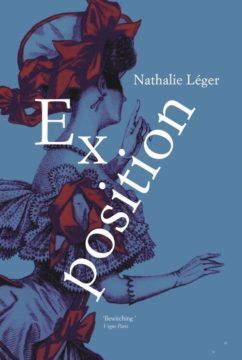 Exposition, Suite for Barbara Loden, and The White Dress are literary works of research. Léger is the Director of the Institut Mémoires de l’Édition Contemporaine (Institute for Contemporary Publishing Archives), so it is unsurprising that archives and the figure of the archive should feature in her work. What is perhaps more notable is the way in which Léger sees the archive as a literary space. In
 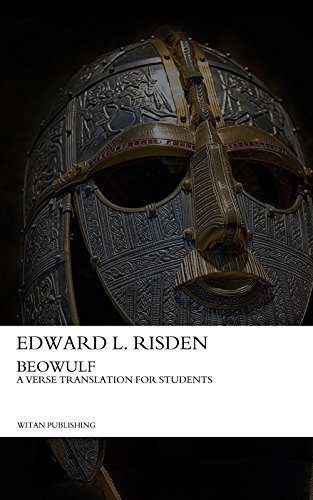 The tenth-century epic poem, Beowulf, is the longest surviving poem in Old English. Before the poem was transcribed in a single manuscript, now known as “The Nowell Codex, it was orally transmitted, which explains the alliteration, metrical structure, and memory aids alluding to previous events. At a surface-level, the poem is about a Geatish warrior who is employed to kill monsters, becomes king, and then gets killed by a dragon. Moreover, the poem also gives us some insight into the sociocultural context of early medieval England—the poem considers the politics of the comitatus bond (the relationship between lord and retainer), the history of several Germanic tribes, and as some scholars note, the transition from paganism to Christianity.
 The human sense of smell is far more acute than previously thought, yet it is still commonly believed that there is no language of smell.
 Of the Corona vaccine doses available each week, 1% should be auctioned off to the highest bidders and the money given to to humanitarian charities like the Red Cross and Salvation Army. This will ensure that the limited amount of vaccine we now have will achieve the most good. Perhaps more surprisingly, it will also be fairer.
 H
H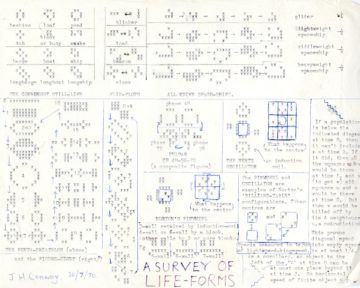 In March of 1970, Martin Gardner opened a letter jammed with ideas for his Mathematical Games column in Scientific American. Sent by John Horton Conway, then a mathematician at the University of Cambridge, the letter ran 12 pages, typed hunt-and-peck style. Page 9 began with the heading “The game of life.” It described an elegant mathematical model of computation — a cellular automaton, a little machine, of sorts, with groups of cells that evolve from iteration to iteration, as a clock advances from one second to the next. Dr. Conway, who
 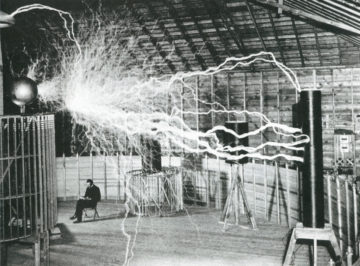 The strangeness of electricity seemed to be that it was at once “so moveable and incapable of rest” and yet also capable of being arrested if deprived of a suitable conductor, for example, by the air. This latter had been demonstrated most dramatically by the experiments of Stephen Gray in the early 1700s, who had electrified charity boys, an ample supply of which was furnished by Charterhouse where he was resident, hung from silken cords in mid-air. The sense that electricity belongs naturally to “the more hidden properties of the air” is borne out by the fact that so many demonstrations and depictions showed electrified subjects who were themselves suspended in midair (even though the reason for this is actually to use the air as insulation). Charles Burney, the father of the novelist Fanny, recorded in 1775 his terror at being caught in a thunderstorm in Bavaria, and his wish for a bed off the ground, so he might sleep in safety “suspended by silk cords in the middle of a large room.”