Channels to fall asleep to
While shoe box to shoe box travels my childhood
Professionals roll garbage cans around a conference room
Half the size of a holding tank
Half the hope of a holding tank
Full of third world retail flattery
“nothing wrong with the blind leading the blind,”
………………………………………………….…….. we think they just said
…………………………… the entire train station crouches behind a piano player
……………………………… ……and why should Harlem not kill for its musicians
……………………………… ……………………………….………………..“He is in a dream”
……………………………… ……………………………………………………..“A spirit world”
……………………………… ………………………………….…“I should introduce myself”
……………………………… ……………………………………“And convince him to sleep”
porcelain epoch
succeeding for the most part
dying for the most part
married for the most part to its death
when a hostage has a hostage
that is u.s. education
stores detach their heads
and expect you to do the same when you enter
God says, “do not trust me in this room”
Two fascists walk into a bar
One says, “let’s make a baby.”
The other says, “let’s make three… and let the first one eat the other two.”
……………………………… ……………………..……………….…….your sky or mine
……………………………… …………………..………………………………….read from
……………………………… ……………..…………the book of pool room enemies
“I’m the best kind of square. Poor and in love with the 1960s. The first picture I ever
saw in my life faded from my storytelling a long time ago.”
Not even ten years old
And most of you are on my shoulders
……………………………… ………………….The store’s detached head smiled
casually be poor
… teach yourself
… how to get out of this room
… and we’ll leave you enough blood
… to turn off the lights
… on your way out
casually be poor
.. they are all cops when you are poor
by Tony Eisen-Martin
from Brooklyn Quarterly

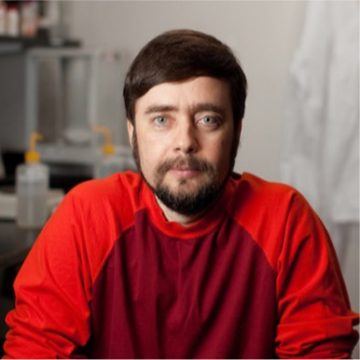 As a semi-outsider, it’s fun for me to watch as a new era dawns in biology: one that adds ideas from physics, big data, computer science, and information theory to the usual biological toolkit. One of the big areas of study in this burgeoning field is the relationship between the basic bioinformatic building blocks (genes and proteins) to the macroscopic organism that eventually results. That relationship is not a simple one, as we’re discovering. Standard metaphors notwithstanding, an organism is not a machine based on genetic blueprints. I talk with biologist and information scientist Michael Levin about how information and physical constraints come together to make organisms and selves.

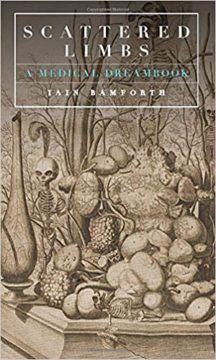 What is health anyway, when everyone dies in the end? The World Health Organization defines it as ‘a state of complete physical, mental and social well-being and not merely the absence of disease or infirmity’. This is a long way from the attitude of the ‘last of the great Bakhtishu family of physicians, around the year 1000 in Baghdad’, writes Bamforth: they found that the perfect state of health ‘does not exist’. What about Schopenhauer and his definition of humanity as a synthesis of the infinite and the finite?
 The pandemic, which has seemed
 When Africans were taken from their homes and forced into slavery, they were separated from mothers, fathers, sisters and brothers and were torn from extensive kinship networks. Enslaved in the British colonies of North America or the free states of the American Union, the ability of Africans to reestablish nuclear families and familial support systems depended on many factors including the needs and desires of the slave owner. As the circumstances of slavery changed across time and place, the opportunities for slaves to marry, have children, and create stable family units fluctuated.
 Do bees have generals? Do they constitute a nation? A tribe? Perhaps a clan?
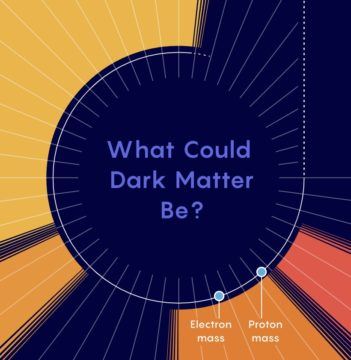 Ever since astronomers reached a consensus in the 1980s that most of the mass in the universe is invisible — that “dark matter” must glue galaxies together and gravitationally
 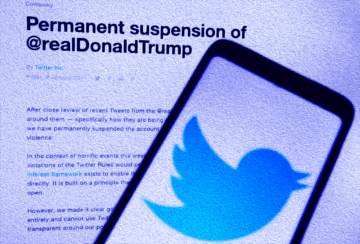 After years of providing oxygen to the political guerrilla tactics of Donald Trump, Mark Zuckerberg and Jack Dorsey finally decided that fanning the flames of violent insurrection through a firehose of incendiary falsehoods violated their terms of service (
 It’s so nice to be here. I’m looking forward to working with all of you amazing reporters and editors. You’ve all shown you’re capable of incredible work, and I respect you enormously. But at the same time, my arrival here is an inflection point. It’s impossible to look out on the current state of political discourse in this country and believe we are succeeding in our core mission of creating an informed electorate. It’s impossible to look out at the looming and in some cases existential challenges facing our republic and our globe — among them the pandemic, the climate crisis, income inequality, racial injustice, the rise of disinformation and ethnic nationalism — and think that it’s OK for us to keep doing what we’ve been doing. So let me tell you a bit about what we need to do differently.
 Adam Przeworski in Boston Review: