
Dennis Overbye in The New York Times:
 Once upon a time, Albert Einstein described scientific theories as “free inventions of the human mind.” But in 1980, Stephen Hawking, the renowned Cambridge University cosmologist, had another thought. In a lecture that year, he argued that the so-called Theory of Everything might be achievable, but that the final touches on it were likely to be done by computers. “The end might not be in sight for theoretical physics,” he said. “But it might be in sight for theoretical physicists.” The Theory of Everything is still not in sight, but with computers taking over many of the chores in life — translating languages, recognizing faces, driving cars, recommending whom to date — it is not so crazy to imagine them taking over from the Hawkings and the Einsteins of the world.
Computer programs like DeepMind’s AlphaGo keep discovering new ways to beat humans at games like Go and chess, which have been studied and played for centuries. Why couldn’t one of these marvelous learning machines, let loose on an enormous astronomical catalog or the petabytes of data compiled by the Large Hadron Collider, discern a set of new fundamental particles or discover a wormhole to another galaxy in the outer solar system, like the one in the movie “Interstellar”? At least that’s the dream. To think otherwise is to engage in what the physicist Max Tegmark calls “carbon chauvinism.” In November, the Massachusetts Institute of Technology, where Dr. Tegmark is a professor, cashed a check from the National Science Foundation, and opened the metaphorical doors of the new Institute for Artificial Intelligence and Fundamental Interactions.
More here.
 Conspiracy theories come in all shapes and sizes, but perhaps the most common form is the Global Cabal theory. A
  On a mild autumn day in 2016, the Hungarian mathematician
  Concern about American democracy is often expressed as a parable of the Thirties: We must prevent another Hitler. The word “fascism” has appeared frequently in denunciations of Donald Trump; many have accused him of a führer-like contempt for the American system. But it is time to ask whether the system itself is not thereby too conveniently excused. Mass political participation has come only recently and reluctantly to America; voter suppression is the more traditional American way. And for reasons that have nothing to do with fascism, even that partial efflorescence may be coming to an end. Trump’s baleful theatrics have distracted us, in fact, from the broader disintegration of the twentieth-century interregnum, of which he is only a symptom. That process has much further to go, and will produce dangers greater than he.
 Individual poems by Vilariño have occasionally appeared in anthologies of Latin American poetry in the United States, but not until now, more than a decade after her death and in the centennial year of her birth, has one of her books appeared in English translation. Unsurprisingly, it is her best-known work, Poemas de amor / Love Poems (University of Pittsburgh Press, 2020), in a translation by the poet Jesse Lee Kercheval. The literary scholar Emir Rodríguez Monegal, a Yale professor who wrote influential treatises on
  Similar to Tony Conrad—who reflected in one of his
  There are more than 120 biobanks worldwide, having evolved over the past 30 years. They range from small, predominantly university-based repositories, to large, government-supported resources. As well as collecting and storing samples, they also provide clinical, pathological, molecular and radiological information for research into personalized medicine. Biobanks allow researchers to explore the causes of disease by helping them link genotypes to phenotypes. This is a process that has been underway for years through genome-wide association studies (GWAS), but it has proved far from straightforward. “What we have learned from GWAS over the last 15 to 20 years is that there are many variants, they have small effect sizes and, even if you total most of the common variants throughout the genome, they account for only a small fraction of phenotypic variance,” says Judy Cho, a translational geneticist at Icahn School of Medicine at Mount Sinai, New York.
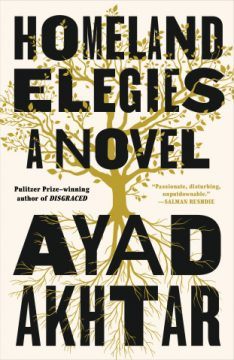 IF YOU’VE ALREADY READ Camus’s The Plague and have been searching for the perfect pre-apocalyptic fiction work to help you navigate our current affairs, this book may be just the provocation. I opened it knowing little about the author, other than having seen him act in the independent feature The War Within and perused his play Disgraced. Neither had prepared me for Homeland Elegies, which turns out to be masterful storytelling for these disturbing times.
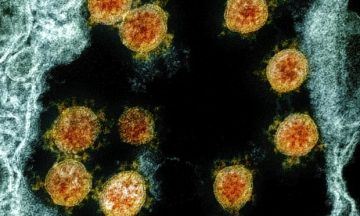 Letting the virus that causes Covid-19 circulate more-or-less freely is dangerous not only because it risks overwhelming hospitals and so endangering lives unnecessarily, but also because it could delay the evolution of the virus to a more benign form and potentially even make it more lethal.
 As picks for President-elect Joe Biden’s Environmental Protection Agency (EPA) transition team were announced, I felt concerned and disheartened about
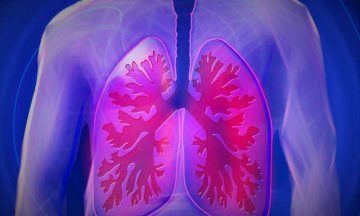 A team of researchers from multiple departments at Stanford University has created a cellular atlas of the human lung that highlights the dozens of cell types that comprise parts of the lungs. In their paper published in the journal Nature, the researchers describe their work (mostly involving single-cell RNA sequencing) and some of the things they learned about the lungs during their effort. To create the atlas, the researchers collected
 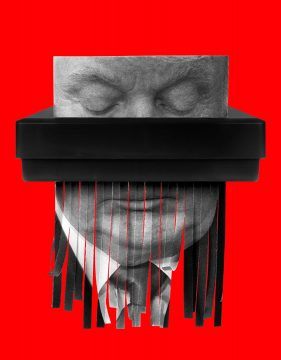 Donald Trump is not much of a note-taker, and he does not like his staff to take notes. He has a habit of tearing up documents at the close of meetings. (Records analysts, armed with Scotch Tape, have tried to put the pieces back together.) No real record exists for five meetings Trump had with Vladimir Putin during the first two years of his Presidency. Members of his staff have routinely used apps that automatically erase text messages, and Trump often deletes his own tweets, notwithstanding a warning from the National Archives and Records Administration that doing so contravenes the Presidential Records Act.
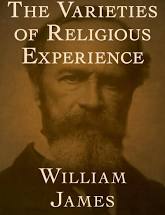 James never stopped short in an exploration or an argument—and for him that meant never stopping short of the biggest question: the religious one. His thinking of the late 1890s kept pushing in this direction, culminating in the Gifford Lectures delivered in Edinburgh in 1901 and 1902, the lectures known to posterity as The Varieties of Religious Experience. James felt that the question of this world and the other world was somehow decisive for all of us, whichever way we answered it. And that included a whole lot of answers for someone like William James—attender of séances, consulter of mediums and all-around junkie for experience. In “The Will to Believe,” James is mostly interested in leveling the playing field vis-à-vis his skeptical colleagues. When it comes down to it, he wonders, why can’t we just go ahead and will the belief in God? The stern-minded skeptic is happy to object: we have no evidence for it. James replies: we have no evidence against it. The skeptic concedes, and objects again: well, then, I’ll wait until we have decisive evidence one way or the other. William James: to spend a life in indecision is no different from choosing against it; for example, if you have no decisive evidence that a potential career is best for you, you can’t just delay your decision until you die. The skeptic: but religion is not like that. William James: why not?