
Jennifer Szalai in The New York Times:
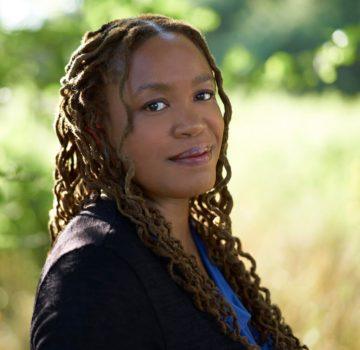 Hinton Rowan Helper was an unreserved bigot from North Carolina who wrote hateful, racist tracts during Reconstruction. He was also, in the years leading up to the Civil War, a determined abolitionist.
His 1857 book, “The Impending Crisis of the South,” argued that chattel slavery had deformed the Southern economy and impoverished the region. Members of the plantation class refused to invest in education, in enterprise, in the community at large, because they didn’t have to. Helper’s concern wasn’t the enslaved Black people brutalized by what he called the “lords of the lash”; he was worried about the white laborers in the South, relegated by the slave economy and its ruling oligarchs to a “cesspool of ignorance and degradation.” Helper and his argument come up early on in Heather McGhee’s illuminating and hopeful new book, “The Sum of Us” — though McGhee, a descendant of enslaved people, is very much concerned with the situation of Black Americans, making clear that the primary victims of racism are the people of color who are subjected to it. But “The Sum of Us” is predicated on the idea that little will change until white people realize what racism has cost them too. The material legacy of slavery can be felt to this day, McGhee says, in depressed wages and scarce access to health care in the former Confederacy. But it’s a blight that’s no longer relegated to the region. “To a large degree,” she writes, “the story of the hollowing out of the American working class is a story of the Southern economy, with its deep legacy of exploitative labor and divide-and-conquer tactics, going national.”
As the pandemic has laid bare, the United States is a rich country that also happens to be one of the stingiest when it comes to the welfare of its own people. McGhee, who spent years working on economic policy for Demos, a liberal think tank, says it was the election of Donald Trump in 2016 by a majority of white voters that made her realize how most white voters weren’t “operating in their own rational economic self-interest.” Despite Trump’s populist noises, she writes, his agenda “promised to wreak economic, social and environmental havoc on them along with everyone else.”
More here. (Throughout February, at least one post will be dedicated to honoring Black History Month. The theme this year is: The Family)
 Study, reader, before going further,
  In our postmodern world, studying the classics of ancient Greece and Rome can seem quaint at best, downright repressive at worst. (We are talking about works by dead white men, after all.) Do we still have things to learn from classical philosophy, drama, and poetry? Shadi Bartsch offers a vigorous affirmative to this question in two new books coming from different directions. First, she has newly translated the
  Joseph Silverman remembers when he began connecting the dots that would ultimately lead to a new branch of mathematics: April 25, 1992, at a conference at Union College in Schenectady, New York.
 In 2015, Bon Appétit
 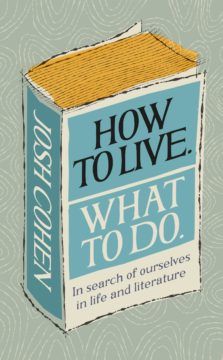 Much of Cohen’s work is driven by his aversion to a type of spatial metaphor that minimises the value and variety of familiar experience. His first book, Spectacular Allegories (1998), a study of modern American fiction and journalism that emerged from his PhD, questions the postmodern idea that spectacle somehow floats “outside” history and “above” material reality. It was written before Cohen was a practitioner, or even employed Freudian theory. He told me that his “obsessional preoccupation – and I’m pointedly using the singular – has been what is concealed in what is right in front of us, in what is present”. He isn’t only talking about unconscious blind-spots. The book’s title is “filched”, as he puts it, from the American poet Wallace Stevens, and Cohen expressed a particular fondness for Stevens’s idea of a “strange presence that irradiates through the world that his poems are always gesturing towards and trying to get us to see”.
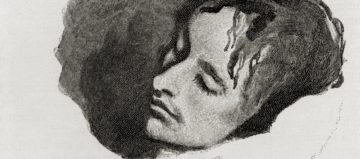 We knew that the persistent cough spelled his end. The fever had preceded it, just as it had in his mother, brother and dozens around him. The contagion that was devastating society had him in its throes. When he finally died, a postmortem showed his lungs had been decimated. He’d suffocated, drowning in his own inflammatory fluids. The young English poet
  In May 1803 a group of enslaved Africans from present-day Nigeria, of Ebo or Igbo descent, leaped from a single-masted ship into Dunbar Creek off St. Simons Island in Georgia. A slave agent concluded that the Africans drowned and died in an apparent mass suicide. But
  The expression of frustration could have been sent from any tier in travel-restricted Britain: “Where do you go in July? For me, I cant answer. I am longing to go to London, & hoping to the last. That is all. For the present, … certainly the window has been opened twice – an inch – but my physician shakes his head or changes the conversation (which is worse) whenever London is mentioned. But if it becomes possible, I shall go – will go! Putting it off to another summer is like a never.”
 Boston is one of
 For the third time in
 You may not have heard of Robin Dunbar. But you will, perhaps, know of his work. Dunbar, now emeritus professor of evolutionary psychology at Oxford University, is the man who first suggested that there may be a cognitive limit to the number of people with whom you can comfortably maintain stable social relationships – or, as Stephen Fry put it on the TV show QI, the number of people “you would not hesitate to go and sit with if you happened to see them at 3am in the departure lounge at Hong Kong airport”. Human beings, Dunbar found when he conducted his research in the 1990s, typically have