
Smriti Mallapatty in Nature:
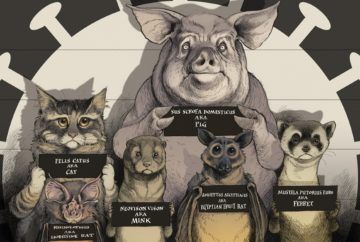 It was the news Sophie Gryseels had been dreading for months. Almost a year into the pandemic, a seemingly healthy wild mink tested positive for SARS-CoV-2 in Utah. No free-roaming animal was known to have caught the virus before, although researchers had been watching for this closely. “It’s happened,” wrote Gryseels, an evolutionary biologist at the University of Antwerp, Belgium, in an e-mail to her colleagues. Ever since the coronavirus started spreading around the world, scientists have worried that it could leap from people into wild animals. If so, it might lurk in various species, possibly mutate and then resurge in humans even after the pandemic has subsided.
That would bring the tale of SARS-CoV-2 full circle, because wild animals probably brought it to humans in the first place. Strong evidence suggests that the virus originated in horseshoe bats (Rhinolophus spp.), possibly hitching a ride on other animals before infecting people1. In the current stage of the pandemic, with hundreds of thousands of confirmed COVID-19 infections every day, people are still driving transmission of SARS-CoV-2. But years from now, when community spread has been suppressed, a reservoir of SARS-CoV-2 in free-roaming animals could become a recalcitrant source of new flare-ups. Wild animals are not the only ones to have drawn scrutiny. Studies have shown that SARS-CoV-2 can infect many domesticated and captive creatures, from cats and dogs, to pumas, gorillas and snow leopards in zoos, and farmed mink. Outbreaks in mink farms have already shown that infected animals can pass the virus back to humans.
More here.
 Causation and control are not the same thing. Not all things that are caused are controlled. Things that are controlled are caused, like everything else, but control requires a controller, an agent of sorts designed to control a process, and that requires feedback: information about the trajectory and conditions that can be used by the controller to modulate the action. This is a fundamental point of control theory. Think about firing a rifle bullet. You’re controlling the direction of the gun barrel and, with the trigger, the time of the bullet emerging from the gun barrel. Are you controlling the course of the bullet after that? No. Where it goes after it leaves the muzzle is out of your control. Now, if you’re a really good shot, you may be able to calculate in advance the windage and so forth and you may be able to get it in the bull’s eye almost every time. But you are unable to affect the trajectory of the bullet after it leaves the gun. So it is not a controlled trajectory, it is a ballistic trajectory. It goes where it goes and, if your eyes were good enough to watch it and see that it was going “off course,” you’d have feedback, but you wouldn’t be able to do anything about it. Feedback is only useful information coming back to a controller if the controller also maintains an informational link back to the thing that’s being controlled. You fired the gun. You caused that bullet to go where it went, but you did not control the bullet after it left the gun. Compare that with a guided missile. A guided missile, after it’s launched, can still be controlled, to some extent, often to a great extent (as in a cruise missile). As you know, one of the chief inventions of technology in warfare in the last fifty years is the development of remote control missiles and, of course, remote control drones. Remote control is real, and readily distinguished from out of control. Autonomy is non-remote control, local or internal control, and it is just as real, and even more important.
 The internet has made it so much easier for people to talk to each other, in a literal sense. But it hasn’t necessarily made it easier to have rewarding, productive, good-faith conversations. Here I talk with sociologist Rod Graham about what kinds of conversations the internet does enable, and should enable, and how we can work to make them better. We discuss both how social media are used for nefarious purposes, from cyberbullying to driving extremism, but also how they can be mobilized for more lofty goals. We also get into some of the lost nuances in conventional discussions of race, including how many minorities are more culturally conservative than an oversimplified narrative would lead us to believe, and the tricky relationship between online discourse and social cohesion.
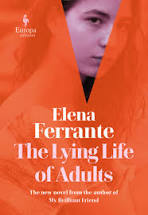 In Ferrante’s most recent novel, The Lying Life of Adults, we are pulled yet again into the story with the tale of a missing woman, Aunt Vittoria. Unlike Lila, she has not disappeared altogether but is estranged from her brother, Andrea, and her 12-year-old niece, Giovanna, who narrates the story. While Giovanna and her parents live in a middle-class section of Naples, Vittoria has remained in Pascone, the working-class neighborhood in the city’s Industrial Zone where she and Andrea were raised. Throughout the novel, we get conflicting stories from Vittoria and Andrea about what led to their estrangement. A dispute about who should inherit their mother’s apartment following her death was certainly the breaking point, but there had long been tension between them. Early on, it becomes clear that Andrea is frustrated that his sister did not respond to the poverty of their childhood in the same way he did: by leaving Pascone behind with no qualms or doubts and embracing the tastes and habits of the Italian bourgeoisie. But what takes longer to be revealed is that Vittoria is perhaps no better, that her working-class pride may not be as sturdy as she wants her young, wide-eyed niece to think.
 The interviewers often push Girard to explain how his theory applies to real life, and he is happy to oblige. The theory’s journey into the world is a great story in its own right. No sooner did his argument reach a certain “elegance” than Girard started to realize its growing applicability: “You suddenly see that there is a single explanation for a thousand different phenomena.” He first formulated his theory in a book of literary history, then went on to apply it to the study of mythology and religion, then to politics and international relations, then to society and economy, fashion and eating disorders, and whatnot. Just open a newspaper and pick something, anything, at random. Even the stock market? Especially the stock market, Girard would respond. That’s “the most mimetic institution” of all—indeed, a textbook illustration of how mimetic theory works: “You desire stock not because it is objectively desirable. You know nothing about it, but you desire stuff exclusively because other people desire it. And if other people desire it, its value goes up and up and up.” There is hardly a field, sphere of life, or situation, where Girard’s theory does not apply. He finds that fascinating. Some of his readers find it too good to be true. Others find it scandalous.
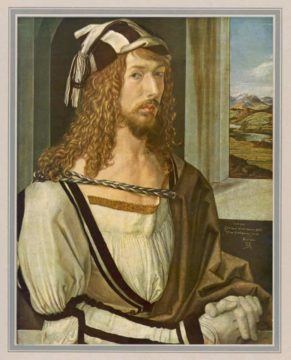 Albrecht Dürer was the first great sightseer in the history of art, travelling Europe to see conjoined twins, Aztec gold, Venetian gondolas and the bones of an 18ft giant. He crossed the Alps more than once and voyaged for six days in the freezing winter of 1520 to see a whale on a beach in Zeeland. The ship was nearly wrecked, but somehow Dürer saved the day and they eventually reached the shore. The sands were empty. The great creature had sailed away.
 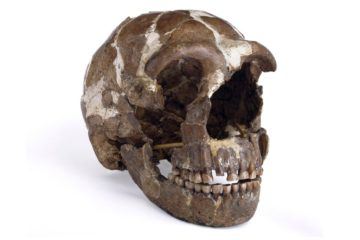 If you were somehow able to travel back in time some 130,000 years and chance upon a Neanderthal, you might find yourself telling them about some of humanity’s greatest inventions, such as spanakopita and TikTok. The Neanderthal would have no idea what you were saying, much less talking about, but they might be able to hear you perfectly, picking up on the voiceless consonants “t,” “k” and “s” that appear in many modern human languages. A team of scientists has reconstructed the outer and middle ear of Neanderthals and concluded that they listened to the world much like we do. Their
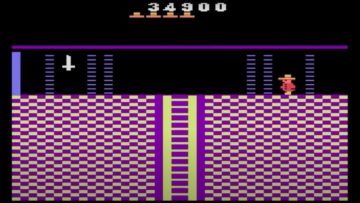 Scientists have come up with a computer program that can master a variety of 1980s exploration games, paving the way for more self-sufficient robots.
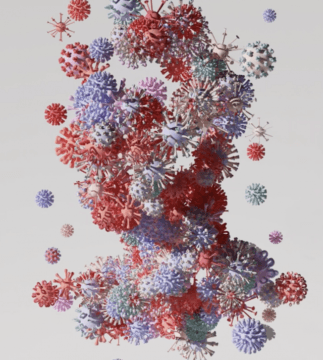 Last spring,
 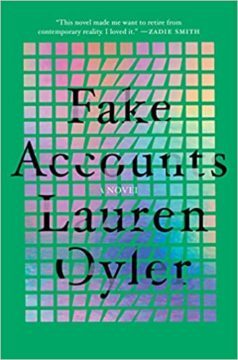 Since its consolidation at the end of the eighteenth century, the realist novel has been the premier vehicle for the depiction of contemporary life. For over two hundred years, a relatively fixed set of representational techniques – point-of-view, voice, description, dialogue, plot – has managed to adapt to the radical transformations of modernity: the nuclearization of the family, the entry of women into public life, the liberalization of sexual mores, industrialization and deindustrialization, urbanization and suburbanization, secularization, the lifeworlds of dominated classes and colonized nations, war on a planetary scale, and new conceptions of cognition and identity formation, to name just a few. By doubling down on its core strength – the linguistic representation of inner experience – the novel even managed to fend off challenges from rival media, like film and television. But over the last decade or so it has become clear that changes in the texture of the contemporary itself, due primarily to the diffusion of digital networked media, have begun to strain the capacity of the novel – as an institution, as a medium, as a form – to fulfil its traditional remit.
 During a rare excursion to a clothes shop I took last month, an older woman walked in, looked around at the other shoppers and exclaimed, “humans!” It was an unusual moment of bonding with strangers. Mostly I just hold my breath as people squeeze past me at the supermarket. In this year of staying two metres away from practically everyone, we’ve all become used to treating other people as potentially toxic. Now that vaccinations are under way, we’re allowed to hope that we will one day emerge from hibernation. What will socialising be like on the other side? And how will we cope with being together again?