
Steven Levy in Wired:
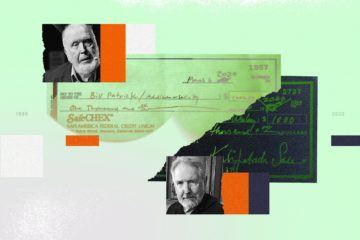 ON MARCH 6, 1995, WIRED’s executive editor and resident techno-optimist Kevin Kelly went to the Greenwich Village apartment of the author Kirkpatrick Sale. Kelly had asked Sale for an interview. But he planned an ambush. Kelly had just read an early copy of Sale’s upcoming book, called Rebels Against the Future. It told the story of the 19th-century Luddites, a movement of workers opposed to the machinery of the Industrial Revolution. Before their rebellion was squashed and their leaders hanged, they literally destroyed some of the mechanized looms that they believed reduced them to cogs in a dehumanizing engine of mass production.
Sale adored the Luddites. In early 1995, Amazon was less than a year old, Apple was in the doldrums, Microsoft had yet to launch Windows 95, and almost no one had a mobile phone. But Sale, who for years had been churning out books complaining about modernity and urging a return to a subsistence economy, felt that computer technology would make life worse for humans. Sale had even channeled the Luddites at a January event in New York City where he attacked an IBM PC with a 10-pound sledgehammer. It took him two blows to vanquish the object, after which he took a bow and sat down, deeply satisfied.
Kelly hated Sale’s book. His reaction went beyond mere disagreement; Sale’s thesis insulted his sense of the world. So he showed up at Sale’s door not just in search of a verbal brawl but with a plan to expose what he saw as the wrongheadedness of Sale’s ideas. Kelly set up his tape recorder on a table while Sale sat behind his desk.
More here.
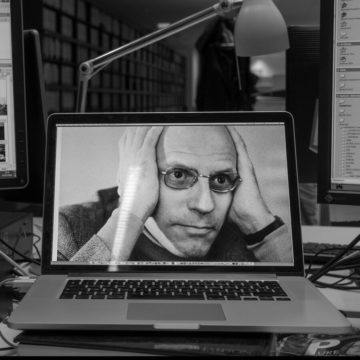 There are many kinds of pseudosciences: astrology, homeopathy, flat-Earthism, anti-vaxx. These ‘fields’ traffic in bizarre claims with scientific pretensions. On a surface level, these claims seem to be scientific and usually appear to comment on the same kind of things that science does. However, upon closer inspection, pseudoscience is revealed to be
 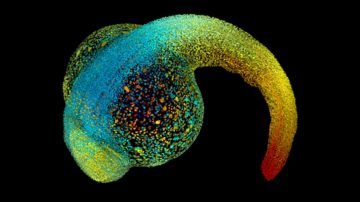 At first, an embryo has no front or back, head or tail. It’s a simple sphere of cells. But soon enough, the smooth clump begins to change. Fluid pools in the middle of the sphere. Cells flow like honey to take up their positions in the future body. Sheets of cells fold origami-style, building a heart, a gut, a brain.
 First things first — much respect to Bill Gates for his membership in the select club of ultrabillionaires not actively attempting to flee Earth and colonize Mars. His affection for his home planet and the people on it shines through clearly in this new book, as does his proud and usually endearing geekiness. The book’s illustrations include photos of him inspecting industrial facilities, like a fertilizer distribution plant in Tanzania; definitely the happiest picture is of him and his son grinning identical grins outside an Icelandic geothermal power station. “Rory and I used to visit power plants for fun,” he writes, “just to learn how they worked.”
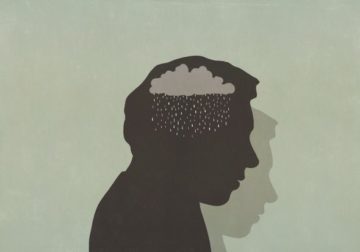 A consensus has emerged in recent years that psychotherapies—in particular, cognitive behavioral therapy (CBT)—rate comparably to medications such as Prozac and Lexapro as treatments for depression. Either option, or the two together, may at times alleviate the mood disorder. In looking more closely at both treatments, CBT—which delves into dysfunctional thinking patterns—may have a benefit that could make it the better choice for a patient.
 When 22-year-old Cassius Clay
  “How did you reach adulthood without learning how to cook?”
 The history of digital cash consists of scientific discoveries from the 1970s, hardware from the 1980s, and networks from the 1990s, shaped by theories from the previous three centuries and beliefs about the next ten thousand years. It speaks ancient ideas with a modern twang, as we might when we say “quid pro quo” or “shibboleth”: the sovereign right to issue money, the debasement of coinage, the symbolic stamp that transfers the rights to value from me to thee. Digital cash has the hovering, unsettled realness (not reality) of all money, a matter of life and death that is also symbolic tokens, rules of a game, scraps of cotton blend and polymer, entries in a database, promises made and broken, gestures of affection and trust. The long history we are discussing here is at its heart the history of a debate about knowledge, an epistemological argument conducted through technologies.
 For almost a year, the central policy debate in most Western countries has been whether—and for how long—to impose lockdowns. Advocates of stringent lockdowns argue that measures such as stay-at-home orders and forced closures of businesses are necessary to save lives and prevent health-care systems from being overwhelmed. So-called “lockdown sceptics,” on the other hand, argue either that such measures are ineffective, or that their benefits are outweighed by the associated social and economic costs; and that a focussed protection strategy is preferable. (The term “lockdown,” as I am using it, does not encompass all non-pharmaceutical interventions. In particular, I am excluding non-onerous, common-sense measures like asking symptomatic individuals to self-isolate, encouraging vulnerable people to work from home, and restricting large indoor gatherings.)
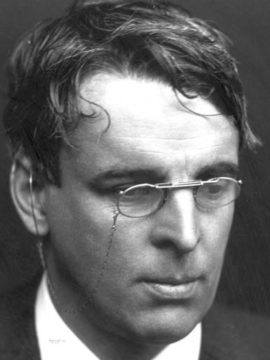 Yeats saw so deeply into the contours of his age that the shape of the future became somewhat discernible. He understood that those who merely reflect the nostra of their times soon go out of fashion (“like an old song”), but that those who oppose the spirit of their age often capture its central energies and come to know it from within. In doing as much, they may imagine the sort of future world to which a dreamer will awaken (“In dreams begin responsibility”).
 Don’t think yourself odd if, after reading the Danish writer Tove Ditlevsen’s romantic, spiritually macabre, and ultimately devastating collection of memoirs, “
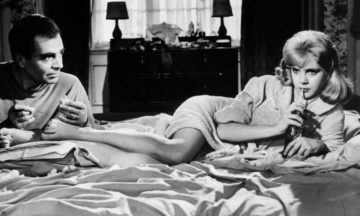 Teenagers are so vulnerable. Like ripe peaches, they’re too easily bruised. But Alisson Wood was more defenceless than most. At 17, she had already undergone ECT in an effort to treat her depression; beneath her clothes, her arms bore the marks of self-harm. If her American high school was a place to be endured – the other girls, in their locker-room sententiousness, had decided she was a “psycho” – home was hardly a refuge. Her parents, who would soon divorce, were more preoccupied with their own troubles than with those of their exhausting, Sylvia Plath-loving daughter.
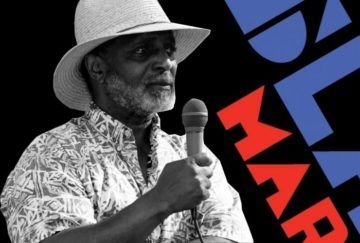 The inspiration to bring out a new edition of Cedric Robinson’s classic, Black Marxism: The Making of the Black Radical Tradition, came from the estimated 26 million people who took to the streets during the spring and summer of 2020 to protest the killings of George Floyd, Breonna Taylor, Ahmaud Arbery, and the many others who lost their lives to the police. During this time, the world bore witness to the Black radical tradition in motion, driving what was arguably the most dynamic mass rebellion against state-sanctioned violence and racial capitalism we have seen in North America since the 1960s—maybe the 1860s. The boldest activists demanded that we abolish police and prisons and shift the resources funding police and prisons to housing, universal healthcare, living-wage jobs, universal basic income, green energy, and a system of restorative justice. These new abolitionists are not interested in making capitalism fairer, safer, and less racist—they know this is impossible. They want to bring an end to “racial capitalism.”
 Lately, I’ve found myself wondering if the time spent in lockdown is going to be memorable or if it’s just going to be one long blur of days spent more or less the same way—waking up, staring, trying to work, forgetting to do things, drinking, sleeping. Even the initial flood of pieces about the lockdown experience has mostly dried up, replaced by tweets in which people confess not to know how to get through the sameness of each predictable tomorrow. There’s nothing to say about nothing. Furthermore, no one wants to read about it. No one even wants to write about it (though here I am anyway).
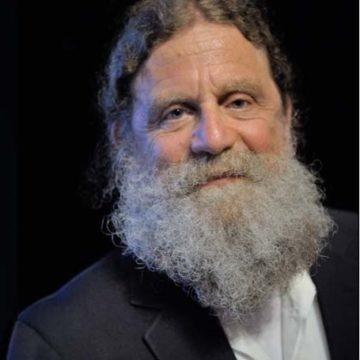 A common argument against free will is that human behavior is not freely chosen, but rather determined by a number of factors. So what are those factors, anyway? There’s no one better equipped to answer this question than Robert Sapolsky, a leading psychoneurobiologist who has studied human behavior from a variety of angles. In this conversation we follow the path Sapolsky sets out in his bestselling book