
Category: Recommended Reading
Velázquez’s Las Meninas: A Detail That Decodes A Masterpiece
Kelly Grovier at BBC Culture:
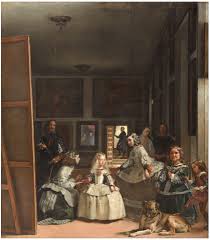 To appreciate fully how the seemingly incidental presence of a ceramic folk craft from Latin America – when polished into pertinence by Velázquez’s virtuoso brush- becomes a visionary lens through which we glimpse the world anew, we must first remind ourselves of the cultural context from which the painting emerged and what it purports to portray. On one significant level, the work provides a self-portrait of the 57-year-old artist four years before his death in 1600, after he had spent more than three decades as court painter to King Philip IV of Spain. Palette in hand on the left side of the painting, Velázquez’s life-size selfie stares our way as if we were the very subject that he is busy capturing on an enormous canvas that rises in front of him – a painting-within-a-painting whose imaginary surface we cannot see.
more here.
Disclaimer
Jackson Arn at 3AM Magazine:
 Recently, I won’t say exactly when but embarrassingly late in life, I realized that books had been lying to me. Movies were slightly better, but still untruthful. To put it another way, I realized that nothing is connected. Nothing is central. Not all things happen at the same time, or a millisecond before or after that time, or at midnight, or on anniversaries.
Nobody jogs down a street and sees a sign that says SIMPSON and then later that afternoon drives to their dentist and finds a new receptionist, surname Simpson, caressing the desk with nails of plastic coral.
Her eyes are never the precise whimpery blue of an April morning in the Southwest. They may bear a passing resemblance to that shade, they may be very, very close, but they are never the same, no matter how hard one overworks one’s eyes.
more here.
The Moment of Impressionism
Michael Fried at nonsite:
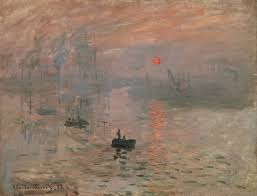 Specifically, I want to suggest that the advent of Impressionism around 1870 marks a fundamental break in what I will call the dialectical continuity of French painting going back to the middle of the eighteenth century, when a new conception of the absorptive and dramatic tableau came to the fore in the paintings of Jean-Baptiste Greuze (themselves inconceivable apart from the precedent of the genre paintings of Jean-Baptiste-Siméon Chardin) and the art critical and theoretical writings of the polymath philosophe Denis Diderot, the founder of art criticism as we know it. This is the fateful development analyzed in my 1980 book, Absorption and Theatricality: Painting and Beholder in the Age of Diderot, in which I argue (I would like to think I demonstrate) that starting in the mid-1750s and 1760s in France the art of painting found it necessary to confront a new imperative: to find the means to suspend or neutralize—to somehow wall off—the now suddenly distracting presence of the beholder; or to put this slightly differently, to somehow establish the supreme fiction or ontological illusion that the beholder does not exist, that there is no one standing before the painting. I describe this imperative in terms of a need to stave off, if possible to overcome, a newly distinct danger of theatricality. And I argue that this was to be accomplished with the aide of two principal strategies: first, the thematization of absorption, which is to say the depiction of personages each of whom was felt to be entirely caught up (absorbed) in whatever was understood to be taking place within the representation; and second, the promotion of a new, more exigent ideal of dramatic unity, according to which all the elements in the painting were directed toward a single dramatic end, thereby achieving a compositional effect of closure vis-à-vis the beholder.
more here.
Wednesday Poem
1. Primevère Primrose
first yellow yes
but the very first
rose of the first
spring firsting
(a honeyed fist)
2. Platane Plane Tree
bark peels off in patches
leaving a mottled trunk
(inside spring pushes
out new skins) or
thickens and cracks
3. Asperge Asparagus
sparrow grass marks you
greenscented
leaving its tang in your water
all this hurry into life
(a lily stem)
4. Tulip Tulipe
still life never
motionless but fragile
in wind a turban
unwound (how
far a flower)
5. Poule Hen
women are fragile
on dating apps
and difficult to monetise
(he said) their golden
eggs in a basket Read more »
Calling Trump to Account with Sticks and Stones, and Words As Well
Andrew Levine in CounterPunch:
 The Trump years have transformed the Greater Evil Party, formerly known as the GOP, into a party too appalling even to contemplate without going berserk. Alarmists expected all sorts of bad things to come from the Trump presidency, but no one quite expected this. Meanwhile, the Democratic Party has sprouted a left wing too extensive and organized for that wretched party’s leaders and donors to marginalize. Even after the Occupy movements of 2011 and the Sanders campaign in 2016, this too was unexpected. It is also, by far, the best thing that has happened in American politics in decades. It probably would not have happened but for Trump. Who would have expected that? Who could have imagined that his unmitigated vileness and his incompetence would have had that unintended effect? It did, though. And so, calls for social policies comparable to those achieved in advanced social democracies a half century ago have become almost mainstream. More amazing still, thanks to Trump more than anyone else, the word “socialism” need no longer be uttered only in whispers in Democratic Party circles.
To be sure, the “democratic socialism” championed by Bernie Sanders, and now by a dozen or so “squad” and squad-like House members, and also, implicitly, by a handful of Senators as well, is linked to progressive strains of mid- and late-twentieth century social democratic politics more in spirit than genealogy. It is essentially an up-dated version of New Deal-Great Society liberalism. Calling it “socialism” can therefore be misleading and even counter-productive in a political culture in which capitalists and capitalist ideologues have expended a great deal of effort and treasure over the past century and a half with a view to assuring that the very word would bear negative connotations.
More here.
Play is so important that nature invented it long before it invented us
Andreas Wagner in Nautilus:
 Mind-wandering is often considered a harmless quirk, as in the cliché of the scatter-brained professor. But it has real consequences. Let’s begin with the bad ones. Absentminded people perform less well on tests that require focused attention, such as reading comprehension tests. More worrisome, they also perform more poorly on tests that you better not flunk if you have any career aspirations. Among them is the Scholastic Aptitude Test that many colleges require for admission. But mind-wandering also has an upside—at least for well-trained minds. Indeed, many anecdotes of creators like Einstein, Newton, and eminent mathematician Henri Poincaré, report that these scientists solved important problems while not actually working on anything. The common wisdom that the best ideas arrive in the shower is exemplified by Archimedes’s discovery of how to measure an object’s volume. (OK, he was in a bathtub.) But while Archimedes’s discovery was triggered by the rising water as he entered the tub, other breakthroughs surface apropos of nothing. Take this well-known quote from the Poincaré describing a period in his life when he had worked without success on a mathematical problem:
Disgusted with my failure, I went to spend a few days at the seaside, and thought of something else. One morning, walking on the bluff, the idea came to me, with … brevity, suddenness, and immediate certainty, that the arithmetic transformations of indeterminate ternary quadratic forms were identical with those of non-Euclidean geometry.
The apparently idle period before such insights arrive has a name: incubation. If hard and seemingly futile work on a difficult problem is followed up with a less demanding activity that does not require complete focus—walking, showering, cooking—a mind is free to wander. And when that mind incubates the problem, it can stumble upon a solution.
More here.
Tuesday, December 22, 2020
Beethoven and Freedom
David P. Goldman in Tablet:
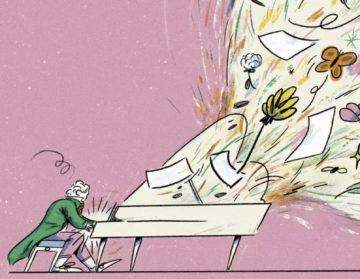 On Christmas Day 1989 after the fall of the Berlin Wall, Leonard Bernstein conducted Beethoven’s Ninth Symphony, with its setting of Friedrich Schiller’s Ode to Joy:
Joy, immortal incandescence!
Daughter of Elysium!
Drunk with fire from thy presence
To thy temple ground we come …
“Freude”—Joy—is the subject of Schiller’s ode, but Bernstein substituted the word “Freiheit”—Freedom—in his festive rendering of the work. That fit the occasion, but it also paid tribute to Beethoven himself, lauded as the composer of freedom by writers too numerous to mention.
There are rare moments when the triumph of the human spirit lifts us into a higher state of being. We look at perfect strangers and see the better angels of our nature, and shed the pettiness and petulance of daily life. We feel the touch of the infinite and feel the fullness of our freedom, because man is only free as a moral agent. And in such moments we hearken to the composer of freedom, whose 250th birthday falls this Dec. 16. People of good will everywhere will celebrate this anniversary with gratitude. I owe a personal debt to Beethoven, the guide and comfort of my youth, and in his honor I offer a thought about his music: It isn’t only that Beethoven was an apostle, or an exemplar of freedom, but that his music actually summons us to freedom.
More here.
Sean Carroll’s Holiday Message 2020: The Screwy Universe
Sean Carroll in Preposterous Universe:
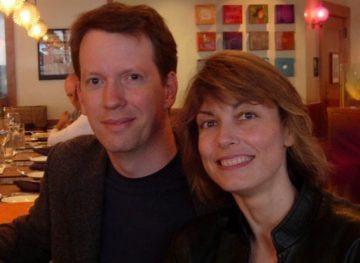
Welcome to the third annual Mindscape Holiday Message! Just a chance for me to be a little more chatty and informal than usual, although as it turned out this isn’t all that different from a conventional solo episode. With the difference that what I’m talking about — a phenomenon called “cosmic birefringence” — has played a big part in my personal scientific career, so I get to be a bit autobiographical.
Every photon has a direction of polarization, which generally remains fixed as the photon travels through space. Birefringence is an effect by which the polarization rotates rather than staying fixed. It can happen in materials, but generally not in outer space. But there are exotic physics ideas that could cause such a rotation, including the dynamical dark energy candidate known as quintessence. People have put limits on such cosmic birefringence for a while now, but recently there was a claim that there might be a nonzero amount of birefringence visible in the polarization of the cosmic microwave background! Still very tentative, but if this hint turns into real evidence, it would big extremely big news for our understanding of physics and cosmology, possibly helping us pinpoint the nature of dark energy.
More here.
Sabine Hossenfelder: All you need to know to understand 5G
Mourning on a wintry day at the end of a year that has all been winter
Dur e Aziz Amna in the New York Times:
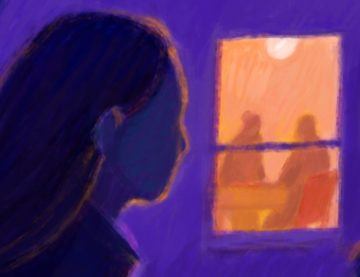 For those, like me, living far from home, there is a worry so common it is banal: the Call. The call that comes when a loved one is hurt or dying. We brace ourselves against it, convinced that anticipation is inoculation against grief. To this day, I sleep with my phone on silent only when I am back in Pakistan; home is the place where late-night calls don’t seize the ground beneath you.
In Michigan, when the phone rings in the middle of the night, it’s usually just a wrong number or a relative who thinks America is five hours behind and not 10. Sometimes though, it is a sunny morning, the house smells of coffee and the baby is playing with tiny toes when the phone rings, and something in you, that animal that senses danger before it manifests, tells you that it’s bad news.
More here.
Leonora Carrington – Britain’s Lost Surrealist
How Leonora Carrington Feminized Surrealism
Merve Emre at The New Yorker:
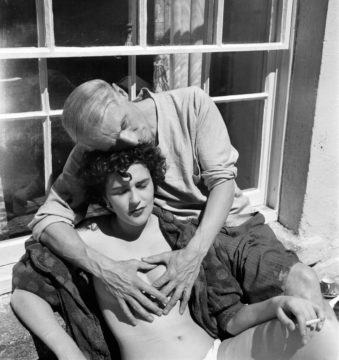 When asked to describe the circumstances of her birth, the Surrealist painter and writer Leonora Carrington liked to tell people that she had not been born; she had been made. One melancholy day, her mother, bloated by chocolate truffles, oyster purée, and cold pheasant, feeling fat and listless and undesirable, had lain on top of a machine. The machine was a marvellous contraption, designed to extract hundreds of gallons of semen from animals—pigs, cockerels, stallions, urchins, bats, ducks—and, one can imagine, bring its user to the most spectacular orgasm, turning her whole sad, sick being inside out and upside down. From this communion of human, animal, and machine, Leonora was conceived. When she emerged, on April 6, 1917, England shook.
more here.
The Winter Solstice
Nina MacLaughlin at The Paris Review:
 The summer solstice scene is loose and dewy, flower-crowned crowds in debauch around the bonfires. People leaped over flames and the tongues of flame licked up high into the night. In winter: private fires. Home hearths. These fires “have such power over our memory that the ancient lives slumbering beyond our oldest recollections awaken with us …revealing the deepest regions of our secret souls,” writes Henri Bosco in Malicroix. The Yule log didn’t start as a cocoa confection with meringue mushrooms on the top. It was oak burned on the night of the solstice. Depending where one lived, the ashes of the solstice fire were then spread on fields over the following days to up the yield of next season’s crop, or fed to cattle to up fatness and fertility of the herd, or placed under beds to protect against thunder, or sometimes worn in a vial around the neck. The ancient cults cast shadows in our minds, shift and flicker, their fears are still our fears, down in the darkest places of ourselves.
more here.
Tuesday Poem
Excerpts from “Cajas/Boxes with Zero Tolerance”
3.
In 1930, my tatarabuela still spoke Rarámuri.
Detribalized now as we’ve been from Turtle Island,
south and north of the río grande, west and east
it’s no surprise that we’re still writing about
our identities, brown women regarded
as brown women, they’d say equally as if
a consolation for any. What does it mean
to be Mexican living in Tejas,
singing in English? I blend in. U.S.
citizenship privilege—check. Education—check.
Job security, check. Chingona propensity, check.
Trauma half-lives (half-līves).
I thought music touches us first
and then the words.
If they built the wall near you,
you’d think music left for rhetoric too.
4.
If they built walls and migrant kennels near you,
you’d think music left for rhetoric too.
Jefferson Che Pop, six, stolen from his papá
Hermelindo, in El Paso, a day after crossing.
Weeks later, by phone, in Mayan Q’eqchi
Papá, I thought they killed you. You separated from me.
Where are you? You don’t love me anymore?
How can I sing a song in this English
when this country urges many to sign
this and that form in this English?
Have it all end with a form in English?
Why would any parent crossing countries
seeking asylum agree, deport me, childless?
from Split This Rock
You Can Get Through This Dark Pandemic Winter, Using Tips From Disaster Psychology
Melinda Moyer in Scientific American:
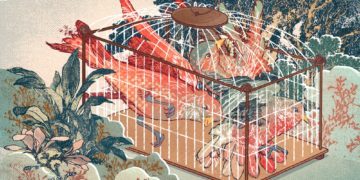 Amy Nitza has spent decades helping people in crisis. The director of the Institute for Disaster Mental Health at the State University of New York at New Paltz has traveled to Puerto Rico in the wake of Hurricane Maria, to Botswana during an HIV crisis and to Haiti to help traumatized children forced into domestic servitude. But the COVID-19 pandemic, Nitza says, is different. It keeps coming at people month after month as loved ones get sick or die, as jobs are lost, and as the actions taken to avoid infection—such as isolation from family—cause intense emotional pain and stress. As of December 2020, more than 1.6 million people around the globe have died from the coronavirus. Grief, fear and economic hardship have hit every nation. In the U.S. the numbers have been overwhelming: more than 300,000 people have died, and about 17 million have been infected with the virus, according to the Johns Hopkins Coronavirus Resource Center. Usually disasters have survivors and responders, Nitza says, but COVID is so widespread that people are both of those things at once. “We’re training everybody [on] how to take care of themselves and how to support the people around them,” she says.
The upcoming winter looks especially dark and hard as deaths climb to exceed the losses of 9/11 every day. As soon as we hear that outbreaks are receding, they rise back up again like storm-tossed seas. Perhaps the toughest part is that no one knows when the pandemic will end or whether the future will look anything like the past. Vaccines are here for some health-care workers and nursing-home residents, but for most of us, they are still months away. At the moment, many hospitals are overwhelmed with waves of new COVID patients. “We as a nation have never been in anything like this,” says Charles Figley, who has worked in disaster psychology for 40 years and is director of the Traumatology Institute at Tulane University in New Orleans.
More here.
Sold short: confessions of a young banker
Alice Fulwood in The Economist:
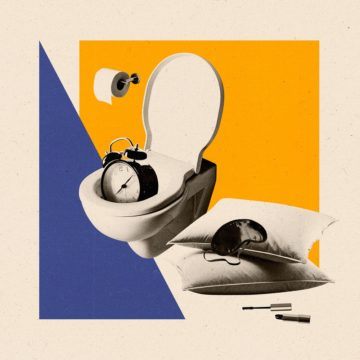 I had to watch each episode of “Industry”, a tv drama about young bankers, in 15-minute doses. This is no fault of the show, which is joyously binge-worthy and thoroughly deserves the second series it has just been granted. It’s because it reminded me so powerfully of my previous life – as a 20-something on the trading floor – that I kept having to press pause before psyching myself up to carry on watching. Sure, some of the details are a little off (how did Harper get away with that $140k loss? Would a hedge-fund manager really bet on Treasury yields going to 4%?). Yet most of it is jarringly familiar to anyone who, like me, was lured into a career in finance as a young person.
When a character spread his company-branded fleece on the floor of a toilet cubicle to take a nap instead of returning home to sleep, I sighed with recognition. I remembered that choice: should I waste over an hour travelling back and forth for two hours’ sleep in a real bed, or kip on the bathroom floor for three? I, too, picked the loos – mostly because I was afraid that going home would mean I would turn up late the next day. How did I end up working in finance? Though I told people it was because I liked economics and maths, in large part it reflected my own insecurity. I reckoned I was pretty clever and reasonably numerate. But I was also worried that I lacked the wild talent and immense self-belief that you need to pursue a “dream career” in something like theatre or politics, where failure looms large. My passion was for being successful.
More here.
Sunday, December 20, 2020
Lorraine Hansberry Was an Unapologetic Radical
Joel Whitney in Jacobin:
 In May 1963, in a Kennedy family living room on Central Park South, Lorraine Hansberry tried to defend civil rights activists’ safety. The Raisin in the Sun playwright had come along with actor Harry Belafonte, author James Baldwin, and other luminaries at the invitation of Robert F. Kennedy and Baldwin. She listened as activist Jerome Smith tried to impress upon the attorney general the level of violence protesters were facing in the South. Smith had come straight from the Freedom Rides for medical treatment on his jaw and head, having been beaten in Birmingham.
The young unknown activist spoke first among the prestigious attendees. He chided Kennedy for not doing enough to protect protesters. On television and in newspapers around the world, it was clear that African American protesters were routinely punched, kicked, spat upon, clubbed, hosed, and had police dogs sicced on them. For what? Wanting to vote? Equal protection? Just being there, he said, made him sick at the administration’s inaction.
When Kennedy turned away from Smith — as if to say, “I’ll talk to all of you, who are civilized. But who is he?” — Hansberry “unleashed,” Imani Perry writes in her recent biography. There were many accomplished individuals in the room, Hansberry said, but Smith’s was the “voice of twenty-two million people.” Kennedy should not only listen; he should give his “moral commitment” to protect those like Smith.
More here.
The Milky Way is probably full of dead civilizations
Rafi Letzter in Live Science:
 Most of the alien civilizations that ever dotted our galaxy have probably killed themselves off already.
That’s the takeaway of a new study, published Dec. 14 to the arXiv database, which used modern astronomy and statistical modeling to map the emergence and death of intelligent life in time and space across the Milky Way. Their results amount to a more precise 2020 update of a famous equation that Search for Extraterrestrial Intelligence founder Frank Drake wrote in 1961. The Drake equation, popularized by physicist Carl Sagan in his “Cosmos” miniseries, relied on a number of mystery variables — like the prevalence of planets in the universe, then an open question.
This new paper, authored by three Caltech physicists and one high school student, is much more practical. It says where and when life is most likely to occur in the Milky Way, and identifies the most important factor affecting its prevalence: intelligent creatures’ tendency toward self-annihilation.
More here.
Study of 50 Years of Tax Cuts For Rich Confirms ‘Trickle Down’ Theory Is an Absolute Sham
Kenny Stancil in Common Dreams:
The Economic Consequences of Major Tax Cuts for the Rich (pdf), a working paper published this month by the International Inequalities Institute at the London School of Economics and written by LSE’s David Hope and Julian Limberg of King’s College London, examines data from nearly 20 OECD countries, including the U.K. and the U.S., and finds that the past five decades have been characterized by “falling taxes on the rich in the advanced economies,” with “major tax cuts… particularly clustered in the late 1980s.”
But, according to Hope and Limberg, the vast majority of the populations in those countries have little to show for it, as the benefits of slashing taxes on the wealthy are concentrated among a handful of super-rich individuals—not widely shared across society in the form of improved job creation or prosperity, as “trickle down” theorists alleged would happen.
More here.