
 Dana El Kurd in Sidecar:
Violence against Palestinians over the last few weeks has been so horrific that it has come to the attention of those who were previously blind to it. Over two hundred dead in Gaza alone, fifty-nine of them children. Media offices bombed, thousands injured and tens of thousands displaced. Palestinians in Israel have been killed by lynch mobs while the police stand by. As a result, the usual taboos are being broken. Six US Congress members condemned the attacks on Gaza from the House floor, and Alexandria Ocasio-Cortez acknowledged Israel as an ‘apartheid state’. Yet the US is far from rescinding its support for Netanyahu. On three occasions during the latest bombardment it has blocked the UN Security Council’s call for a ceasefire, greenlighting the merciless campaign against the Gaza strip. If Trump was the most brazen supporter of Israeli aggression, his successor is not much different.
None of this is new. Gaza has been under attack at regular intervals since 2008, and with each Israeli incursion we have seen a similar pattern play out: ethnic cleansing of Palestinians in Israel and the occupied territories, huge provocations accompanied by repression on the ground, and F16s raining bombs on Gazans. Human rights organizations – international as well as Israeli – have repeatedly condemned the illegal blockade of Gaza and the forward march of Israeli settler colonialism. Yet their appeals fall on deaf ears.
More here.
 Ted Fertik (he/him) in Alchemist:
 George Scialabba in The Baffler:
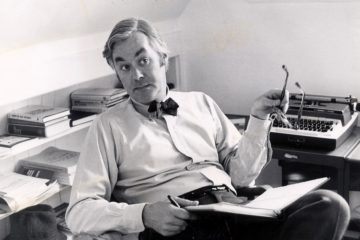 “The central conservative truth is that it is culture, not politics, that determines the success of a society,” Senator Daniel Patrick Moynihan of New York said during a lecture at Harvard in 1986. “The central liberal truth is that politics can change a culture and save it from itself.” Moynihan, an apostle of complexity, lived at the intersection of those two truths, a place where he was free to become one of the most creative American thinkers of the late 20th century. He sensed, and then came to know, that the social problems of what was being called “postindustrial” society would be different from those that came before. He identified these problems, sometimes controversially. In so doing, he predicted the dislocations of the 21st century with uncanny accuracy. He did it with elegance and wit and — this may be a surprise — transcendent humility. His spot-on sense of what truly mattered deserves to be revisited now, if we’re to grope our way past the mess we’ve become as a society.
 This time last year, the United States seemed stuck on a COVID-19 plateau. Although 1,300 Americans were dying from the disease every day, states had begun to reopen in
  Last Saturday was Nakba Day, which commemorates the 700,000 Palestinians who were expelled by Israel – or who fled in fear – during the country’s founding in 1948. The commemoration had special resonance this year, since it was Israel’s impending expulsion of six Palestinian families from the East Jerusalem neighbourhood of Sheikh Jarrah that
 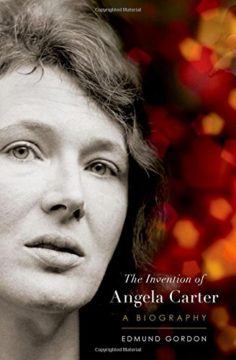 I would imagine that anyone approaching Edmund Gordon’s comprehensive biography, The Invention of Angela Carter, has a memorable “first time” with Carter. When it comes to cult figures of the intelligentsia, the story of the first time is practically de rigueur. Gordon himself mentions his own in his epilogue. During a post-university year in Berlin, he came upon a secondhand copy of The Magic Toyshop, which Carter had described to her editor in 1966 as a “Gothic melodrama about a sort of South Suburban bluebeard toymaker & his household.” A writer Gordon admired, Ali Smith (an iconoclast of her own order), had spoken highly of Carter, whose reputation he’d previously thought had something “off-putting” about it—“a sense, perhaps, that she was just for girls.” Nonetheless, he bought the novel and “tore” through it “in a few intoxicated hours, stunned by the fearless quality of the imagination on display and by the luminous beauty of the prose.”
 As a tormented young anarchist pacifist pining for radical deliverance while cooped up at home with his parents in Berlin during the First World War, Gershom Scholem felt absolutely committed to one cause: Zionism. The only problem, he acknowledged in his journal, was that Zionists had not yet defined the contents of their ideology. As far as Scholem was concerned, Zionism had no political implications. It did not necessitate an oceanic ingathering of the Jewish people from the diaspora. There was no imperative to farm the Holy Land. The movement, in the eyes of the future pioneering scholar of kabbalah, was a humanistic, anti-bourgeois endeavour that probably required a commitment to living in Palestine or thereabouts. But it did not require the acquisition of sovereign control over territory, let alone taking possession of land belonging to the Arab peoples resident in the country.
 Leading Indian authors Pankaj Mishra and
  Since the modern era of research on autism began in the 1980s, questions about social cognition and social brain development have been of central interest to researchers. This year marks the 20th anniversary of the first annual meeting of the
  It’s hard to understand the culture of policing in America from the outside.
 One pillar of the modern world was the project to transform science from a discipline for contemplating nature into a tool for mastering it. Queen among the new sciences was mathematical physics, made possible by a corresponding transformation of mathematics. Ancient mathematicians, said René Descartes, had misunderstood their subject. They offered a procession of dazzling spectacles, but mathematics properly understood is not the presentation of beautiful chance discoveries. It must instead provide a systematic method for solving problems.
 In a study of the effectiveness of putting calorie counts on menu items, consumers were more likely to make lower-calorie choices if the labels were placed to the left of the food item rather than the right.