
Moudhy Al-Rashid in Psyche:
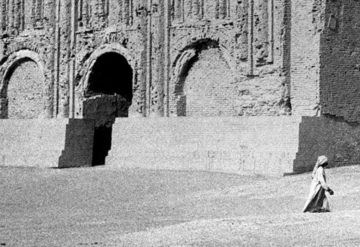 Along a dried-up channel of the Euphrates river in modern-day Iraq, broken mud bricks poke out of vast, dusty ruins. They are the remains of Uruk, the birthplace of writing that’s better known in popular culture today as the city once ruled by the legendary king Gilgamesh, the hero of an epic about his struggle with life, love and death. Sometimes called the oldest story in the world, the Epic of Gilgamesh continues to resonate with modern audiences more than 3,000 years after a Babylonian scholar named Sîn-leqi-unninni picked up his reed stylus and, in the tiny tetrahedrons of cuneiform script, impressed a standardised version of the epic on to 12 clay tablets. Written in a literary dialect of the Akkadian language spoken in ancient Mesopotamia, it’s this version that has survived on fragmentary clay copies – some as big as an iPad and others as little as a fingertip – uncovered from sites throughout what is now Iraq, Syria and neighbouring countries.
The story is equal parts hero’s journey and crash course in Mesopotamian cosmology, as Gilgamesh follows the Tigris and Euphrates rivers to their source beyond the known world in search of a survivor of the apocalyptic Flood named Uta-napishti. Fundamentally, it tells of Gilgamesh’s transformation from cruel to kindly king.
More here.
 It wasn’t long into the pandemic before Simon Carley realized we had an evidence problem. It was early 2020, and COVID-19 infections were starting to lap at the shores of the United Kingdom, where Carley is an emergency-medicine doctor at hospitals in Manchester. Carley is also a specialist in evidence-based medicine — the transformative idea that physicians should decide how to treat people by referring to rigorous evidence, such as clinical trials.
 Joe Biden’s American Families Plan is something of a miracle. It carries out goals that advocates have only dreamed of.
 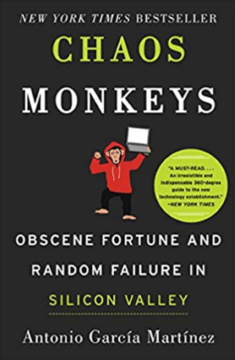 When I read Chaos Monkeys the first time I was annoyed, because this was Antonio’s third career at least — he’d also worked at Goldman, Sachs — and he tossed off a memorable bestseller like it was nothing. Nearly all autobiographies fail because the genre requires total honesty, and not only do few writers have the stomach for turning the razor on themselves, most still have one eye on future job offers or circles of friends, and so keep the bulk of their interesting thoughts sidelined — you’re usually reading a résumé, not a book.
 unch:
unch: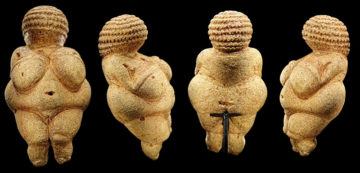 Archaeologists and other scientists are beginning to unravel the story of our most intimate technology: clothing. They’re learning when and why our ancestors first started to wear clothes, and how their adoption was crucial to the evolutionary success of our ancestors when they faced climate change on a massive scale during the Pleistocene ice ages. These investigations have revealed a new twist to the story, assigning a much more prominent role to clothing than previously imagined. After the last ice age, global warming prompted people in many areas to change their clothes, from animal hides to textiles. This change in clothing material, I suspect, could be what triggered one of the greatest changes in the life of humanity. Not food but clothing led to the agricultural revolution.
 Thomas Meaney in The New Yorker:
 David Masciotra in the Los Angeles Review of Books:
 Corey Robin in the NYRB:
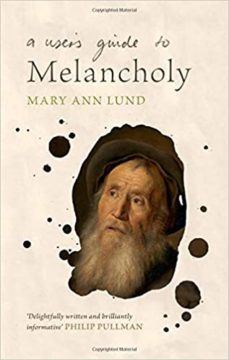 Mary Ann Lund’s book serves as an introduction not just to Burton’s magnum opus but to contemporary and historical conceptions of melancholy. Do not make the mistake of confusing “melancholy” with what we now call depression. Her brief is not so much to say why or how Burton’s style is so delightful but to give us a learned, broad and readable picture of Renaissance medicine, using Burton’s book as a starting point. Melancholy, in the early modern world, could present itself in bizarre ways. Think “Embarrassing Early Modern European Bodies”. She tells, for instance, the story of the classical scholar Isaac Casaubon (1559-1614), whose “postmortem revealed that his bladder was malformed and that the supplementary bladder was nearly six times as large as the main chamber”. The apparent reason was that he had regularly ignored the call of nature while being absorbed in his work. (That George Eliot chose the name for the dry-as-dust obsessive in
 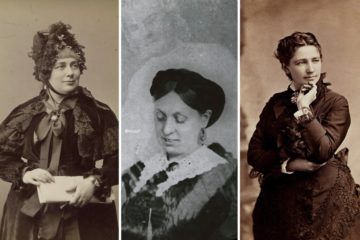 Although they inspired many imitators, the Fox sisters did not number among those mediums who subsequently developed Spiritualism as an organized movement in both the United States and Britain. Their ranks included Emma Hardinge Britten, who wrote its history and traveled the public lecture circuit as a trance medium in the late 1850s, delivering opinions about the issues of the day as dictated by the spirits. By contrast, Victoria Woodhull had cut her ties to Spiritualist groups when her claim to clairvoyant powers persuaded the tycoon Cornelius Vanderbilt to back her in founding the first female brokerage firm on Wall Street. But shortly thereafter she managed to recruit both Spiritualist and women’s rights organizations to support her bid for the presidency in 1872. Meanwhile in Britain, Georgina Weldon — not a medium herself but a stage-struck Spiritualist — fought the efforts of her husband and his squad of doctors to commit her to an asylum. She challenged Britain’s lunacy laws with more than a decade of agitation, which included parading sandwich-board men as pickets, scattering leaflets from a hot-air balloon, giving theatrical performances and offering antic testimony in court.
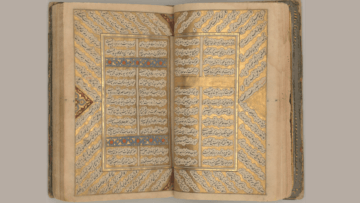 For the past year, I’ve been researching and studying the works of Hafez, one of Iran’s most beloved and influential poets. More than 600 years after his death, his work is still invoked regularly, quoted by Iranian politicians to skewer their rivals and by everyday Iranians in casual conversations over dinner. Normally, this is the part where I would share a verse of his work, or tell you how complex and beautiful his words are. I would to tell you how Iranians use his poems as a form of divination, like a tarot card reading of sorts. Instead, I am consumed with trying to understand why I’ve been devoting so much time to studying the verses of a poet from the fourteenth century right now, when my country is going through every imaginable version of pain. Wouldn’t it make more sense to focus on current national security issues instead of diving into the art of our past?
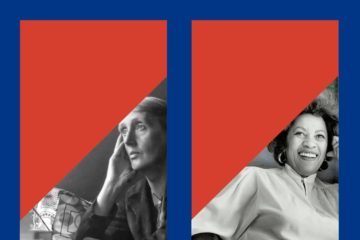 Early this spring, wary and disoriented despite the vaccine at work in my system, I sought a book to help me navigate the strange, bardo-like moment in which disaster and its aftermath begin to overlap. “To the Lighthouse,” Virginia Woolf’s 1927 masterpiece, was the one that kept coming to mind — specifically its experimental middle section, “Time Passes.” Parsed into 10 “chapters,” with its swirling rhythms, involuted structure and flights into abstraction, “Time Passes” presents an especial challenge to the pre-post-pandemic brain. I hoped to find in Woolf’s evocation of grief as a disruption of one’s sense of time not a solution but the solace of a riddle’s key connections laid bare.
 Stockton, California has gotten