
Endling
There’s a man who cares
for the last snail of its kind,
Achatinella apexfulva, knows precisely
how much moisture, shade and light
it needs to thrive while it spends
its dwindling time in a glass cabinet.
Don’t think about what you can start,
think about what you can end was the advice
I heard on a time management podcast
while slicing bananas
for my daughter’s breakfast.
The banana comes from Guatemala
where its kind is plagued
by the Fusarium fungus to a possible
almost certain if-it-continues
at-this-rate extinction.
I’ve never been to Guatemala,
seen a rotting banana plant, or touched
a snail’s glossy shell of the kind
that resembles the palette
of a chocolate box— dark brown, chestnut,
white, the occasional splash of mint.
I watch my daughter collect stones
in her plastic bucket, clinking them beside her
as she runs smiling from one corner
of our yard to another — impossible to say
if this July is the warmest month
since the last warmest month,
until it is. My dread, a garden
crawling with invasive insects.
Later, she smashes bananas at the table
between her dirt-crusted fingernails,
laughs at the stickiness while I try to finish
the article I started days ago
about Achatinella apexfulva,
whose largest threat is
(you might’ve guessed) another snail,
Euglandina rosea, aptly named
for its rosy-hued carapace, who will follow
the slimy trail of its gastropod cousin
then yank it from its shell with its serrated tongue
and swallow it like Cronus, shell and all.
When a species is the last of its kind,
it’s called an endling, a word
that reminds me of changeling,
such a fairy-swapped child
I’ve called my own. I’ve made
this place for her: warm, soft,
a place that someday I’ll not
be allowed to enter,
that may not even survive me.
by Sara Burnett
from Pank Magazine
 Lorna Finlayson in Sidecar:
 Macabe Keliher in Boston Review:
 Ho-fung Hung in Phenomenal World:
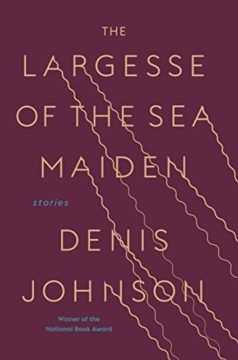 DENIS JOHNSON UNDERSTOOD the impulse to check out. He understood a lot of things, including the contradictory nature of truth. He himself was the son of a US State Department employee stationed overseas, a well-to-do suburban American boy who was “saved” from the penitentiary, as he put it, by “the Beatnik category.” He went to college, published a book of poetry by the age of nineteen (The Man Among the Seals), went to graduate school and got an MFA, but was also an alkie drifter and heroin addict: a “real” writer, in other words (who, like any really real writer, can’t be pigeonholed by one coherent myth, or by trite ideas about the school of life). Later he got clean and became some kind of Christian, published many novels and a book of outstanding essays (Seek), lived in remote northern Idaho but traveled and wrote into multiple zones of conflict—Somalia, Liberia, Sierra Leone, Afghanistan, and famously, in Tree of Smoke, wartime Vietnam. Perhaps being raised abroad, in various far-flung locations (Germany, the Philippines, and Japan), gave him a better feeling for the lost and ugly American, the juncture of the epic and pathetic, the suicidal tendencies of the everyday joe, which seem to have been his wellspring.
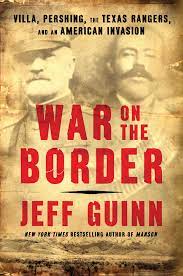 In 1913 and 1914, Mexico suffered under a cruel dictator, Victoriano Huerta, who had gained power by assassinating that nation’s democratically elected president in a U.S.-sanctioned coup. Hoping to restore representative government, four unlikely allies joined forces to defeat Huerta. They called themselves Constitutionalists. The consequences of the Constitutionalists’ victory for both Mexico and the United States are the focus of Texas historian Jeff Guinn’s “
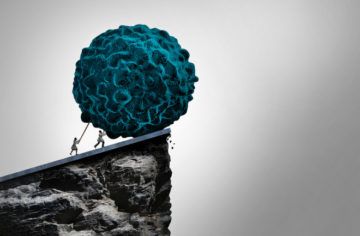 Sitting in an isolated room at Beth Israel Deaconess Medical Center in Boston, Frank Nielsen steeled himself for the first injection. Doctors were about to take a needle filled with herpes simplex virus, the strain responsible for cold sores, and plunge it directly into his scalp. If all went well, it would likely save his life.
 The first time I saw the Breonna Taylor memorial was on a livestream. It was summer of 2020, and I watched a small team of people at Injustice Square shake out tarps and cover the collection of paintings and signs to protect them from rain. The second time I saw it was in person. I walked around it, noticed the nameplates inscribed with the names of the other Black men and women killed by police encircling its edges. There was one painting of Taylor that was massive, vibrant; a sheen of purple glistened in her hair, and a small jewel glittered in her nose. At its base were poster boards proclaiming “Justice for Bre” and “She was asleep.” Around me, protestors shouted out some of those same lines through their masks.
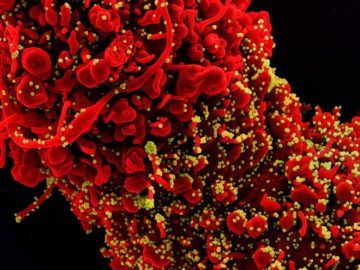 Researchers developing the Oxford–AstraZeneca COVID-19 vaccine have identified biomarkers that can help to predict whether someone will be protected by the jab they receive. The team at the University of Oxford, UK, identified a ‘correlate of protection’ from the immune responses of trial participants — the first found by any COVID-19 vaccine developer. Identifying such blood markers, scientists say, will improve existing vaccines and speed the development of new ones by reducing the need for costly large-scale efficacy trials.
 “Neuroaesthetics can perhaps be understood in the Duchampian sense,” he claimed in a 2004 interview. “Neuroscience is a readymade, which is recontextualized out from its original context as a scientific-based paradigm into one that is aesthetically based.” He pointed to Conceptualists like Dan Graham and Sol LeWitt as precursors of a later generation of artists who would act as mediators between an increasingly technologized and monetized society and its hyperactive visual culture. Neuroaesthetics endeavored not to produce a synthesis of neuroscience and aesthetics, but rather to estrange the former from normal usage—much as Duchamp did the bicycle wheel and bottle rack—and reenvision in a more psychodynamic capacity its tools for mapping cognitive categories such as color, memory, and spatial relationships, in order to reveal, in Neidich’s words, “the idea of becoming brain.”
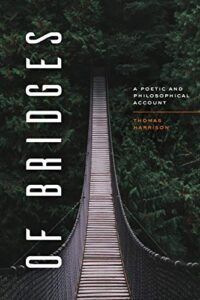 Bridges connect us – and they have since the beginning of time, all the way back to the very first bridge, the rainbow. They connect us geographically, strategically, metaphorically, lyrically (if that last seems a stretch, think of Simon and Garfunkel’s “Bridge Over Troubled Waters”). Now we have a book to explain all sorts of bridges to us, thanks to UCLA author
 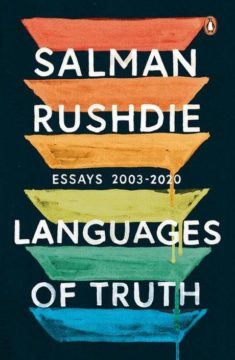 “What is the use of stories that aren’t even true?” Haroun asks his father in Salman Rushdie’s delightful and inexplicably underrated crossover novel. Rushdie suggests the issue it raises, the relationship between the “world of imagination and the so-called real world”, has occupied most of his writing life.