
Paul Voosen in Science:
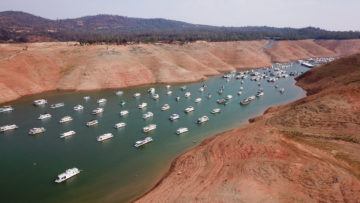
Next month, after a yearlong delay because of the pandemic, the U.N. Intergovernmental Panel on Climate Change (IPCC) will begin to release its first major assessment of human-caused global warming since 2013. The report, the first part of which will appear on 9 August, will drop on a world that has starkly changed in 8 years, warming by more than 0.3°C to nearly 1.3°C above preindustrial levels. Weather has grown more severe, seas are measurably higher, and mountain glaciers and polar ice have shrunk sharply. And after years of limited action, many countries, pushed by a concerned public and corporations, seem willing to curb their carbon emissions.
But as climate scientists face this alarming reality, the climate models that help them project the future have grown a little too alarmist. Many of the world’s leading models are now projecting warming rates that most scientists, including the modelmakers themselves, believe are implausibly fast. In advance of the U.N. report, scientists have scrambled to understand what went wrong and how to turn the models, which in other respects are more powerful and trustworthy than their predecessors, into useful guidance for policymakers. “It’s become clear over the last year or so that we can’t avoid this,” says Gavin Schmidt, director of NASA’s Goddard Institute for Space Studies.
More here.
 In hindsight, it was only fitting that a story about surveillance and spyware in India should have begun with more than a touch of cloak and dagger.
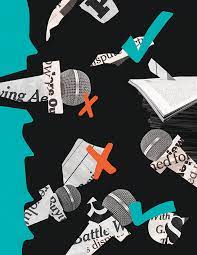 In a 1959 letter to her friend Mary McCarthy, Hannah Arendt paused to commiserate on a harrowing experience they had in common: having their writing fact-checked by The New Yorker. In her previous correspondence, McCarthy had mused that the magazine’s checking department was “invented by some personal Prosecutor of mine to shatter the morale,” and Arendt shared her frustration. Fact-checking, she replied, was a “kind of torture,” a “rigmarole,” and “one of the many forms in which the would-be writers persecute the writer.” Arendt’s opposition to the practice of fact-checking ran deeper than personal irritation. Throughout her work, she was critical of the infiltration of scientific terminology and methods into all aspects of human life. Couching an argument in language that sounded scientific, she thought, was a way of claiming the ability to know or predict things that could never be predicted or known. Fact-checking was a part of that larger trend: the practice, she wrote to McCarthy, was a form of “phony scientificality.”
 A
A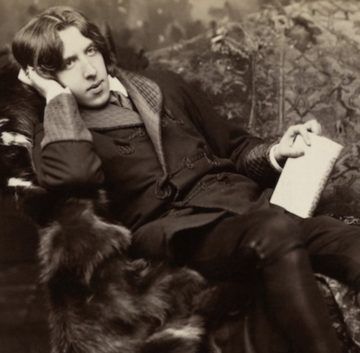 Oscar Wilde’s ship docked in New York Harbor on the evening of January 2, 1882, one week before he was scheduled to speak at Chickering Hall. During the crossing he had composed his first lecture, but the journalists who swarmed onto the ship as it lay at anchor off Staten Island were more interested in Wilde himself than in the theories he had come to expound. “His outer garment was a long ulster trimmed with two kinds of fur, which reached almost to his feet,” reported the New York World; “he wore patent-leather shoes, a smoking-cap or turban, and his shirt might be termed ultra-Byronic . . . His hair flowed over his shoulders in dark-brown waves, curling slightly upwards at the ends . . . His teeth were large and regular, disproving a pleasing story which has gone the rounds of the English press that he has three tusks or protuberants.” His face presented “an exaggerated oval of the Italian face carried into the English type of countenance,” the World reporter continued, while his “manner of talking” was “somewhat affected . . . his great peculiarity being a rhythmical chant in which every fourth syllable is accentuated.” “The dress of the poet was not less remarkable than his face,” declared the San Francisco Chronicle, “and consisted of a short velvet coat, rose-colored necktie and dark-brown trousers . . . cut with a sublime disregard of the latest fashion.”
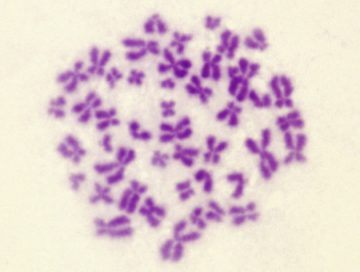 Two decades after the draft sequence of the human genome was
 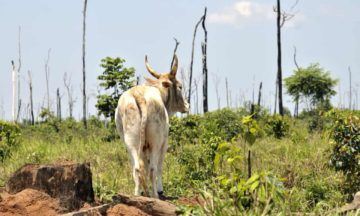 A new study tracking the planet’s vital signs has found that many of the key indicators of the global climate crisis are getting worse and either approaching, or exceeding, key tipping points as the earth heats up.
 Facebook has a save-the-world mission statement—“to give people the power to build community and bring the world closer together”—that sounds like a better fit for a church, and not some little wood-steepled, white-clapboarded, side-of-the-road number but a castle-in-a-parking-lot megachurch, a big-as-a-city-block cathedral, or, honestly, the Vatican.
  More than two decades ago, when Elizabeth Turner was still a graduate student studying fossilized microbial reefs, she hammered out hundreds of lemon-sized rocks from weathered cliff faces in Canada’s Northwest Territories. She hauled her rocks back to the lab, sawed them into 30-micron-thick slivers—about half the diameter of human hair—and scrutinized her handiwork under a microscope. Only in about five of the translucent slices, she found a sea of slender squiggles that looked nothing like the microbes she was after. “It just didn’t fit. The microstructure was too complicated,” says Turner. “And it looked to me kind of familiar.”
 “T
“T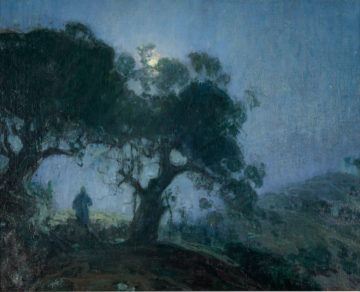 I do not want to be soft-minded or irrational, pursue Dark Aged–ignorance, be any sort of woo-woo New Age mush head. I do not know my moon sign. I own a Tarot deck but do not know how to read the cards. I don’t know much about prayer, though I have aimed begging attention at thunderstorms to come, please come, break this heat, rip it open. I believe, in some ferocious kid place, that there’s a lot on this earth and beyond it that we don’t understand. No correlation? Maybe, instead, the more honest: we don’t know, we have not figured a way to measure, or to say. “Do you not think that there are things which you cannot understand, and yet which are; that some people see things that others cannot?” Bram Stoker asks. “It is the fault of our science that it wants to explain all; and if it explain not, then it says there is nothing to explain.” Stephen Jay Gould had a name for this, when scientists interpret an absence of discernible change as no data, leaving significant signals from nature unseen, unreported, ignored.
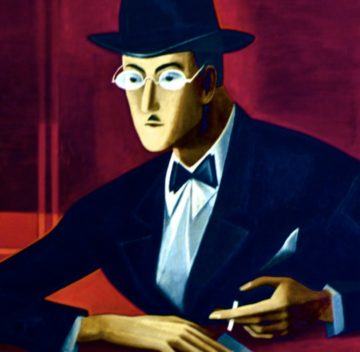 When the ever elusive Fernando Pessoa died in Lisbon, in the fall of 1935, few people in Portugal realized what a great writer they had lost. None of them had any idea what the world was going to gain: one of the richest and strangest bodies of literature produced in the twentieth century. Although Pessoa lived to write and aspired, like poets from Ovid to Walt Whitman, to literary immortality, he kept his ambitions in the closet, along with the larger part of his literary universe. He had published only one book of his Portuguese poetry, Mensagem (Message), with forty-four poems, in 1934. It won a dubious prize from António Salazar’s autocratic regime, for poetic works denoting “a lofty sense of nationalist exaltation,” and dominated his literary résumé at the time of his death.
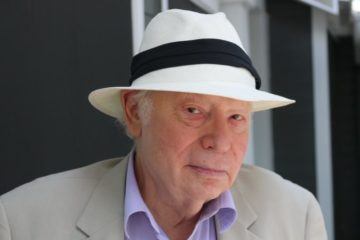 ‘The greatest living theoretical physicist’ – many commentators in the past few decades have described Steven Weinberg in such terms. When I rather cheekily asked him what he thought of that statement, he shot back: ‘It is quite ridiculous to rank scientists like that’, adding with a twinkle in his eye, ‘but it would be impolite to dispute the conclusion’. That reply was classic Weinberg: self-aware, intimidatingly direct but always ready to lighten the moment with humour.
 Elaine Scarry has been writing about the unique dangers and challenges of nuclear weapons in Boston Review for