
Azza and I Share a Cup of Tea
and Azza pours the tea before she speaksAzza never looks the same.
Each time you get close enough, each time you think you know her,
she reveals another surfaceIf you don’t pay attention, you might almost miss it
the way her crisp white toub falls gracefully on her shoulders,
how the gold crescent in her nose accentuates her face tenderlyAzza is timid, but captures your attention
She is not a mere stop on your destination
So, plan to stay awhile.Listen to the way she uses language to weave stories full of heart
Pay attention to how she sings songs of love
Count the scars and ask her how many battles she has foughtYou will be surprised to learn how many of them she’s won.
Sip your tea slowly and know that she will offer you a place to stay
Let her soft voice trickle into your ears, and
Let the cool breeze touch your skin
No need for formalities,
Azza has no care for them
She has no need for ceremony nor procedure
She takes big leaps, wanders on the dangerous route
She fears nothing, and is ready to risk it all
She is fearless, but never reckless
Beautiful, but never boastful
Smart, and always dreaming
She paints pictures of hopes and what-ifs
See how her eyes light up when she talks of future
Notice when she smiles
Because it does not happen often
Savor the moment,
Ask her the questions
Listen to the answers
Sip your tea slowly
by Leena Badri
from Pank Magazine 1.1-2020
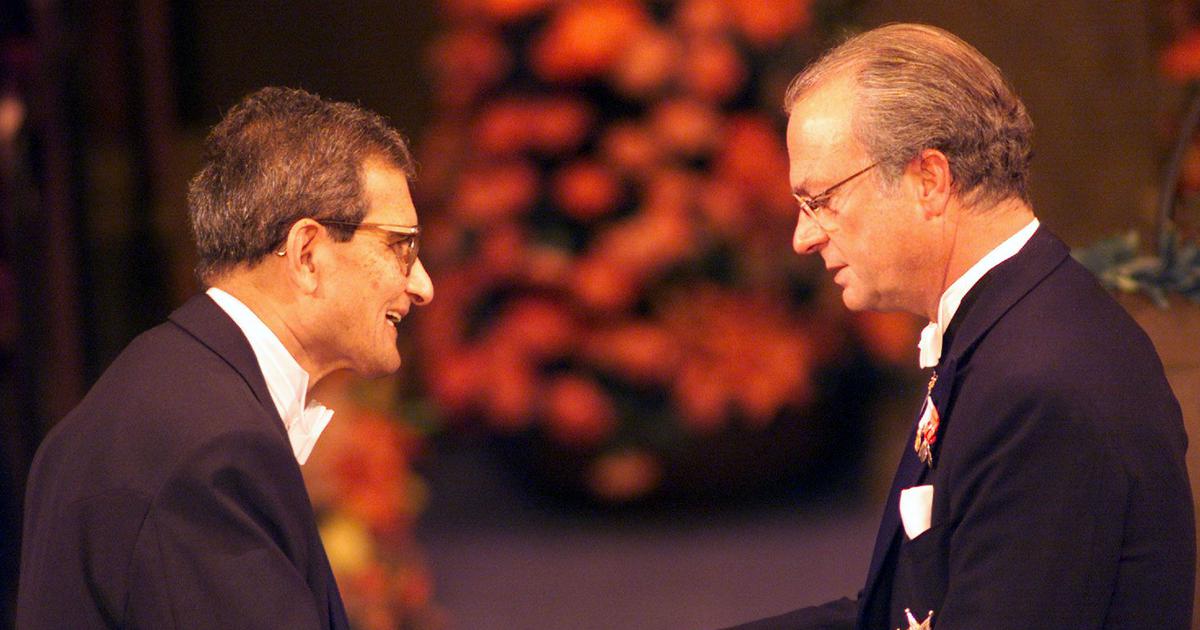 By June 1956, at the end of my first year as a research student, I had a set of chapters that looked as if they could form a dissertation. A substantial number of economists at various universities were work ing then on different ways of choosing between techniques of production. Some were particularly focused on maximising the total value of the output produced, whereas others wanted to maximise the surplus that was generated, and there were also some profit maximisers.
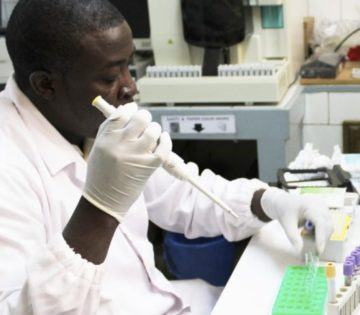 Researchers from the University of Oxford and their partners have today reported findings from a Phase IIb trial of a candidate malaria vaccine, R21/Matrix-M, which demonstrated high-level efficacy of 77% over 12-months of follow-up.
 Sex and analytic philosophy are not promising bedfellows. But when it comes to feminist philosophy, it is no mere pun to say that sex is where the action is. The revival of this neglected feminist concern is principally owed to Amia Srinivasan, the 36-year-old star of Oxford philosophy and Chichele Professor of Social and Political Theory at All Souls College. Srinivasan began her career making influential contributions to formal epistemology and shot up the academic rungs; she has since found a public audience as a critic and essayist of remarkable precision and range. In her new essay collection, The Right to Sex, Srinivasan writes about consent, pornography and the ideological shaping of desire, attempting “to remake the political critique of sex for the 21st century.” Here, the political isn’t just personal; it’s intimate.
 Three ideas that are central to all Orwell’s subsequent, serious writing were formed in Spain. First, that socialism works. Second, that socialism works, but beware, for it can take an authoritarian turn. (Homage to Catalonia in part tells a similar story to Animal Farm ‑ the utopia betrayed from within when its leaders start to suit themselves.) Third, that those who betray lie brazenly, weaving an elaborate web of self-serving falsehood. “[I]n Spain,” wrote Orwell in the 1942 “Looking Back on the Spanish War”, “for the first time, I saw newspaper reports which did not bear any relation to the facts, not even the relationship which is implied in an ordinary lie. I saw great battles reported where there had been no fighting, and complete silence where hundreds of men had been killed … This kind of thing is frightening to me, because it often gives me the feeling that the very concept of objective truth is fading from the world.”
 So what should we do in such a predicament? We should above all avoid the common wisdom according to which the lesson of the ecological crises is that we are part of nature, not its center, so we have to change our way of life — limit our individualism, develop new solidarity, and accept our modest place among life on our planet. Or, as Judith Butler put it, “An inhabitable world for humans depends on a flourishing earth that does not have humans at its center. We oppose environmental toxins not only so that we humans can live and breathe without fear of being poisoned, but also because the water and the air must have lives that are not centered on our own.”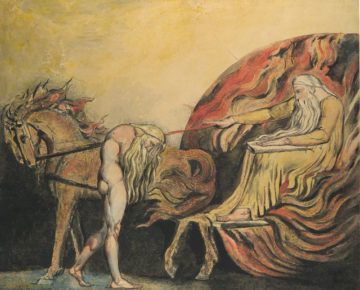
 Efforts to understand cardiac disease progression and develop therapeutic tissues that can repair the human heart are just a few areas of focus for the Feinberg research group at Carnegie Mellon University. The group’s latest dynamic model, created in partnership with collaborators in the Netherlands, mimics physiologic loads on engineering heart muscle tissues, yielding an unprecedented view of how genetics and mechanical forces contribute to heart muscle function.
 Unlike talk of, say, badgers or ermine, talk of beavers seems always to be the overture to a joke. So powerful is the infection of the cloud of its strange humor that the beaver is no doubt in part to blame for the widespread habit, among certain unkind Americans, of smirking at the mere mention of Canada. Nor is it the vulgar euphemism, common in North American English and immortalized in Les Claypool’s heartfelt ode, “
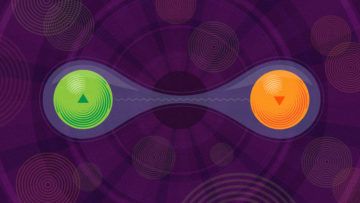 We take for granted that an event in one part of the world cannot instantly affect what happens far away. This principle, which physicists call locality, was long regarded as a bedrock assumption about the laws of physics. So when Albert Einstein and two colleagues showed in 1935 that quantum mechanics permits “spooky action at a distance,” as Einstein put it, this feature of the theory seemed highly suspect. Physicists wondered whether quantum mechanics was missing something.
 It has been four decades since neoliberal globalization began to reshape the world order. During this time, its agenda has
  So here is my ask. I want fiction by “men” in which they go into real detail about the internal mechanics of their own masculinity. I want evidence of that interiority on the page. Does it exist. All I’ve ever seen is silence or violence. I mean he’s perpetually doing it, the performance of being a man in writing, but he concomitantly refuses its existence except when there’s a glitch, meaning a woman, a queer, or an oddly behaving man. It’s like the only way a man ever talks about gender at all is by talking about them. Never talking about how it is to be a man.
 TM: The epigraph to your poem “Cotton Candy” is from John Donne: “To go to heaven, we make heaven come to us.” In its original context, the line appears: “All their proportion’s lame, it sinks, it swells; / For of meridians and parallels / Man hath weaved out a net, and this net thrown / Upon the heavens, and now they are his own. / Loth to go up the hill, or labour thus / To go to heaven, we make heaven come to us. / We spur, we rein the stars, and in their race / They’re diversely content to obey our pace.” I love your epigraphic eye here. Who is Donne to you, as both poet and legacy? Why choose these lines in particular from his poem?
 In 2017, a German man who goes by the name Marco came across an article in a Berlin newspaper with a photograph of a professor he recognized from childhood. The first thing he noticed was the man’s lips. They were thin, almost nonexistent, a trait that Marco had always found repellent. He was surprised to read that the professor, Helmut Kentler, had been one of the most influential sexologists in Germany. The article described a new research report that had investigated what was called the “Kentler experiment.” Beginning in the late sixties, Kentler had placed neglected children in foster homes run by pedophiles. The experiment was authorized and financially supported by the Berlin Senate. In a report submitted to the Senate, in 1988, Kentler had described it as a “complete success.”