Friday Poem

Language Current

English is like a nuclear reactor.
I’m in it right now.
As I shoot down it’s fast track
small bits of skin, fragments, cells
stick to my sides.
Once in a while whole sentences gush forth
and slam themselves against the page
condensing their spray of pellets
into separate words.
Sometimes I travel at 186,000 miles an hour,
the speed of light,
when I lie sleepless on the bed at night.
No excess baggage allowed.
No playful, baroque tendrils
curling this way and that.
No dreamtime walkabout
all the way down to Australia.
In English you have to know where you’re going:
either towards the splitting of the self
or the blasting of the molecules around you.

Spanish is a different tongue.
It’s deeper and darker, with so many twists
and turns it makes me feel like I’m navigating
the uterus. Shards of gleaming stone,
emerald, amethyst, opal
wink at me as I swim down the moist shaft.
It goes deeper than the English Channel,
al the way down to the birth canal and beyond.

by Rosario Ferré
from
El Coro
University of Massachusetts Press, 1997

What We Find When We Get Lost in Proust

Adam Gopnik in The New Yorker:

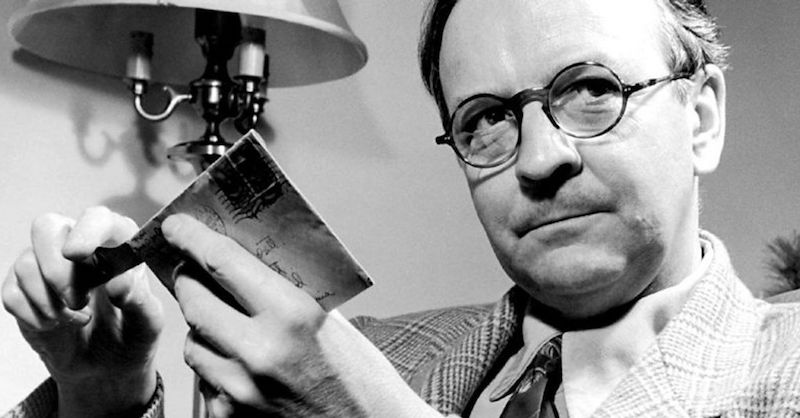
When the first volume of “In Search of Lost Time” appeared, a year before the Great War, the shock of its excellence was captured in a delicious exchange with André Gide, the magus of the Parisian literary scene. Apologizing for having passed on “Swann’s Way” for his Nouvelle Revue Française, Gide offered an explanation almost more insulting than the original rejection: “For me you were still the man who frequented the houses of Mmes X. and Z., the man who wrote for the Figaro. I thought of you, shall I confess it, as ‘du côté de chez Verdurin’; a snob, a man of the world, and a dilettante—the worst possible thing for our review.” Proust, who had money, had offered to help subsidize the publication, which, Gide fumbles to explain, only made it seem a dubious effort at buying a reputation. (That year, Gide confided in his journal his doubts that any Jewish writer could truly master the “virtues” of the French tradition.)

Proust responded with the most beautiful fuck-you letter in literary history, suavely pretending that Gide’s belatedly flattering letter made up for all the previous insults: “Had there been no rejection, no repeated rejections by the N.R.F., I should never have had your letter. . . . The joy of receiving your letter infinitely surpasses any I should have had at being published by the N.R.F. . . . How I should like to be able to give someone I loved as much pleasure as you have given me.” Gide, no fool, made a firm offer to publish the rest of the novel, which the Nouvelle Revue did, right through to its completion.

The exchange underlines several aspects of Proust as a phenomenon. First, Proust landed on his contemporaries with something of the same revelatory shock that he delivers to us. Perhaps only the abrupt celebrity of Karl Ove Knausgaard has had the same effect in our time. What made the metamorphosis? The unimaginably large space between the Proust of “The Mysterious Correspondent” and the Proust of “Swann’s Way” lies in his learning to trust the meandering nature of his own intelligence. He found a voice by hearing his own. The one thing that Proust’s mature literary manner is not is mannered. It was as natural and unimpeded as Mark Twain’s. His mind moved exactly as his sentences do, and his gift was to be able to trace its movements without being halted by other people’s literary rules.

More here.

Could mitochondria help athletes to make gains?

Anthony King in Nature:

Usain Bolt won the men’s 100 metre final in the 2016 Olympic Games in 9.81 seconds and 42 strides. A few days later, Eliud Kipchoge ran 42 kilometres in 2 hours and 8 minutes to win the marathon. These extraordinary feats pose very different challenges for the human body, but the races began in much the same way. As the starting pistol fired, Bolt and Kipchoge began to use creatine phosphate, an energy-rich molecule stored in muscle tissue, to generate the energy-carrying molecule ATP. In a few seconds, however, both athletes’ stores of creatine phosphate were depleted, forcing their bodies to break down glucose to provide ATP to contracting muscle cells for a few more minutes. For Bolt and his fellow sprinters, a few minutes seems like an age. But for marathon runners, there is much farther to go. To reach the finish line, these endurance athletes rely on a slower, but more efficient way to generate ATP that uses oxygen to burn fats and carbohydrates, in structures inside the cell called mitochondria.

Elite endurance athletes such as Kipchoge pack many more of these aerobic power plants into muscle cells than both an average person and the far-from-average Usain Bolt. “He probably doesn’t need any more mitochondria than you or I,” says John Hawley, an exercise physiologist at the Australian Catholic University in Melbourne. Athletes’ mitochondrial engines activate quickly, within a few minutes of exercise, but even for the best, that switch doesn’t flick immediately. “We can’t turn on mitochondria fast enough to provide all the energy required for a sprint,” says David Hood, a mitochondrial scientist at York University in Toronto, Canada.

More here.

Thursday, May 6, 2021

Arthur Jafa’s Swing

Morgan Meis in The Easel:

Early in 2016, not long after the inauguration of Donald Trump as President of the United States, an artist named Arthur Jafa screened a work of video art at Gavin Brown’s Enterprise in New York City. The video was titled Love is the messagethe message is death. It is about seven minutes long. It is constructed of found footage ranging in time from the immediate present to shaky clips from the early days of film. Most of the clips are just a couple of seconds long. Generally, they feature Black people, African Americans in specific. Much of the footage is upsetting. That’s to say, there are clips of police brutality against Black people. These clips are interspersed with other images not obviously related to the specific issue of police mistreatment of African Americans. The entire video is set to the music of Kanye West’s gospel-ish song Ultralight Beam.

The video piece was extremely popular, and Gavin Brown’s Enterprise noted that the gallery was especially busy during the run of the show. Many of the viewers of Love is the message spoke about its direct, emotional impact. Basically, it made people cry. That fact alone is worth noting. It is not often that one goes to a gallery of contemporary art and feels so emotionally impacted that the tears flow. Indeed, so many people cried watching Love is the message that the artwork started to become something of a global phenomenon. Museums and galleries all around the world wanted a piece of it. Interviewers and journalists wanted a piece of Arthur Jafa.

More here.

Percolation theory illuminates the behavior of many kinds of networks

Kelsey Houston-Edwards in Scientific American:

When you hit “send” on a text message, it is easy to imagine that the note will travel directly from your phone to your friend’s. In fact, it typically goes on a long journey through a cellular network or the Internet, both of which rely on centralized infrastructure that can be damaged by natural disasters or shut down by repressive governments. For fear of state surveillance or interference, tech-savvy protesters in Hong Kong avoided the Internet by using software such as FireChat and Bridgefy to send messages directly between nearby phones.

These apps let a missive hop silently from one phone to the next, eventually connecting the sender to the receiver—the only users capable of viewing the message. The collections of linked phones, known as mesh networks or mobile ad hoc networks, enable a flexible and decentralized mode of communication. But for any two phones to communicate, they need to be linked via a chain of other phones. How many people scattered throughout Hong Kong need to be connected via the same mesh network before we can be confident that crosstown communication is possible?

More here.

On the protests in Colombia

Sergio Guzman in The Global Americans:

The past week’s demonstrations in Colombia have shown that popular dissatisfaction is surging after a year of COVID-19 lockdowns. Although the government’s tax reform proposal may have been the immediate trigger for the unrest, pent-up anger has been building since 2019 over social inequality, unemployment, the murder of social leaders, and the conspicuous absence of the state in peripheral regions far from Bogotá. All of these problems have only been aggravated by the pandemic.

If the proposed tax reform was the spark, police brutality was the flame that set fire to the protests. Videos shared widely on social media show security forces clubbing, tear gassing, and even killing demonstrators—over 19 people have been killed by police since April 28—in cities such as Bogotá, Cali, and Manizales. International human rights organizations, the United Nations, and foreign governments have all called on the Colombian government to de-escalate the situation, convene a dialogue, and investigate incidents of wrongdoing by police. Nevertheless, the government has refused to acknowledge the role that police brutality played in escalating the protests and continues to defend all police actions, no matter how egregious, as having been necessary to restore law and order.

More here.

The Veiled Avengers of Pakistan’s Streaming New Wave

Bilal Qureshi at Film Quarterly:

The term “churails” is Pakistan’s c-word, translated literally as “witches,” but more accurately understood as a loaded epithet for a demonic, unstable, uncontrollable species of woman, the so-called bitch/witch. Filmmaker Asim Abbasi’s über-stylish series embraces the insult, celebrating the difficult women of Pakistan and reveling in their power through ten hours of exceptional television. The four central women of Churails (Asim Abbasi, 2020–) are drawn from across social classes and life experiences but come together with a mission: to form a detective agency that hunts down the terrible men of Karachi. They work under cover, literally, as their front is a clothing business called Halal Designs, where they meet in a subterranean control room that looks straight out of The Avengers to plot their missions. In a kind of extrajudicial feminist fantasy, they traverse the streets of Karachi in burkas, opening up basements and hidden corners of Pakistani homes in the dark of night, uncovering prostitution rings, secrets, and misogynistic murderers.

more here.

Nadezhda Mandelstam’s Last Letter to Osip Mandelstam

via Ilya Kaminsky’s guest post at The Book Haven:

Remember the way we brought back provisions to make our poor feasts in all the places where we pitched our tent like nomads? Remember the good taste of bread when we got it by a miracle and ate it together? And our last winter in Voronezh. Our happy poverty, and the poetry you wrote. I remember the time we were coming back once from the baths, when we bought some eggs or sausage, and a cart went by loaded with hay. It was still cold and I was freezing in my short jacket (but nothing like what we must suffer now: I know how cold you are). That day comes back to me now. I understand so clearly, and ache from the pain of it, that those winter days with all their troubles were the greatest and last happiness to be granted us in life.

My every thought is about you. My every tear and every smile is for you. I bless every day and hour of our bitter life together, my sweetheart, my companion, my blind guide in life.

more here.

Thursday Poem

Accidents in the Perception of Time

Modes of perception: between channels:
Wordless days, years, periods.
Centuries of drawing with black lead, or burnt sienna on the rock.
Restless scratches. Silhouettes of clumsy figures.
A tangle of lines (animals in motion).
Millennia of the word: winding of words around the body, lashing,
silhouettes of clumsy sentences. Space behind them.
Muting: and a surge of noisy images. Unravel. Span.
Look like you understand.
A hand for joy: draw.
A hand.
A hand: survive, kill.
A mouth for the voice (play, cheat). Open. For someone else.
Like with like (Picasso in the cave). And bridges!
For yourself. For someone else.

by Mária Ferenčuhová
from: 
Princíp neistoty
publisher: Ars Poetica, Bratislava, 2008

“Read More” for Original Slovak:

Read more »

Minds Without Brains? The promise and peril of artificial intelligence

John Farrell in Commonweal:

In the view of many scientists, Artificial Intelligence (AI) isn’t living up to the hype of its proponents. We don’t yet have safe driverless cars—and we’re not likely to in the near future. Nor are robots about to take on all our domestic drudgery so that we can devote more time to leisure. On the brighter side, robots are also not about to take over the world and turn humans into slaves the way they do in the movies.

Nevertheless, there is real cause for concern about the impact AI is already having on us. As Gary Marcus and Ernest Davis write in their book, Rebooting AI: Building Artificial Intelligence We Can Trust, “the AI we have now simply can’t be trusted.” In their view, the more authority we prematurely turn over to current machine systems, the more worried we should be. “Some glitches are mild, like an Alexa that randomly giggles (or wakes you in the middle of the night, as happened to one of us), or an iPhone that autocorrects what was meant as ‘Happy Birthday, dear Theodore’ into ‘Happy Birthday, dead Theodore,’” they write. “But others—like algorithms that promote fake news or bias against job applicants—can be serious problems.”

Marcus and Davis cite a report by the AI Now Institute detailing AI problems in many different domains, including Medicaid-eligibility determination, jail-term sentencing, and teacher evaluations:

Flash crashes on Wall Street have caused temporary stock market drops, and there have been frightening privacy invasions (like the time an Alexa recorded a conversation and inadvertently sent it to a random person on the owner’s contact list); and multiple automobile crashes, some fatal. We wouldn’t be surprised to see a major AI-driven malfunction in an electrical grid. If this occurs in the heat of summer or the dead of winter, a large number of people could die.

The computer scientist Jaron Lanier has cited the darker aspects of AI as it has been exploited by social-media giants like Facebook and Google, where he used to work. In Lanier’s view, AI-driven social-media platforms promote factionalism and division among users, as starkly demonstrated in the 2016 and 2020 elections, when Russian hackers created fake social-media accounts to drive American voters toward Donald Trump. As Lanier writes in his book, Ten Arguments for Deleting Your Social Media Accounts Right Now, AI-driven social media are designed to commandeer the user’s attention and invade her privacy, to overwhelm her with content that has not been fact-checked or vetted. In fact, Lanier concludes, it is designed to “turn people into assholes.”

More here.

CineMPC: An algorithm to enable autonomous drone-based cinematography

Ingrid Fadelli in Phys.Org:

Emerging technologies such as artificial intelligence (AI) algorithms, mobile robots and unmanned aerial vehicles (UAVs) could enhance practices in a variety of fields, including cinematography. In recent years, many cinematographers and entertainment companies specifically began exploring the use of UAVs to capture high-quality aerial video footage (i.e., videos of specific locations taken from above). Researchers at University of Zaragoza and Stanford University recently created CineMPC, a computational tool that can be used for autonomously controlling a drone’s on-board video cameras. This technique, introduced in a paper pre-published on arXiv, could significantly enhance current cinematography practices based on the use of UAVs.

“When reading existing literature about autonomous cinematography and, in particular, autonomous filming drones, we noticed that existing solutions focus on controlling the extrinsincs of the camera (e.g., the position and rotations of the camera),” Pablo Pueyo, one of the researchers who carried out the study, told TechXplore. “According to cinematography literature, however, one of the most decisive factors that determine a good or a bad footage is controlling the intrinsic parameters of the lens of the camera, such as focus distance, focal length and focus aperture.”

A camera’s intrinsic parameters (e.g., focal distance, length and aperture) are those that determine which parts of an image are in focus or blurred, which can ultimately change a viewer’s perception of a given scene. Being able to change these parameters allows cinematographers to create specific effects, for instance, producing footage with varying depth of field or effectively zooming into specific parts of an image. The overall objective of the recent work by Pueyo and his colleagues was to achieve optimal control of a drone’s movements in ways that would automatically produce these types of effects.

More here.

Wednesday, May 5, 2021

Stephen Fry Would Like to Remind You That You Have No Free Will

David Marchese in the New York Times:

Do you ever wonder where your old friend Christopher Hitchens would fit into things now?

Stephen Fry: I do. I loved him. He was adorable company, but I was also quite scared of him. He was a much tougher figure than I. He didn’t mind being disliked. He didn’t mind being howled down even. He seemed to enjoy it. I can quite imagine Hitchens being on the same platform with a Ben Shapiro perhaps. But I can’t imagine him having come out on the side of Trump. Hitchens just had a style that suited America despite his Britishness. It was the swagger. I miss that the culture doesn’t have enough of these sorts of people. Toward the last year of his life, I would visit another one of them, Gore Vidal, in Los Angeles, where he had his house; it was so overgrown in the garden that it was dark inside. He would retell stories of his great rows with Norman Mailer and Susan Sontag and William Buckley. Their arguments could be mordant and full of venom, but they weren’t as unhappy as so many debates now. There was a kind of joy and pleasure in the fight.

More here.

Lawrence Krauss: Why Climate Science Is Like the Rest of Science

Lawrence M. Krauss in Quillette:

Recent White House initiatives suggest that addressing climate change has risen to the policy forefront of government at the presidential level for the first time in US history. Last week President Biden convened an online international meeting of heads of state on the issue and committed the US to a dramatic effort to reduce greenhouse gas emissions to a level of 50 percent of emissions in 2005 by the year 2030, which will require unprecedented action and cooperation between government and major industries.

By and large, the public’s mood has shifted from one of skepticism to support, but because the issue is so deeply embedded in scientific predictions whose details are often absent in popular discussions, statements from prominent scientists have great potential to influence the debate.

As a theoretical physicist whose primary research has been in what is often called “fundamental physics” I am acutely aware that my colleagues can project an air of superiority in being dismissive of other disciplines and the scientists who labor in them. My late friend and colleague Freeman Dyson was an example. Freeman was one of the smartest physicists I have known, and we spoke at length on a few occasions about climate change. His views, while creative and novel, like almost all of his ideas, were nevertheless woefully uninformed. I suspect he felt that because he was smarter than climate scientists, he distrusted their work.

More here.

Apartheid in the Holy Land

Fawaz A. Gerges in Project Syndicate:

In a new, well-documented report, Human Rights Watch (HRW) asserts that the Israeli government is enforcing a systemic policy to maintain the “domination by Jewish Israelis over Palestinians.” The nearly seven million Palestinians in the occupied territories and within Israel itself face collective persecution under an apartheid system.

Pointing to Israeli laws that enshrine extra-political rights for Jews over Arabs living in the same areas, HRW concludes that the Israeli government is “privileging Jewish Israelis while repressing Palestinians, most severely in the occupied territory.” While several hundred thousand Israeli settlers live in the occupied territories as full Israeli citizens, the report notes, 2.7 million Palestinians are concentrated in dense population centers under military rule.

Even more ominous are Israel’s emerging population-control measures. “The authorities have adopted policies to mitigate what they have openly described as a demographic ‘threat’ from Palestinians,” the report avers.

More here.

Wednesday Poem

I asked myself about the present: how wide it was,
how deep it was, how much was mine to keep.

………………………………. -Kurt Vonnegut

Hiking in the Anthropocene

I read the forest’s memoirs leaf by leaf,
trace each tree’s veins branch by branch,

my skin parched for its poetry. I want
nothing but to reside here in the quiet,

the dappled light of a hidden cove,
the sweet, secret sound of solitude

on the side of a mountain. Far above
the fray, the floodwaters, the rushing

cold calamity in the callous void of
conservation, the total lack of self-

preservation or empathy for earth.
Swaddlings losing our wrappings, we

swirl in eddies spawned by our chaotic,
collective flailing. The flood’s fingerprint

etched in judgement, in memoriam, on
the mountain’s moss-cloaked cheek.

by V.C.McCabe
from
The Eco Theo Review

CRISPR Madness: Welcome to the Age of Genetic Chaos

Stuart Newman in Counterpunch:

The Nobel prize in chemistry awarded last year to the biochemists Jennifer Doudna and Emmanuelle Charpentier for the genetic modification technique called CRISPR cemented the popular idea that a new era of precision manipulation of hereditary material had arrived. The award came on the heels of the unauthorized use of the technique by the scientist He Jiankui in 2018 in China in an effort to produce individuals (twin girls in this case) resistant to HIV, and a flurry of studies in early 2020 showing that accuracy in altering DNA in a test tube or bacteria in a culture dish, did not hold up when applied to animal embryos. Attempts to modify single genes in human embryos (not intended to be brought to full-term) in fact led to “large-scale, unintended DNA deletions and rearrangements in the areas surrounding the targeted sequence,” aka “genetic chaos.”

Dr. He was imprisoned, fined, and fired from his academic position in China for his actions, although it is still not clear to what extent the higher-ups at his institute were aware of it. At a small meeting that I attended in Berkeley in early 2017 where He spoke, he unambiguously stated that “these things are thought of differently in China than in the U.S.” The U.S. scientific establishment uniformly condemned He’s experiments, but when questioned, most scientists, including Doudna herself, and bioethicists (a profession dedicated, with a few exceptions, to getting the public used to what the scientists and bioentrepreneurs have is store for them), left the door open to future manipulation of humans.

In a recent review in the New York Review of Books of four books on the prospects of using CRISPR and related gene modification technologies for the improvement of human biology (“Editing Humanity’s Future”; April 29), including Walter Isaacson’s paean to Jennifer Doudna, the biotechnology editor and writer Natalie de Souza addresses the safety of such manipulations as a fundamental requirement for moving forward with human applications. But de Souza, in common with the authors of all the books under review, downplays the fact that “safety” means entirely different things when therapeutic alterations of the tissues of a mature body are considered, in contrast to those that are administered at early embryonic stages. The engineering of retinal cells to relieve blindness, for example, a promising, although still uncertain, application of the technique, is not comparable to ridding embryos of genes associated with cystic fibrosis, HIV susceptibility, or sickle cell disease.

More here.

First genetically modified mosquitoes released in the United States

Emily Waltz in Nature:

After a decade of fighting for regulatory approval and public acceptance, a biotechnology firm has released genetically engineered mosquitoes into the open air in the United States for the first time. The experiment, launched this week in the Florida Keys — over the objections of some local critics — tests a method for suppressing populations of wild Aedes aegypti mosquitoes, which can carry diseases such as Zika, dengue, chikungunya and yellow fever.

Aedes aegypti makes up about 4% of the mosquito population in the Keys, a chain of tropical islands off the southern tip of Florida. But it is responsible for practically all mosquito-borne disease transmitted to humans in the region, according to the Florida Keys Mosquito Control District (FKMCD), which is working closely with Oxitec on the project. Researchers and technicians working on the project will release bioengineered male Aedes aegypti mosquitoes, which don’t bite, to mate with the wild female population, responsible for biting prey and transmitting disease. The genetically engineered males carry a gene that passes to their offspring and kills female progeny in early larval stages. Male offspring won’t die but instead will become carriers of the gene and pass it to future generations. As more females die, the Aedes aegypti population should dwindle.

…In late April of this year, project researchers placed boxes containing Oxitec’s mosquito eggs at six locations in three areas of the Keys. The first males are expected to emerge within the first two weeks of May. About 12,000 males will exit the boxes each week over the next 12 weeks. In a second phase later this year, intended to collect even more data, nearly 20 million mosquitoes will emerge over a period of about 16 weeks, according to Oxitec.

More here.