
Stephanie Merritt in The Guardian:
 Jeanette Winterson is not usually considered a science-fiction writer, yet her novels have always been concerned with alternative realities, and for more than two decades she has drawn on the imaginative possibilities offered by technological and digital advances. Her 2000 novel, The Powerbook, was an early exploration of the fluid identities and connections offered by virtual personae; The Stone Gods (2007) combined history with interplanetary dystopias and featured a relationship between a robot and a human. Her most recent fiction, Frankisstein, reworked Mary Shelley’s story of an artificially created intelligence into a modern novel of ideas about the present and future limits of AI and the implications for art, love, sex and biology.
Now, in 12 Bytes, her first collection of essays since 1996’s Art Objects, Winterson examines all these preoccupations without the mediation of fiction, though the narrative style is as conversational and erudite as you’d expect from her, peppered with irreverent asides and mischievous flashes of wit (“Dry as dust I don’t do,” she has said of the previous collection). The 12 essays here are grouped into four “zones”, loosely covering the past, the imagination, relationships and the future, and together offer an eclectic odyssey through the history of technological progress – a history that for too long sidelined some of its most influential figures because they were inconveniently women or gay, and has only recently begun to restore their reputations. Winterson pays tribute here to the contributions of Ada Lovelace and Alan Turing, along with women such as Stephanie Shirley, the founder of all-female company Freelance Programmers, and the forgotten teams of female programmers during the second world war, their work unacknowledged for decades because it didn’t suit a narrative of male expertise.
Winterson explains in her introduction that the essays are the product of a longstanding fascination with advances in machine intelligence, and that she approaches the subject as “a storyteller” with a modest aim: “I want readers who imagine they are not much interested in AI, or bio-tech, or big tech, or data-tech, to find that the stories are engaging, sometimes frightening, always connected.” Her primary interest is in what she calls “the bigger picture”: the metaphysical implications of our transhuman future, about which she appears surprisingly optimistic.
More here.
 Ever since 1796, when English scientist and physician Edward Jenner successfully inoculated an eight-year-old boy with cowpox to protect him from smallpox, vaccines have been a key tool for preventing disease. From smallpox to polio, diphtheria to COVID-19, vaccines have prevented more deaths from infectious disease than any other medical treatment.
 The show will be airing once a month, and I already have several episodes recorded. I am always interested in hearing pitches for new episodes, with guests who either have some weighty credentials in a given area (e.g., a biochemist who wants to address with me the question “What is life?”), or who have some demonstrable ability to speak about a topic in a compelling way (e.g., I’m recording an episode on friendship with someone whose credentials in this area are that he is my old old friend and I know him to be an excellent raconteur). [3QD Editor’s Note: the friend mentioned here happens to be yours truly—S. Abbas Raza]
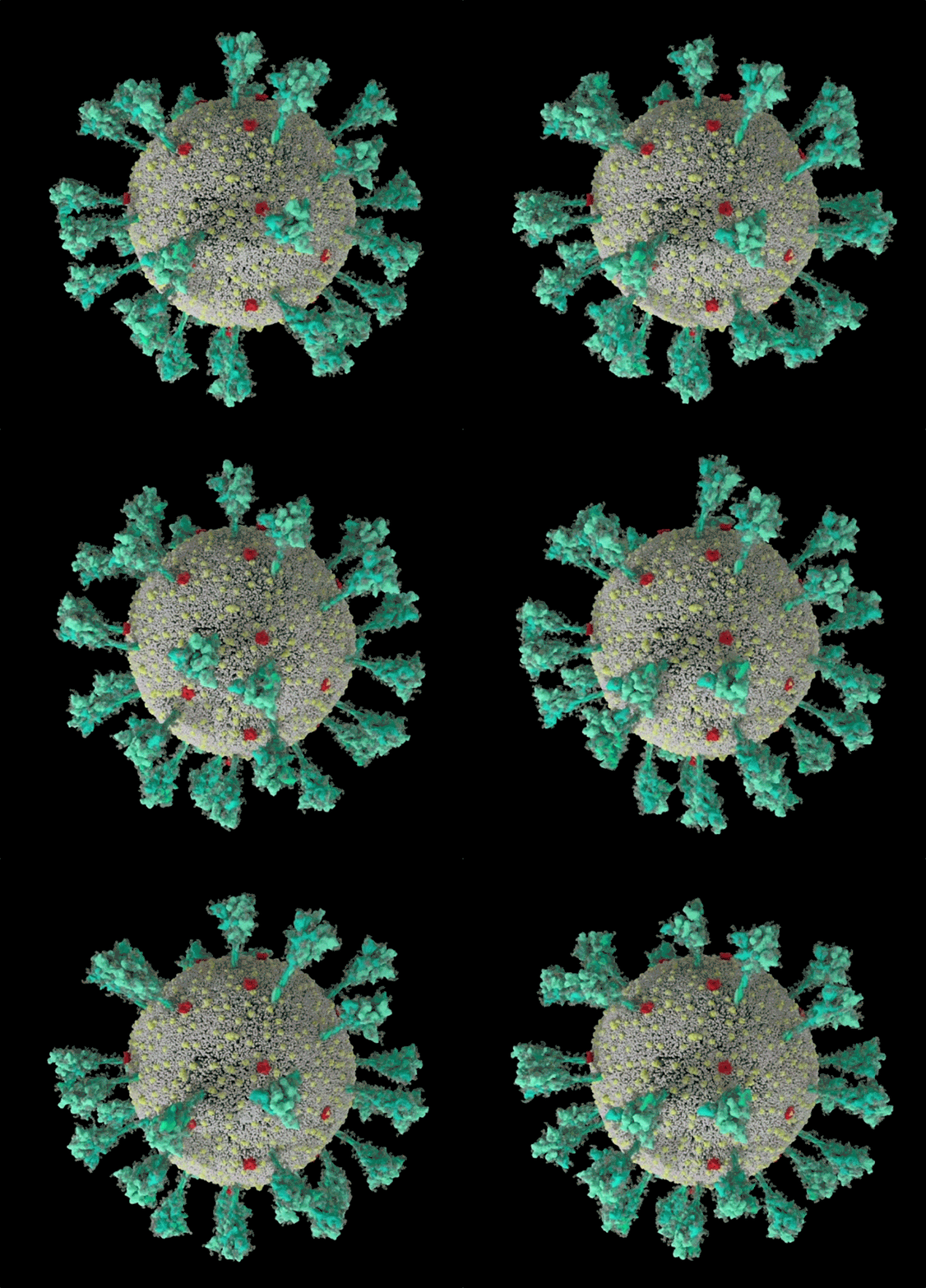 The coronavirus sports a luxurious sugar coat. “It’s striking,” thought Rommie Amaro, staring at her computer simulation of one of the trademark spike proteins of SARS-CoV-2, which stick out from the virus’s surface. It was swathed in sugar molecules, known as glycans.
 Over the past decade, autocrats around the world have perfected the technique of “managed” or “guided” democracy. In Belarus, Egypt, Russia, Uganda, Venezuela, and elsewhere, authoritarian leaders have held periodic elections to enhance their legitimacy but monopolized the media, restricted civil society, and manipulated state institutions and resources to ensure that they remained in power.
 The pack: that’s what they called it. A secret guide, discreetly passed to literary authors in need of money to sustain their ‘real’ art. Compiled by such an author, happy to share their experience of publishing erotica on Amazon, it offered advice to avant-garde writers keen to turn their hand to this lucrative genre. According to the pack, popular topics included:
 Vladimir Nabokov may be known to most people as the author of classic novels like “Lolita” and “Pale Fire.” But even as he was writing those books, Nabokov had a parallel existence as a self-taught expert on butterflies. He was the curator of lepidoptera at the
  In 1990, not long after Jean-Marie Robine and Michel Allard began conducting a nationwide study of French centenarians, one of their software programs spat out an error message. An individual in the study was marked as 115 years old, a number outside the program’s range of acceptable age values. They called their collaborators in Arles, where the subject lived, and asked them to double-check the information they had provided, recalls Allard, who was then the director of the IPSEN Foundation, a nonprofit research organization. Perhaps they made a mistake when transcribing her birth date? Maybe this
  “T
“T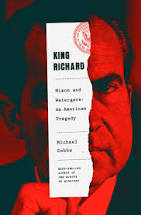 Does the world need another history of the Watergate scandal? If it’s this good, yes. Michael Dobbs’s tense facto-thriller covers the first hundred days of Richard Nixon’s second administration, from the triumph of re-election to the moment when things ‘fell apart’ in mid-1973. Dobbs stalks the president around the White House, watching and listening – much like the taping system Nixon installed to protect his reputation but that, in the end, destroyed it. We hear him make bigoted comments and plot to conceal the truth, as well as lie to the faces of men he professes to love – and to himself as well.
 Adam Tooze in the New Statesman: