
Luke Jennings at the LRB:
 When the Royal Ballet returned to Covent Garden earlier this year after fourteen months of cancelled shows and empty auditoriums, its public announcements were upbeat. The new season (which has just opened) would include world premieres by Wayne McGregor, Christopher Wheeldon and Kyle Abraham, alongside classic ballets by Kenneth MacMillan and Frederick Ashton. In May and June, ahead of the full reopening, the company streamed an online programme featuring choreographers closely associated with the Royal Ballet. One name was conspicuous by its absence: Liam Scarlett, the former Royal Ballet artist-in-residence. In March 2020, following accusations of inappropriate behaviour over the previous decade, the company had severed ties with him. Other companies followed suit. In April this year it was announced that Scarlett, who was 35, had died. An inquest opened in May and revealed that he had been ‘admitted to Ipswich Hospital on 12 April due to a cardiac arrest following an attempted hanging’. The inquest will conclude in November.
more here.
 Recently I was sent an article about “
 Humans have long wondered why we sleep. A well-rested prehistoric mind probably pondered the question, long before Galileo thought to predict the period of the pendulum or to understand how fast objects fall. Why must we put ourselves into this potentially endangering state, one that consumes about a third of our adult lives and even more of our childhood? And we don’t do it grudgingly – why do we, along with dogs, lions and virtually every other animal, apparently enjoy it? Unlike measuring the period of the pendulum, scientists would have to wait much longer to obtain reliable answers, since it’s not so easy to sleep while strangers watch. Doing so involves building sleep disorder clinics for humans and elaborate structures such as platypusariums to observe the REM (rapid eye movement) repose of platypuses.
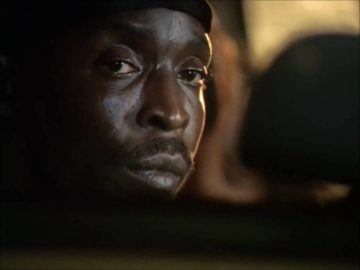 It’s not often that a shotgun-wielding thief and killer comes to be seen as possessing a moral core. But then it’s not often that you have a character like Omar Little. Or an actor like Michael K Williams to bring him to life. Or a TV series like The Wire that allowed both character and actor to breathe.
 When I left Stanford to join Google as an AI research scientist, I “went across the street,” as the saying went. I had been a young assistant professor, first at Georgia Tech and then at Stanford, doing research that was partially funded by the Defense Advanced Research Projects Agency (DARPA). At one point, I brought up the ethical issues of researching surveillance technology with the DARPA program manager, but frankly, raising ethical concerns in such a competitive environment felt a bit like labeling myself a troublemaker.
 For almost two decades, I have been attempting to understand the origins and drivers of the
 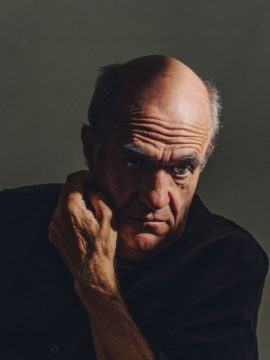 The Irish writer Colm Tóibín is a busy man. Since he published his first novel, “
 Micah L. Sifry in The New Republic:
 Mariana Mazzucato, Rainer Kattel, and Josh Ryan-Collins over at Boston Review:
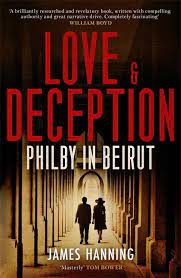 I
I “The world had enough novels,”
 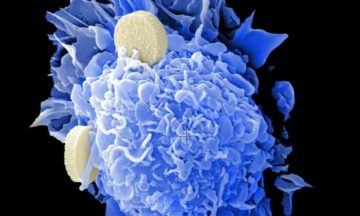 A team of researchers with biotechnology corporation Genentech Inc., has developed a new way to capture the origins and early adaptive processes that are involved in therapy responses to cancer treatments. In their paper published in the journal Nature Biotechnology, the group describes how their new system can be used to help treat resistant types of cancer.