
Brenna M. Henn, Emily Klancher Merchant, Anne O’Connor, and Tina Rulli in the Los Angeles Review of Books:
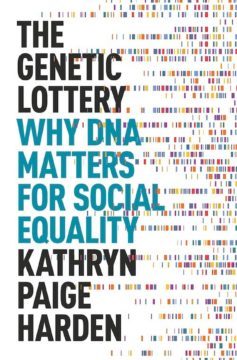 DNA plays a major role, indeed a starring role, in generating socioeconomic inequality in the United States, according to Kathryn Paige Harden, a behavioral geneticist at the University of Texas. In her provocative new book, The Genetic Lottery: Why DNA Matters for Social Equality, she contends that our genes predispose us to getting more or less education, which then largely determines our place in the social order. This argument isn’t new. It has appeared perhaps most notoriously in Arthur Jensen’s infamous 1969 article in the Harvard Educational Review (“How Much Can We Boost IQ and Scholastic Achievement?”) and in The Bell Curve by Richard Herrnstein and Charles Murray, published in 1994. Harden updates the argument in three ways. First, she grounds her claims in cutting-edge genomic research utilizing a technique called genome-wide association. Second, she explicitly rejects the racist claims made by Jensen, Herrnstein, and Murray, arguing that genetic differences account only for socioeconomic inequality between individuals within racially defined groups, not between racially defined groups. Third, she argues that attributing socioeconomic inequality to “nature” rather than “nurture” does not absolve society from ameliorating it.
More here.
 C
C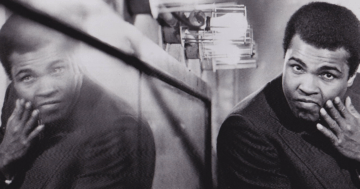 There’s power in watching Ali exact his revenge against Ernie Terrell, who had refused to call him by his Muslim name prior to their fight, punishing Terrell in the ring as he repeatedly taunts him: “What’s my name?” As the essayist Gerald Early says, “It was a sign that a new kind of Black athlete had appeared, a whole new kind of Black consciousness had appeared—it was a whole new kind of Black male dispensation that had come about as a result of that fight. That fight to me and I think for many other young Black people such as myself at the time was a turning point.”
 It’s National Inclusion Week when we all come together to ‘celebrate everyday inclusion in all its forms’. This year’s theme is ‘unity’ where ‘thousands of inclusioneers worldwide’ are being encouraged to ‘take action to be #UnitedForInclusion.’ In the bewildering world of identity politics, however, there is one group of excluded individuals you won’t be hearing much about. As a demographic, they suffer from all kinds of discrimination and yet social justice activists seem uninterested in their plight. Unlike oppressed minorities, this particular group may be in the majority and yet they garner little in the way of sympathy from anyone, barring their mums, perhaps.
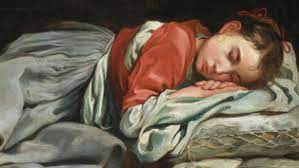 People who have psychologically mediated physical symptoms always fear being accused of feigning illness. I knew that one of the reasons Dr. Olssen was desperate for me to provide a brain-related explanation for the children’s condition was to help them escape such an accusation. She also knew that a brain disorder had a better chance of being respected than a psychological disorder. To refer to resignation syndrome as stress induced would lessen the seriousness of the children’s condition in people’s minds. It is the way of the world that the length of time a person spends as sick, immobile, and unresponsive is less impressive if it doesn’t come with a corresponding change on a brain scan.
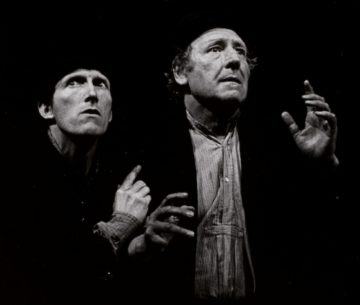 Almost every first draft (and third, and fifth) is overwritten. Maybe too much is happening, but usually it’s all the talk that bloats and clogs. Too much of anything at the outset can be helpful, though; every tailor knows it’s easier to cut cloth than to adhere it. But there is an art to cutting.
 US-based Azra Raza, a respected oncologist of Pakistani origin, has been treating cancer patients for around two decades. Her grouse, articulated in her book, The First Cell, is that most new drugs add mere months to one’s life, that too at great physical, financial and emotional cost. In her telling, the reason the war on cancer has reached an impasse is because doctors are essentially trying to protect the last cell, instead of checking the disease at birth. This has to change, and now, Raza writes with an evangelist’s passion.
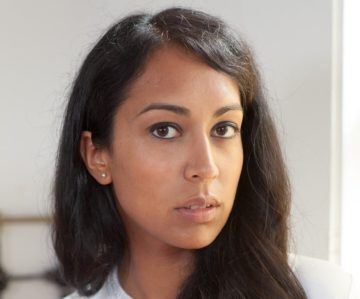 When the philosopher Amia Srinivasan’s essay “The Right to Sex” appeared in the London Review of Books, in 2018, it garnered a level of attention not usually paid to writing by academics. From the provocative title to the bracing clarity of the content (“Sex is not a sandwich,” Srinivasan wrote), the essay’s stylistic appeal was matched by a willingness to entertain positions that had long been off the table in both feminist and mainstream discussions of sex. The piece responded to the commentary surrounding Elliot Rodger, perhaps the most famous of the so-called incels, or involuntary celibates, who in 2014 killed six people after penning a 107,000-word manifesto that railed against the women who had deprived him of sex. Many feminists were quick to read Rodger as a case study in male sexual entitlement. Fewer wanted to broach one of the manifesto’s thornier claims: that Rodger, who was half white and half Malaysian Chinese, had been denied sex because of his race. Srinivasan took Rodger’s undesirability head-on: of course, no one has a right to be desired, she wrote. But we ought to acknowledge, as second-wave feminists more readily did, that who or what is desired is a political question, subject to scrutiny.
 As spring ends, maple trees begin to unfetter winged seeds that flutter and swirl from branches to land gently on the ground. Inspired by the aerodynamics of these helicoptering pods, as well as other
 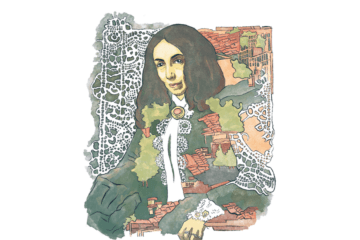 During her lifetime, Elizabeth Barrett Browning (1806-61) was widely regarded as Britain’s best female poet. Her groundbreaking work helped sway public opinion against slavery and child labor and changed the direction of English-language poetry for generations. Yet within 70 years of her death, Barrett Browning was no longer viewed as an international literary superstar but as an invalid with a small, couch-bound life. By the 1970s, critics described her as lacking the talent of her husband, Robert Browning, and hindering his writing. Fiona Sampson challenges those views in “Two-Way Mirror: The Life of Elizabeth Barrett Browning,” the first new biography of the poet in more than 30 years. Sampson, whose works include the critically acclaimed biography “In Search of Mary Shelley,” reframes Barrett Browning’s reputation by highlighting her development as a writer despite the many restrictions she faced in Victorian society.
 How should we think of human rationality? The cognitive wherewithal to understand the world and bend it to our advantage is not a trophy of Western civilization; it’s the patrimony of our species. The San of the Kalahari Desert in southern Africa are one of the world’s oldest peoples, and their foraging lifestyle, maintained until recently, offers a glimpse of the ways in which humans spent most of their existence. Hunter-gatherers don’t just chuck spears at passing animals or help themselves to fruit and nuts growing around them. The tracking scientist Louis Liebenberg, who has worked with the San for decades, has described how they owe their survival to a scientific mindset. They reason their way from fragmentary data to remote conclusions with an intuitive grasp of logic, critical thinking, statistical reasoning, correlation and causation, and game theory.
 Servaas Storm over at INET:
 Becca Rothfield in Boston Review: