
Elif Shafak in The Guardian:
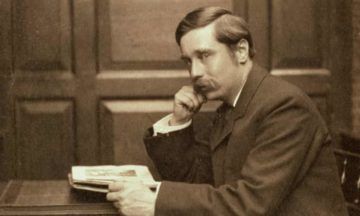 In his writings, Wells conveyed a plethora of futuristic prophecies, from space travel to genetic engineering, from the atomic bomb to the world wide web. There was no other fiction writer who saw into the future of humankind as clearly and boldly as he did.
Were he to have been alive at the very end of the 20th century, what would he have made of that world? I am especially curious to know what he would have thought about the unbridled optimism characteristic of the era, an optimism shared by liberal politicians, political scientists and Silicon Valley alike. The rosy conviction that western democracy had triumphed once and for all and that, thanks to the proliferation of digital technologies, the whole world would, sooner or later, become one big democratic global village. The naive expectation that, if you could only spread information freely beyond borders, people would become informed citizens, and thus make the right choices at the right time. If history is by definition linear and progressive – if there is no viable alternative to liberal democracy – why should you worry about the future of human rights, or rule of law, or freedom of speech or media diversity? The western world was regarded as safe, solid, stable. Democracy, once achieved, could not be disintegrated. How could anyone who had tasted the freedoms of democracy ever agree to discard it to the winds?
Fast forward, and today this dualistic way of seeing the world is shattered. The ground beneath our feet does not feel that solid any more. We have entered the Age of Angst. Ours is the age of pessimism. Ours is a world that is hurting. If Wells were alive today, what would he think of this new century with its increasing polarisation, rising populist authoritarianism, and the bewildering pace of consumption – including consumption of misinformation – all of which are exacerbated by digital technologies?
More here.
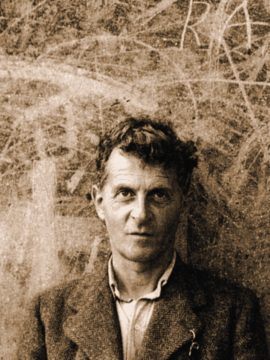 In 1920, after failing five times to find a publisher for his newly finished book, Tractatus Logico Philosophicus, the Austrian-born philosopher Ludwig Wittgenstein consoled himself in a letter to Bertrand Russell:
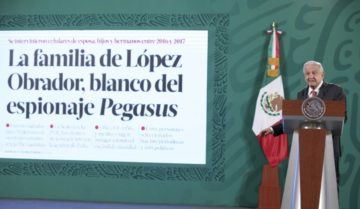 Between June 2020 and February 2021, the iPhones of nine Bahraini activists – including two dissidents exiled in London and three members of the Bahrain Centre for Human Rights – were hacked using the Pegasus spyware that was developed by NSO Group, an Israeli cyber-surveillance firm regulated by Israel’s defence ministry.
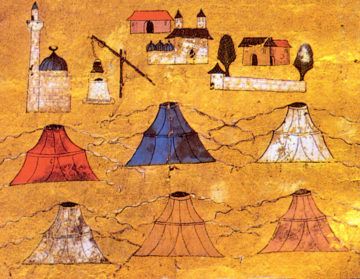 In the 1770s, the Paduan philosopher, natural historian, and Augustinian abbot Alberto Fortis (1741–1803) undertook several journeys to the other side of Adriatic, one of them to the lands of the Morlacchi. His travels were memorialized as Viaggio in Dalmazia, an epistolary travelogue printed in Venice in 1774 and translated into German two years later. It inspired Goethe to retranslate a folk poem collected by Fortis for his book and to recommend it for inclusion in Herder’s collection of Volkslieder. Goethe’s translation, initially published anonymously, made the “Xalostna pjesanca plemenite Asan-Aghinize” one of the most famous folkloric artifacts of the late eighteenth and nineteenth centuries in Europe.
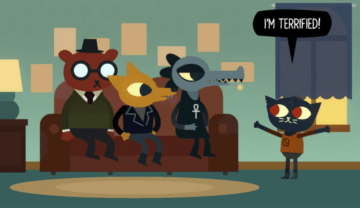 By most reasonable metrics, the 2017 indie adventure game Night In the Woods is not a horror game. There are no jump scares, no dread-inducing meta experiments, no resource scarcity (no item management to speak of, actually), and no tense gameplay sequences. Night In the Woods is a story about a 20-year-old cat named Mae Borowski who has returned to her hometown of Possum Springs after deciding to drop out of college, and you spend the majority of the game exploring her relationships with the townsfolk—with her neighbors, with her parents, with the friends she left behind. Aside from a few rhythm game inspired musical sequences, it is a relatively quiet game that thrives on rich dialogue and character interactions.
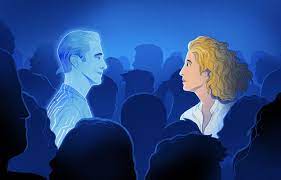 Allow me to introduce Tom. You’ll like him. Tom is handsome and sleek, with a discreet dress sense and all the social graces, but what really counts is that he’s kind. You can’t beat kindness. He won’t bug you or bore you, and so exactly will he meet your needs, whatever they are, that it’s as if he understood, in advance, what they were going to be. And did I mention that he knows a lot? As in, everything? To sum up, Tom is quite a guy. If you want to be picky, or downright rude, you could point out that he’s a robot, but hey: nobody’s perfect.
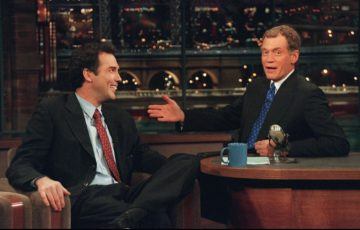 Norm Macdonald was best known for
 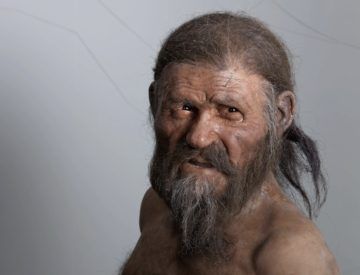 Thirty years ago this month,
  I have a friend who studied the history of fascism. She gets angry when people call Trump (or some other villain du jour) fascist. “Words have meanings! Fascism isn’t just any right-winger you dislike!” Maybe she takes this a little too far; by a strict definition, she’s not even sure Franco qualifies.
 A
A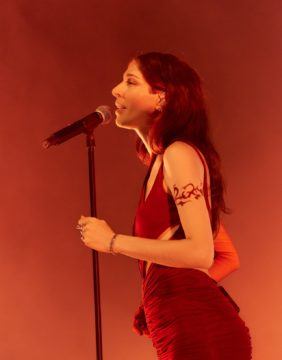 Polachek’s career started with guys and guitars. She co-founded the indie band Chairlift when she was in college, in the early two-thousands, and the group quickly reached a steady level of afternoon-set-at-a-festival success. But “Pang,” a sumptuous avant-pop record about the ecstatic terrors of love, had inspired a fervent new following. Instead of being the lead singer of a band, Polachek was now an alt-pop diva whose fans wrote things like “omfg i’m gonna cry and pee yes queen” on Instagram and showed up to gigs in leather and mesh. (The phrase “bunny is a rider” was printed on white cotton thongs; they sold out in every size.) Polachek, who has also written songs for other performers—including “No Angel,” a track on Beyoncé’s self-titled album, from 2013—is as stylized as a Top Forty artist, but she has an experimental aesthetic, tending toward the esoteric. The visuals for “Pang” were partly inspired by the mid-twentieth-century American illustrator Eyvind Earle and the seventeenth-century engraver Jacques Hurtu. She has co-directed several of her frequently surreal music videos with her boyfriend, the visual artist Matt Copson.
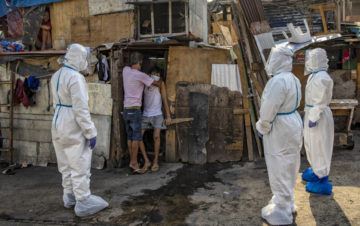 Covid has caused a deep crisis in the already suffering developing world, which contains nearly half of all humanity. And this will have serious implications for the future of the world economy and political order. Initially, Covid was something of a rich country’s disease. It started in industrial China and spread to places like the United States, Italy and the United Kingdom. But now none of the wealthiest countries falls within the top 10 worst-hit countries in terms of Covid deaths per capita. In the US, Covid has gone from the leading cause of death to seventh place in just over a year.