
Razib Khan in Nautilus:

A new paper, published in the American Journal of Human Genetics, highlights the fact that genes your parents didn’t transmit to you still matter—the phenomenon of “genetic nurture.” A team of researchers based in the United Kingdom conducted a systematic review and meta-analysis of 12 studies with nearly 40,000 parent-offspring comparisons. The genetic nurture effect for years of education, they found, is about 50 percent of the value of direct genetic effects. “Empirical studies,” they write, “have indicated that genetic nurture effects are particularly relevant to the intergenerational transmission of risk for child educational outcomes, which are, in turn, associated with major psychological and health milestones throughout the life course.” Genetic nurture is clearly not a factor you can ignore.
How does it work? Some parents may have personalities that have them prioritizing the short-term over the long-term. Rather than investing in their offspring’s educational outcome, by investing in a college fund, say, they may prefer spending the money on vacations to Europe, which have a great deal of short-term utility. The child may have somewhat different preferences, but this would be irrelevant, as these sorts of decisions are usually made by parents. The same is true in the converse situation, where parents make decisions that would increase the likelihood of their offspring going to college. This is a situation where the offspring may not have inherited the gene (or cluster of genes) that gives their parents the long-term vision, but they themselves benefit from that disposition.
More here.
 I first became aware of the photographs of Deana Lawson because of a piece that Zadie Smith wrote about Lawson in The New Yorker a few years ago and I remember it being quite a good piece, which is not unusual for a piece by Zadie Smith and, to be completely truthful, I find that I am often much more moved and impressed when Zadie Smith writes about visual art than I am by the novels of Zadie Smith. But perhaps I am just being bitter in saying this because in fact I should also say that I once sort of thought that I was a little bit friends with Zadie Smith since she had liked an article I’d written about a collection of her essays and we engaged in something of an ongoing email exchange and then one day I noticed that we were both scheduled to do something at a literary event, to give a talk or give a reading or whatever people do at literary events and I thought I would drop by to say hi to her and maybe have a coffee and suddenly I was in a long line of people trying to get a moment with Zadie Smith as she was sitting at a table signing books. She was surrounded by different sorts of handlers and managers and, I guess, bodyguards and when I finally got up to Zadie Smith and when she realized that she sort of knew me through an email exchange there was an awkward chit chat between the two of us mixed with some overly long pauses and it felt, I must say, like I was standing there for several hours when in fact it must have only been a couple of minutes and the whole time she looked deeply pained and sorry for me and then her handlers sort of scooted me along down the hall and I finally realized that I am not friends with Zadie Smith at all, not even a little bit, and that she lives in a world that truly and completely has nothing to do with my own. She lives in a world of real and genuine fame and I do not. She ‘knows’ hundreds of people like me and mostly she just wants them to go away. And I don’t blame her at all for that. Not one bit. During that awkward couple of minutes standing in front of her book-signing table I wanted me to go away too.
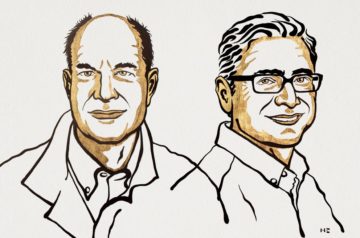 The Nobel Assembly at Karolinska Institutet has today decided to award the 2021 Nobel Prize in Physiology or Medicine jointly to David Julius and Ardem Patapoutian for their discoveries of receptors for temperature and touch.
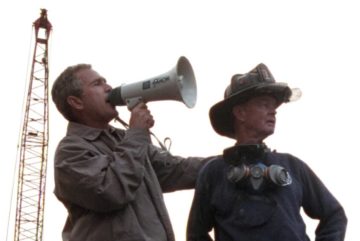 Postmortems on the war in Afghanistan stress errors of execution during the two decades of occupation. However, the greatest error may have been to invade at all.
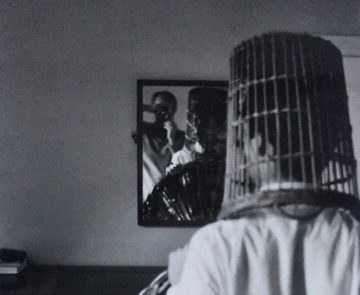 Readers of Sebald increasingly agree that it is wrong to see the Jewish and German tragedy of the Holocaust as the sole focus of his work: the darkness of his vision extends much further, to the whole of human history, to nature itself. That is true. But here is my limitation: I am the daughter of Jewish refugees from Nazism. It was the fact that Sebald was the German writer who most deeply took on the burden of German responsibility for the Holocaust that first drew me to him, and it is still one of the things that most amaze and move me about his work. He didn’t want to be labeled a “Holocaust writer” and I don’t call him one here. But though the Holocaust was far from the only tragedy he perceived, it was his tragedy, as a German, the son of a father who had fought in Hitler’s army without question. It was also my tragedy, as the daughter of Viennese Jews who had barely escaped with their lives. I think it is right to see the Holocaust as central to his work. But if I make it too central, that is why.
 ‘W
‘W E
E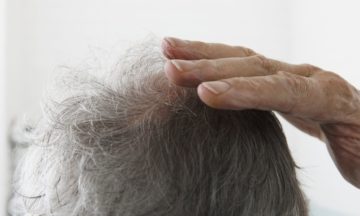 Every person, every mouse, every dog, has one unmistakable sign of aging: hair loss. But why does that happen? Rui Yi, a professor of pathology at Northwestern University, set out to answer the question.
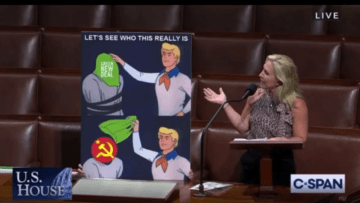 Social media have gutted institutions: journalism, education, and increasingly the halls of government too. When Marjorie Taylor Greene displays some dumb-as-hell anti-communist Scooby-Doo meme before congress, blown up on poster-board and held by some hapless staffer, and declares “This meme is very real”, she is channeling words far, far wiser than the mind that produced them. We’re all just sharing memes now, and those of us who hope to succeed out there in “reality”, in congress and classrooms and so on, momentarily removed from our screens and feeds, must learn how to keep the memes going even then. “Real-world” events, in other words, are staged by the victors in our society principally with an eye to the potential virality of their online uptake. And when virality is the desired outcome, clicks effected in support or in disgust are all the same. Thus the naive idea that AOC wore her “Tax the Rich” gown to a particular event attended by a select crowd within a well-defined physical space completely distorts the motivation behind the gesture, which was, obviously, to make waves not during, but immediately after, the event, not for the people at the event, but for all the people who were not invited.
 Topologists study the properties of general versions of shapes, called manifolds. Their animating goal is to classify them. In that effort, there are a few key distinctions. What exactly are manifolds, and what notion of sameness do we have in mind when we compare them?
 There is great emotional weight in literature. Anyone who has cried for the death of Old Yeller, laughed at the antics of Lucky Jim, or been thrilled by the adventures of Simon Templar can attest to that simple fact. What has never been simple is understanding why a string of written words can create such an emotional response, or possibly more important, why some strings achieve it so much more effectively than others.
 I’m an audiovisual translator, which means that I—and others like me—help you understand the languages spoken on screen: You just click that little speech bubble icon in the bottom-right corner of your preferred streaming service, select the subtitles or the dub, and away you go. These scripts are all written by someone like myself, sitting quietly at a computer and spending day after day trying to figure out, “What are they actually saying here?”
 H
H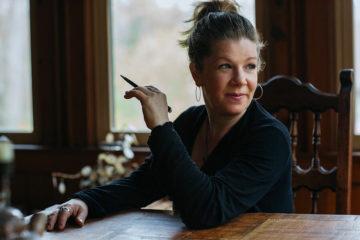 On the cover of her new album, Dar Williams stands on a floating platform in a lake. A breeze ripples the water so that it’s as wrinkled as elephant skin. As Ms. Williams gazes toward an unseen horizon, her scarlet shawl flutters behind her like a vapor trail. The atomistic image is metaphorical. Ms. Williams says the photo, taken by a drone, makes her look like a red dot destination marker on a map. The album, debuting Oct. 1, is titled “I’ll Meet You Here.” “Somehow we have to figure out how to continue to meet the moment and meet one another,” even when we seem to be stranded, explains the folk singer in a phone call.