
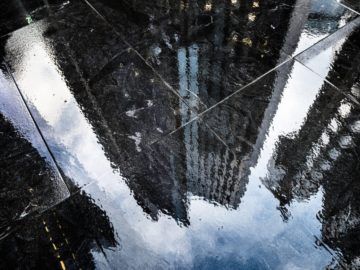
 James Meadway in New Statesman:
Stagflation”, an appropriately ugly word coined in the 1970s to describe the grisly combination of high inflation and low growth that afflicted that decade, is making a return to economic discussion. Nouriel Roubini, the “Doctor Doom” credited with predicting the 2008 financial crash, has suggested that the “mild stagflation” of earlier this year could be followed by a more serious recurrence in the future. As I’ve written in the New Statesman over the past 18 months, endemic Covid alone would be enough to drive up costs and therefore prices across the world. The economic outlook is uniformly grim – perhaps more so than even Roubini thinks.
First, while inflation is higher than it has been, and is likely to remain so, this is not the result of the extraordinary expansion of the money supply over the past year, as most “inflation hawks” have argued. Their theory seems simple – more money chasing the same goods makes prices go up – but in reality the volumes of Quantitative Easing (QE) cash that central banks such as the Bank of England have issued since early last year have made their way into different forms of hoarding, rather than spending.
The British government has spent, for example, extraordinary amounts on the furlough scheme and, in effect, paid for it with QE. But with households having saved an estimated £200bn since the start of the pandemic, that money is not entering the wider economy and so is having limited impact on prices. The injection of QE into the financial system has only caused prices to rise in specific markets – helping to support rising house prices in the UK and US stock markets.
The causes of the current general rise in prices are more serious, and harder to solve. The supply chain disruptions caused by Covid are obvious contributing factors, with the shock of lockdowns and factory closures last year still making their way through the system. But the ongoing, and perhaps permanent, impact of Covid as the virus becomes endemic – with people continuing to fall ill, being forced to self-isolate, and the extra costs and hassles of performing many economic activities – will result in significant costs across the economy.
More here.
 T
T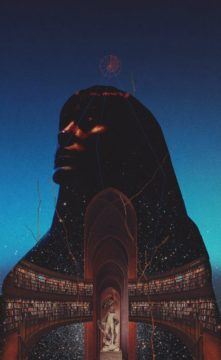 “Cloud Cuckoo Land,” a follow-up to Doerr’s best-selling novel “All the Light We Cannot See,” is, among other things, a paean to the nameless people who have played a role in the transmission of ancient texts and preserved the tales they tell. But it’s also about the consolations of stories and the balm they have provided for millenniums. It’s a wildly inventive novel that teems with life, straddles an enormous range of experience and learning, and embodies the storytelling gifts that it celebrates. It also pulls off a resolution that feels both surprising and inevitable, and that compels you back to the opening of the book with a head-shake of admiration at the Swiss-watchery of its construction.
 “Let me start big. The mission of the Claremont Institute is to save Western civilization,” says Ryan Williams, the organization’s president, looking at the camera, in a crisp navy suit. “We’ve always aimed high.” A trumpet blares. America’s founding documents flash across the screen. Welcome to the intellectual home of America’s Trumpist right.
 Even Noah Webster, that master of words, did not have a name for the terrible sickness. “In May 1735,” he wrote in A Brief History of Epidemic and Pestilential Diseases, “in a wet cold season, appeared at Kingston, an inland town in New-Hampshire, situated in a low plain, a disease among children, commonly called the ‘throat distemper,’ of a most malignant kind, and by far the most fatal ever known in this country.” Webster noted the symptoms, including general weakness and a swollen neck. The disease moved through the colonies, he wrote, “and gradually travelled southward, almost stripping the country of children….It was literally the plague among children. Many families lost three and four children—many lost all.” And children who survived generally went on to die young, he wrote from his vantage point of more than half a century later. The “throat distemper” had somehow weakened their bodies.
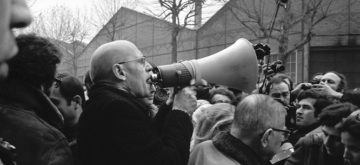
 In the last few years, I have had dozens of conversations with leaders of companies and nonprofit organizations about the illiberalism that is making their work so much harder. Or rather, I should say I’ve had one conversation—the same conversation—dozens of times, because the internal dynamics are so similar across organizations. I think I can explain what is now happening in nearly all of the industries that are creative or politically progressive by telling you about what happened to American universities in the mid-2010s. And I can best illustrate this change by recounting the weirdest week I ever had in my 26 years as a professor.
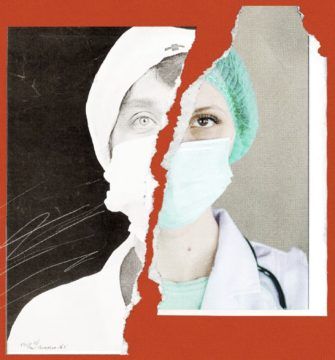 America’s frustrating inability to learn from the recent past shouldn’t be surprising to anyone familiar with the history of public health.
  In case we wonder why not all of us have healthy, sustaining, lifelong friendships, this issue offers some answers to the riddle of why and how friendships, begun in such pleasure and good faith, can derail so catastrophically.
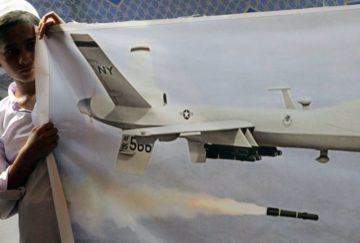 The United States began bombing the border zone, then known as the Federally Administered Tribal Areas (FATA), in 2004, ostensibly to combat al-Qaeda and the Taliban. It has bombed the area at least 430 times, according to the London-based Bureau of Investigative Journalists, and killed anywhere between 2,515 to 4,026 people.
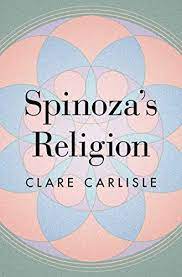 The term ‘atheist’ can be just as ambiguous as ‘religious’ and ‘God’. In the 17th century, it was essentially an all-purpose word used against anyone whose view of God departed from orthodoxy – much in the way that ‘communist’ was (and is) used in the USA to cast aspersion on political opponents (and much in the way that ‘Spinozist’ was used in the early modern period after Spinoza’s works were posthumously published and condemned). But Spinoza does not only dismantle the orthodox notion of a personal God, which he regards as a source of human misery. He also famously refers to ‘God or Nature’ (Deus sive Natura), which suggests that God is nothing but nature, and that ‘God’ can broadly be construed to refer both to the visible cosmos and to the unseen but fundamental power, laws and principles that govern it. And this, to me at least, looks like true atheism. In Spinoza’s view, all there is is nature. There is no supernatural; there is nothing that does not belong to nature and that is not subject to its causal processes.
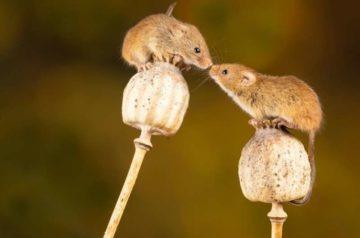 “Normal behavior and physiology depends on a near 24-hour circadian release of various hormones,” said Jeff Jones, who led the study as a postdoctoral research scholar in biology in Arts & Sciences and recently started work as an assistant professor of biology at Texas A&M University. “When hormone release is disrupted, it can lead to numerous pathologies, including affective disorders like anxiety and depression and metabolic disorders like diabetes and obesity.
 Urging the German people to “stop the steal,” Donald J. Trump claimed that he was elected Chancellor of Germany over the weekend. Trump said that, once the official vote tallies have been recounted, it will be clear that he won the German election by a “landslide.” Reflecting on his purported win, Trump said,
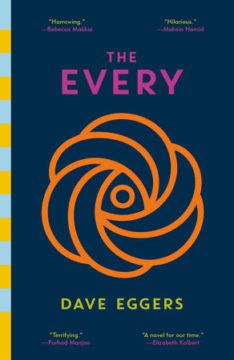 Dave Eggers’s newest book,
  In the question to understand the biology of life, we are (so far) limited to what happened here on Earth. That includes the diversity of biological organisms today, but also its entire past history. Using modern genomic techniques, we can extrapolate backward to reconstruct the genomes of primitive organisms, both to learn about life’s early stages and to guide our ideas about life elsewhere. I talk with astrobiologist Betül Kaçar about paleogenomics and our prospects for finding (or creating!) life in the universe.