
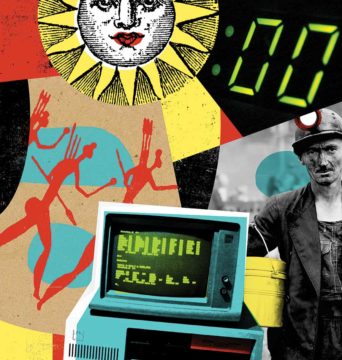
 Aaron Benanav in The Nation (Illustration by Tim Robinson):
We have named the era of runaway climate change the “Anthropocene,” which tells you everything you need to know about how we understand our tragic nature. Human beings are apparently insatiable consuming machines; we are eating our way right through the biosphere. The term seems to suggest that the relentless expansion of the world economy, which the extraction and burning of fossil fuels has made possible, is hard-wired into our DNA. Seen from this perspective, attempting to reverse course on global warming is likely to be a fool’s errand. But is unending economic growth really a defining feature of what it means to be human?
For the longest part of our history, humans lived as hunter-gatherers who neither experienced economic growth nor worried about its absence. Instead of working many hours each day in order to acquire as much as possible, our nature—insofar as we have one—has been to do the minimum amount of work necessary to underwrite a good life.
This is the central claim of the South African anthropologist James Suzman’s new book, Work: A Deep History, From the Stone Age to the Age of Robots, in which he asks whether we might learn to live like our ancestors did—that is, to value free time over money. Answering that question takes him on a 300-millennium journey through humanity’s existence.
More here.
 Justin Sandefur over at the Center for Global Development:
 Yakov Feygin in Noema (image by Roman Bratschi for Noema Magazine):
 David McDermott Hughes in Boston Review:
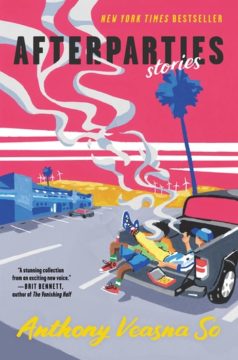 Afterparties is haunted by lateness, not only because it arrives after the premature death of its author, but also because it is a work of Cambodian American literature. “I very much feel that I come from a Cambodian-American world, not really an American one . . . so I find it important for my work to reflect that,” So said in a 2020 interview. In contrast to Asian American writing by those of Japanese, Chinese, and Korean descent (what So might refer to as “mainstream East Asians” in “The Shop”), Cambodian American writing is a relatively newer and more minor literature. (“We’re minorities within minorities,” goes So’s own self-description in his posthumous essay “Baby Yeah.”) There was a relative absence of Cambodian American communities until the late 1970s, following the genocide and the passage of the 1980 Refugee Act; there is now also a deficit of Cambodian writing and writers, because the Khmer Rouge annihilated Cambodian society by targeting its intellectuals and artists (libraries and schools were demolished, books burned, teachers murdered). The aftershocks of genocidal loss permeate the writing of the Cambodian diaspora, as the deliberate obliteration of their literature makes the work of contemporary writing both more necessary and difficult. For the children of Cambodian refugees, this work is even harder: How do you write the stories of those whose stories were systematically destroyed?
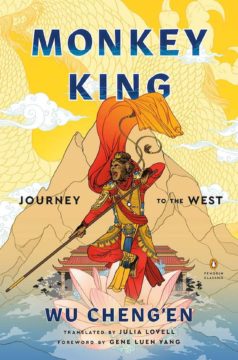 Third, Monkey King accentuates one of the major appeals of the novel — its humor — with embellishments made by the translator in three main ways: dialogue, the culture of the immortal society, and the technicality of magic. Monkey is nothing without his complete disregard for formality, even (or especially) as he interacts with those perching at the top of the deities’ hierarchical system. He evokes both childish innocence and rebellious boldness. The English edition takes this characteristic and runs with it, tweaking a word choice here and perfecting a repartee there, in line with the lighthearted tone of the original. I should mention also that Lovell excels at spicing up the insults exchanged between Monkey and his enemies. One of the spirits sent to subdue Monkey threatens his monkey kingdom, “The merest whisper of resistance and we’ll turn the lot of you into baboon butter” — you will not find “baboon butter” in the original version.
 Let’s talk about fear, health and why so many of us have decided that sitting in front of the
 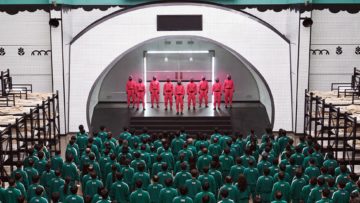 For the chance to escape severe debt, the characters in Netflix’s hugely popular survival drama Squid Game would risk anything, even death. Take the protagonist Seong Gi-hun. Unemployed, he spends his days in Seoul gambling on horse races and has signed away his organs as collateral to his creditors. His deficits, both financial and personal, hurt the people closest to him: He hasn’t paid child support or alimony to his ex-wife; he mooches off his elderly mother. On his daughter’s birthday, Gi-hun can afford to buy her only tteokbokki (spicy rice cakes) and a claw-machine toy. He has little left to lose.
 What do we think we know about Baruch Spinoza? We know he was one of the greatest philosophers of the Enlightenment: the Dutch thinker was a champion of free intellectual inquiry who broke new ground in metaphysics, epistemology and philosophy of mind. His magnum opus, the Ethics, put forward a system of breathtaking originality that is still celebrated today. We might know that he was a pioneer of the rationalist school that emerged in the 17th century. But more than any of this, most of us know something about his philosophy of religion: Spinoza’s writing is famously atheistic.
 Einstein recalled how, at the age of 16, he imagined chasing after a beam of light and that the thought experiment had played a memorable role in his development of special relativity. Famous as it is, it has proven difficult to understand just how the thought experiment delivers its results. It fails to generate serious problems for an ether based electrodynamics.
  The
The 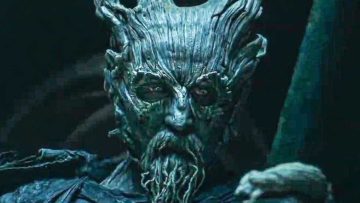 Folk horror plays on myths as lure and nightmare, but The Green Knight is more focused on the radical otherness of the natural world. Lowery’s “horror-ized” version of Gawain’s quest, with its defamiliarizing photography of Ireland’s forests, bogs, and caves, creates a landscape that feels far from “natural.” It contains uncanny specters, eerie giants, haunted woods, talking foxes, and, of course, the story’s titular tree-like green weirdo who picks up his own head off the floor after Gawain severs it. Nature has grown tired of having axes driven into its neck and is now fighting back, threatening to destabilize the human world. These details feel redolent of what English horror writer Gary Budden calls “
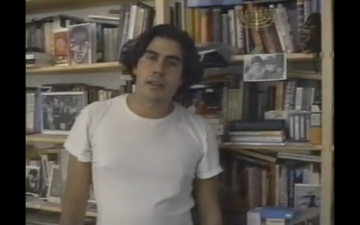 For a film about dying, the sick bodies hold their illnesses discreetly. There are no waning limbs, no unsightly fluids, no Kaposi sarcoma lesions. Perhaps this is a line of spectacle Bordowitz will not cross. The subjects seem healthy, for now. But there is a rupture in the final moments of the film, after the credits have rolled. It’s an outtake from the opening scene. “Death is the death of consciousness,” says Bordowitz, reclining in bed, pants-less. “I hope there’s nothing after this,” and then he breaks character and starts laughing, as does whoever is filming. But the laughter turns to coughing, Bordowitz can’t catch his breath. Is it the smoking? There’s an ashtray balanced on his
 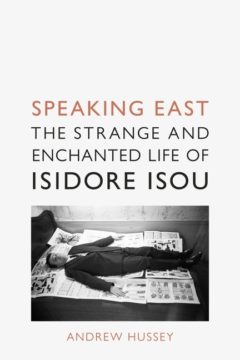 Nevertheless, when the Dadaist poet Tristan Tzara was buried at Montparnasse in the winter of 1963, Isou and his followers arrived uninvited at the cemetery and fought with the communists who had also come to pay their respects. As Isou began to make a speech, he was informed that Tzara’s family had wished for the funeral to pass in silence. Undeterred, he began to declaim a lettriste poem: ‘étli, tzara, jofué lochigran télebile sarkénidan.’