
Bryan Greene in Smithsonian:
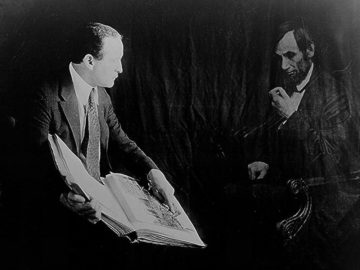 Harry Houdini was just 52 when he died on Halloween in 1926, succumbing to peritonitis caused by a ruptured appendix. Famous in life for his improbable escapes from physical constraints, the illusionist promised his wife, Bess, that—if at all possible—he would also slip the shackles of death to send her a coded message from the beyond. Over the next ten years, Bess hosted annual séances to see if the so-called Handcuff King would come through with an encore performance from the spirit world. But on Halloween 1936, she finally gave up, declaring to the world, “Houdini did not come through. … I do not believe that Houdini can come back to me, or to anyone.”
Despite Bess’ lack of success, the Houdini séance ritual persists to this day. Though visitors are banned from visiting the magician’s grave on Halloween, devotees continue to gather for the tradition elsewhere. Ever the attention-seeker in life, Houdini would be honored that admirers are still marking the anniversary of his death after 95 years. He’d likely be mortified, however, to learn that these remembrances take the form of a séance.
More here.
 Cora Currier in The New Republic:
 Aziz Z. Huq in Boston Review:
 A
A  “You’re just a pawn in the game, you know,” a public security officer summarily informs Ai Weiwei, China’s most controversial — and to the Chinese Communist Party, its most dangerous — artist. It is 2011 and Ai, suspected of “inciting the subversion of state power,” has recently been held captive for 81 days; soon after his release, he is slapped with a tax bill equivalent to $2.4 million. According to the officer, Ai’s high profile has made him an expedient tool for Westerners to attack China, but “pawns sooner or later all get sacrificed.” Of course, it’s obvious that Ai also regards the officer as a pawn, one who, in serving an oppressive regime, has sacrificed his freedom to speak for himself.
 Contemporary Americans have access to custom workout routines, fancy gyms, and high-end home equipment like Peloton machines. Even so, when it comes to physical activity, our forebears of two centuries ago beat us by about 30 minutes a day, according to a new Harvard study.
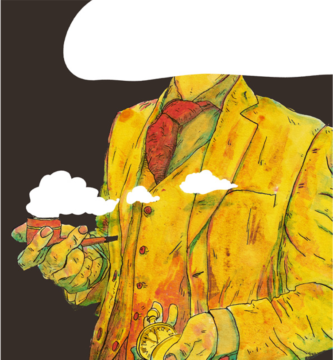 If you want to predict the future accurately, you should be an incrementalist and accept that human nature doesn’t change along most axes. Meaning that the future will look a lot like the past. If Cicero were transported from ancient Rome to our time he would easily understand most things about our society. There’d be a short-term amazement at various new technologies and societal changes, but soon Cicero would settle in and be throwing out Trump/Sulla comparisons (or contradicting them), since many of the debates we face, like what to do about growing wealth inequality, or how to keep a democracy functional, are the same as in Roman times.
 There is a world, not too dissimilar from our own, in which Jonathan Franzen is a professor of creative writing at a small liberal arts college in the Midwest. He still has his bylines at the New Yorker and Harper’s (in fact, he writes for them more frequently); he still has his books (even if they’re all a bit shorter, one of them is a collection of short stories, and his translation of Spring Awakening lives with his unpublished notes on Karl Kraus in the Amish-made drawer of his ‘archive’); he still has his awards (except his NBA is now an NEA). Despite his misgivings about the effect of social media on print culture, he also has a Facebook page, which he uses to promote his readings and share photos of his outings with the local birding society, and a Twitter account, which he uses to retweet positive reviews and post about Julian Assange. Aside from his anxiety about how much time teaching and administrative duties take away from his ‘real work’ as a novelist, whether his diminishing royalty checks will be enough to cover his mortgage and his adopted son’s college tuition, and whether it would be wise to keep flirting with the sole female member of his small group of student acolytes, the greatest drama in his life occurs when he periodically becomes the main character on Twitter for saying something hopelessly out of touch – pile-ons he less-than-discreetly attributes to other writers’ envy for his hard-won success.
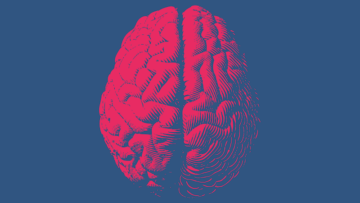 Although I’ve successfully learned the language of mathematics, it has always frustrated me that I couldn’t master those more unpredictable languages like French or Russian that I’d tried to learn in hopes of becoming a spy. Although Gauss too left his love of languages behind to pursue a career in mathematics, he did actually return to the challenge of learning new languages in later life, such as Sanskrit and Russian. At the age of 64, after two years of study, he had mastered Russian well enough to read Pushkin in the original. Inspired by Gauss’s example, I’ve decided to revisit my attempts at learning Russian.
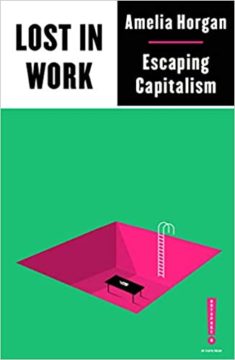 If there is a utopian kernel to be found in this pandemic, so replete with dystopian terror, it is most certainly that each day more and more people have grown to hate the world of work. Some of us, certainly a lucky few, might even enjoy our jobs, or certain aspects of them, but all the same, work under capitalism has become increasingly legible as a system of false promises—deferred freedom, self-actualization, leisure, joy, safety, or whatever else we might value that cannot be reduced to the accumulation of capital.
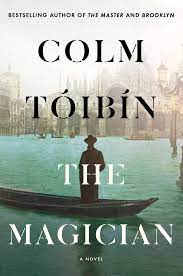 Colm Tóibín presents us with one account of Mann’s gradual progress away from German nationalism. It might not be the last word on what seems to have been a complex and tortured journey, but it functions well in the context of the demands of a novel, where the shifts in perspective must be presented dramatically and are often portrayed through Thomas’s interactions with others, principally members of his large and turbulent family. First and most important of these is his wife, Katia Pringsheim, who is deeply suspicious of his friendship with the nationalist (and later Nazi) writer Ernst Bertram. On the outbreak of the First World War Katia asks her husband to consider how they would feel if their two boys, Klaus and Golo, were old enough to be conscripted, “and we were waiting here each day for news of them”: “And all because of some idea.”