
 Roosevelt Montás over at Aeon:
As a high-school student with still-shaky English proficiency, I found a collection of Plato’s dialogues in a garbage pile near my house in Corona, Queens. I had grown up in a mountain town in the Dominican Republic and emigrated to New York City just before my 12th birthday. My mother had left the Dominican Republic a few years earlier, secured the only job she could get, earning the minimum wage in a garment factory, and petitioned for my brother and I to join her. In 1985, we entered New York City’s overcrowded public school system, where the free lunches supplied a good portion of our sustenance. Like many immigrants, we were poor, exposed, and disoriented by our uprooting.
It was not an auspicious beginning for the career I would have as student, academic administrator and faculty member at an Ivy League university. But the jarring journey became, at some point, less of a handicap and more of a peculiar vantage point from which to reflect on the intellectual and social world I had entered. My development was nourished by an education in what some people call ‘the great books’. That same education has made me sensitive to a culturally influential critique of ‘the canon’ that insists that Homer, Sophocles, Plato, Montaigne, Cervantes, Goethe, Hegel, Dostoyevsky, Woolf, et al, are not for people like me, that they are for white people, or rich people, or people born with class privileges that I lacked
More here.
 I
I The literary scholar Christopher Ricks made a distinction between being “unenchanted” and “disenchanted.” The latter category implies that you have been let down in your hopes and dreams; the former that you never had any to begin with. Didion, of course, belongs to the first breed. Nothing ever seemed to excite her or faze her or disappoint her, largely because she set her sights so low to begin with. She cannot be disabused. Spotting Jim Morrison on a spring evening in 1968 recording a rhythm track leads her to comment on his outfit — “black vinyl pants and no underwear” — and the gnomic remark (one of her specialties) that his whole gestalt suggested “some range of the possible just beyond a suicide pact.” Didion was the archpriestess of cool — possessed of a corrosive sense of irony and an overriding habit of condescension — in a period of greater naïveté and belief than we live in now.
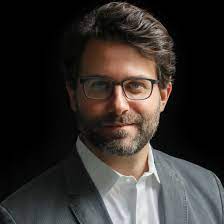 Just after graduating from medical school, Carl Erik Fisher was on top of the world. He was winning awards and working day and night. But a lot of that frantic activity was really covering up his problems with addiction. Fisher – who says he comes from a family with a history of addiction – descended into an alcohol and Adderall binge during residency. A manic episode led to his admission to the Bellevue Hospital Psychiatry ward in New York, where just years ago, he’d interviewed for residency. “Because I was a doctor, because I’m white, because when the NYPD came to get me out of my apartment I was living in an upscale neighborhood —I got a lot of treatment and I got a lot of compassion,” he says. “Sadly, many people with addiction can’t even access services, let alone the kind of quality of services I was able to get.”
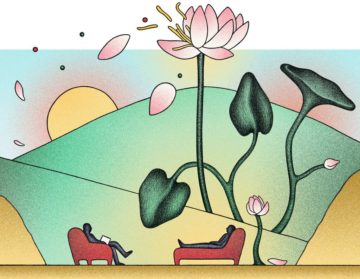 Despite often being lumped together these days in what gratingly gets called the “wellness sector,” psychotherapy and Buddhist meditation might be seen as almost opposite approaches to the search for peace of mind. Show up on the couch of a traditional American shrink, and you’ll be encouraged to delve deep into your personal history and emotional life — to ask how your parents’ anxieties imprinted themselves on your childhood, say, or why the way your spouse loads the dishwasher makes you so disproportionately angry. Show up at a meditation center, by contrast, and you’ll be encouraged to see all those thoughts and emotions as mere passing emotional weather, and the self to which they’re happening as an illusion.
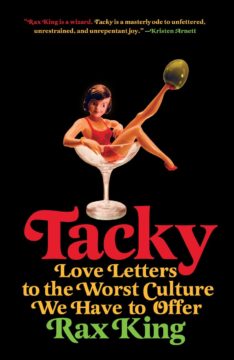 Tackiness, it would seem, has always been in the eye of the beholder—a disapproving audience, real or imagined, clicking their proverbial tongues. They usually judge from the other side of some perceived divide, whether cultural, socioeconomic, or generational. “I always thought of tacky as my mother’s word,” Rax King writes at the beginning of her spirited new essay collection .Tacky: Love Letters to the Worst Culture We Have to Offer (Vintage, $16). She can still describe with stinging clarity the first time her mother flung the insult at her: she was eight years old, dressed in a puff-painted and bedazzled T-shirt she’d made with a friend so that they’d have something to wear when performing a song-and-dance routine at the elementary school talent show. (The song? An unnamed jig by the ’90s Irish girl group B*Witched, naturally.) “It occurred to me that being tacky was, in some sense, the opposite of being right,” King writes, reconsidering that formative moment two decades later. But even then, beneath the shame triggered by her mother’s laughter, she felt the illicit, hedonistic allure of the tacky: “Why should I put all that work into being right when the alternative was so much more fun?”
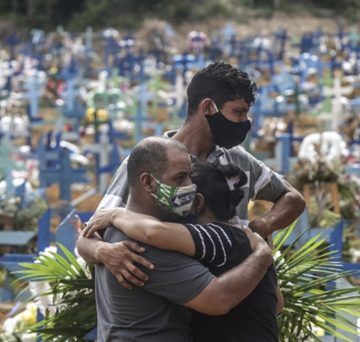 Last year’s Day of the Dead marked a grim milestone. On 1 November, the global death toll from the COVID-19 pandemic passed 5 million, official data suggested. It has now reached 5.5 million. But that figure is a significant underestimate. Records of excess mortality —
  I’ve been reading Anjuli Fatima Raza Kolb’s ambitious debut monograph, Epidemic Empire: Colonialism, Contagion and Terror 1817–2020. In it, the Pakistani-American scholar ranges over 200 years of history to argue that the West has long used the language of disease centrally in its methods of control.
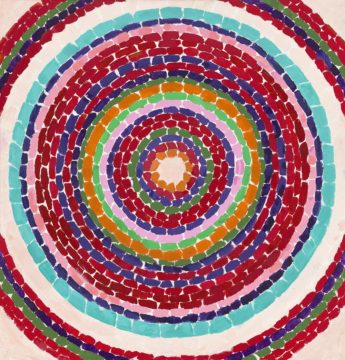 Her continued experimentation on paper notwithstanding, beginning in the late 1960s, Thomas seems to have concentrated on all-over paintings constructed with regular, rhythmic patches of color chained into vertical bands, concentric circles, or o
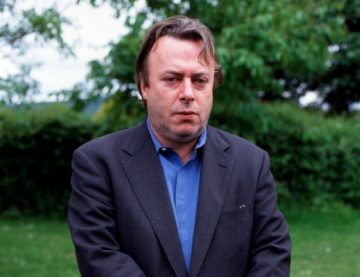 “There’s always the lingering thought, left in the air, of whether this is goodbye,” said Christopher Hitchens as we sat in his Washington apartment one bright winter’s afternoon. And for us, I knew that it was. There was no question about it. Christopher had advanced cancer of the oesophagus—a peculiarly cruel fate for one known for, literally and metaphorically, his voice. “In whatever kind of a ‘race’ life may be,” he had written in Vanity Fair in 2010, “I have very abruptly become a finalist.” He departed life on 15th December 2011, aged 62, with much still left to say.
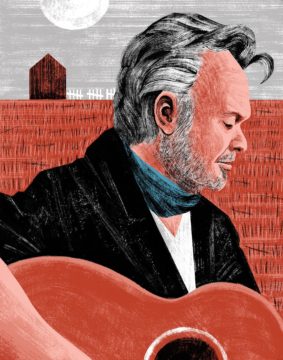 In 2012, the singer and songwriter John Mellencamp was given the John Steinbeck Award, presented annually to an artist, thinker, activist, or writer whose work exemplifies, among other virtues, Steinbeck’s “belief in the dignity of people who by circumstance are pushed to the fringes.” The grace of the marginalized is a long-standing theme of Mellencamp’s writing. The musician, who comes from Indiana and began releasing records in the late nineteen-seventies, is known as a populist soothsayer, an irascible and unpretentious spokesman for hardworking, rural-born folks. Yet Mellencamp has also bristled at this characterization, which is largely rooted in fantasy: men gazing wistfully out the windows of vintage pickup trucks, watching dust blow by, listening to some parched and distant radio station. The image of such “real,” non-coastal Americans has become a useful cudgel for conservatives looking to depict their opponents as élitist buffoons; Mellencamp finds this grotesque. “Let’s address the ‘voice of the heartland’ thing,” he told Paul Rees, whose satisfying biography, “Mellencamp,” came out last year. “Indiana is a red state. And you’re looking at the most liberal motherfucker you know. I am for the total overthrow of the capitalist system. Let’s get all those motherfuckers out of here.”
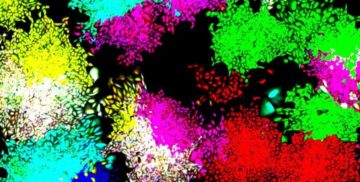 It may seem hard to believe, but each one of us began as a single cell that proliferated into the trillions of cells that make up our bodies. Though each of our cells has the exact same genetic information, each also performs a specialized function: neurons govern our thoughts and behaviors, for example, while immune cells learn to recognize and fight off disease, skin cells protect us from the outside world, muscle cells enable movement, and so on.
 David Hume (1711–1776) is justly considered to be one of the greatest philosophers that Western civilization has produced. His legacy, however, is a strange one: The works for which he was most celebrated in his lifetime are now largely ignored, while those that had the smallest impact have fared better over time.
 Wind and solar power vary over the course of a day, so energy storage is essential to provide a continuous flow of electricity. But today’s batteries are typically quite small and store enough energy for only a few hours of electricity. To rely more on wind and solar power, the U.S. will need more overnight and longer-term storage as well.