
Teju Cole in Literary Hub:
 The idea of epiphany summons two thoughts, generally. One is religious: the sudden and overwhelming appearance of the Divine into everyday life, as experienced, for instance, by Julian of Norwich, Teresa of Avila, and many holy figures through the ages. The other is literary. Epiphany is now perhaps as strongly, or even more strongly, connected to a certain idea expressed in European modernism, and emphasized in its aftermath. The idea is especially prominent in Joyce’s two early prose works, Dubliners—which includes “The Dead”—and Portrait of the Artist as a Young Man. Epiphany, as understood by Joyce, and practiced thereafter, has to do with heightened sensation and flashes of insight, often of the kind that helps a character solve a problem. This is the definition he gave the term, in an early version of Portrait of the Artist as a Young Man: “a sudden spiritual manifestation.”
“The Dead” begins at an annual Christmas gathering for friends and family in Dublin early in the 20th century. After the party, we are with a couple, the Conroys, heading to their hotel. And then we are with just the troubled thoughts of Gabriel Conroy, who is ruminating on what his wife Gretta has just told him about something in her deep past: when she was a girl, she loved a boy and the boy loved her.
More here.
 As the coronavirus pandemic recedes in the advanced economies, their central banks increasingly resemble the proverbial ass who, equally hungry and thirsty, succumbs to both hunger and thirst because it could not choose between hay and water. Torn between inflationary jitters and fear of deflation, policymakers are taking a potentially costly wait-and-see approach. Only a progressive rethink of their tools and aims can help them play a socially useful post-pandemic role.
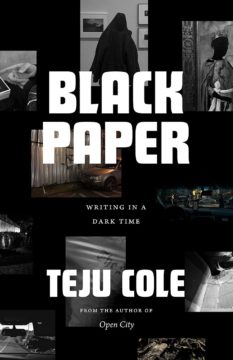 Edward Said loved music, and I loved his love of music as well as the musicality that characterized everything he did. Because of his writings on late style, I think of him in connection with Beethoven’s String Quartet no. 15, op. 132. This was Beethoven’s thirteenth quartet, but the fifteenth in order of publication. It’s the kind of work that tempts one to agree with the strange notion that there is such a thing as pure music, music better than any possible performance. This is a romantic idea, and it’s probably not true, since music exists in the hearing, not on the page. But listening to Beethoven’s Op. 132, you can see why people think so. Within the written tradition of Western classical music, as in all genres of music, there is music that exhausts superlatives. Late Beethoven emerges coherently out of mature Beethoven, and mature Beethoven is an extension and fulfillment of early Beethoven. These are major shifts and distinct modes of evolution, but they are not radical breaks.
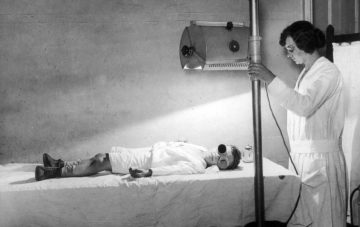 Any account of childhood written by an adult might quickly become a work of adult art, presenting the child’s world, its highlights and its shadows, with a sensibility foreign to the experiences of being young. With his intensely concentrated gaze and voluptuous yet exact prose style, however, Wollheim offers us a work of vivid immediacy. Reading it, one experiences the kind of embarrassment that the critic Christopher Ricks identified in Keats’s poetry: Brought this close up to what it feels like to be a child, or for that matter an adult, Wollheim helps us see with awful clarity what an emotional and moral predicament it is to be alive.
 Electric vehicles have the potential
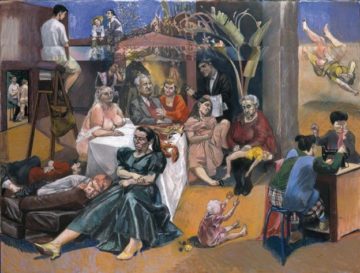 There’s a painting entitled Celestina’s House (2000-1). I count at least twenty-two figures in the painting. That’s a rough count. A few of these figures are sitting around a table, presumably eating a meal, though the only food on the table is a lobster and crab, maybe still alive. In front of the table, several figures nap awkwardly on pillows while, nearby, a tiny old woman sits on the floor, reaching up like a baby. Elsewhere, two women work, disconsolate, at a sewing machine, another woman falls down backward through the air, and a young fellow sits on a ladder with his back to us, as if he’s being punished. There is so much going on it is impossible to understand exactly what is going on. It is a scene, perhaps, showing us what would happen if the entire contents of many nights’ dreaming were smashed onto one canvas. The style is more or less realist, but not fastidiously so. We seem to be firmly in the realm of fantasy, memory, fable, and dream.
 Dear Prime Minister Boris Johnson, I want to thank you and COP President Alok Sharma for your hospitality, leadership, and tireless efforts in the preparation of this COP.
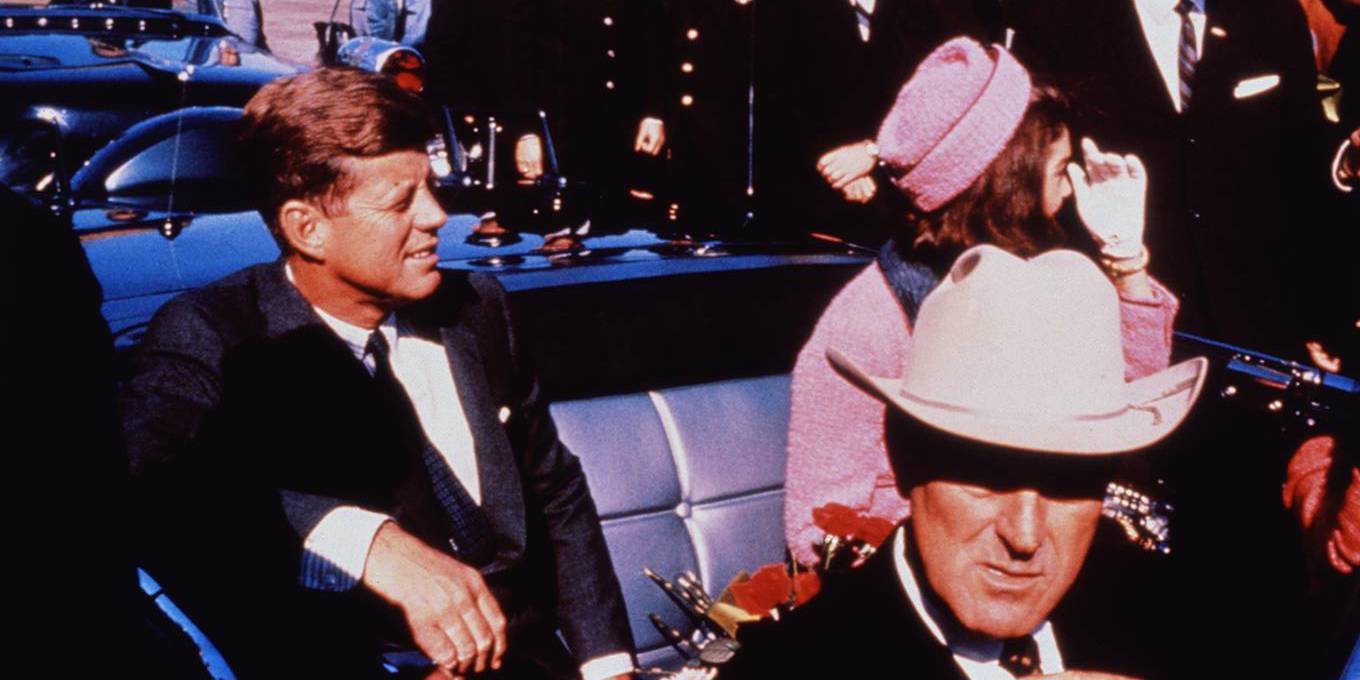 Brood with me on the latest delay of the full release of the records pertaining to the murder of President John F. Kennedy in Dallas on November 22, 1963. That was 58 years ago. More time has passed since October 26, 1992, when Congress mandated the full and immediate release of almost all the JFK assassination records, than had elapsed between the killing and the passage of that law.
 J
J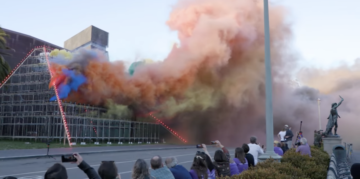 GIDDY FROM SIPPING FLUTES of the de Young Museum’s prosecco, my friend Karen and I quickly realized that from the VIP section, the view of Judy Chicago’s smoke sculpture,
 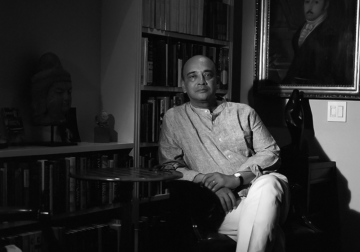 Fifty years ago, at a harp recital in Gloucestershire, a retired British military officer with a clipped aristo accent came across a brown-skinned teenager. “I say, old chap, do you speak English?” the officer said. As a story in Yale’s New Journal recounted, the young man—Kwame Anthony Akroma-Ampim Kusi Appiah—replied, “Why don’t you ask my grandmother?”
 Vaccine