
Anthony Quinn at The Guardian:
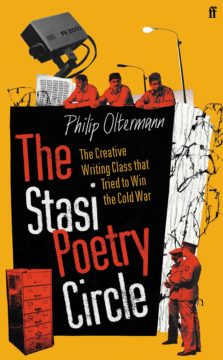 Philip Oltermann’s engrossing The Stasi Poetry Circle recounts a history so outlandish and unlikely that you feel it must be true. The author was inspired to investigate after running his own poetry group for pensioners at a day centre in London’s King’s Cross . How had a brutal spy agency alighted on poetry, “this vaguest of disciplines”, as a tool for training its employees? His research brings him into contact with soldiers and border guards who attended monthly meetings of “writing Chekists” at the Adlershof compound, a place so secret it didn’t even feature on a map of Berlin. Here, they would mull over the finer points of verse while bearing in mind the writer Friedrich Wolf’s stern credo: “The material of our age lies in front of us, hard as iron. Poets are working to forge it into a weapon. The worker has to pick up this weapon.” You can almost hear the sound of pens being chewed.
more here.
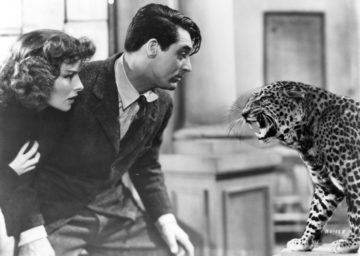 What’s exceptional about the film’s use of the tune is that it is a love song sung under duress, not for courtship but to appease the whims of a leopard named Baby and an equally unpredictable woman (Hepburn is as much a principle of chaos as any wild creature). The song must be performed in the exact style and pace that accommodates the leopard’s movements: a harried and desperate version when Baby wants to jump out of the car; a few dawdling, absent-minded phrases once he’s safely on the estate.
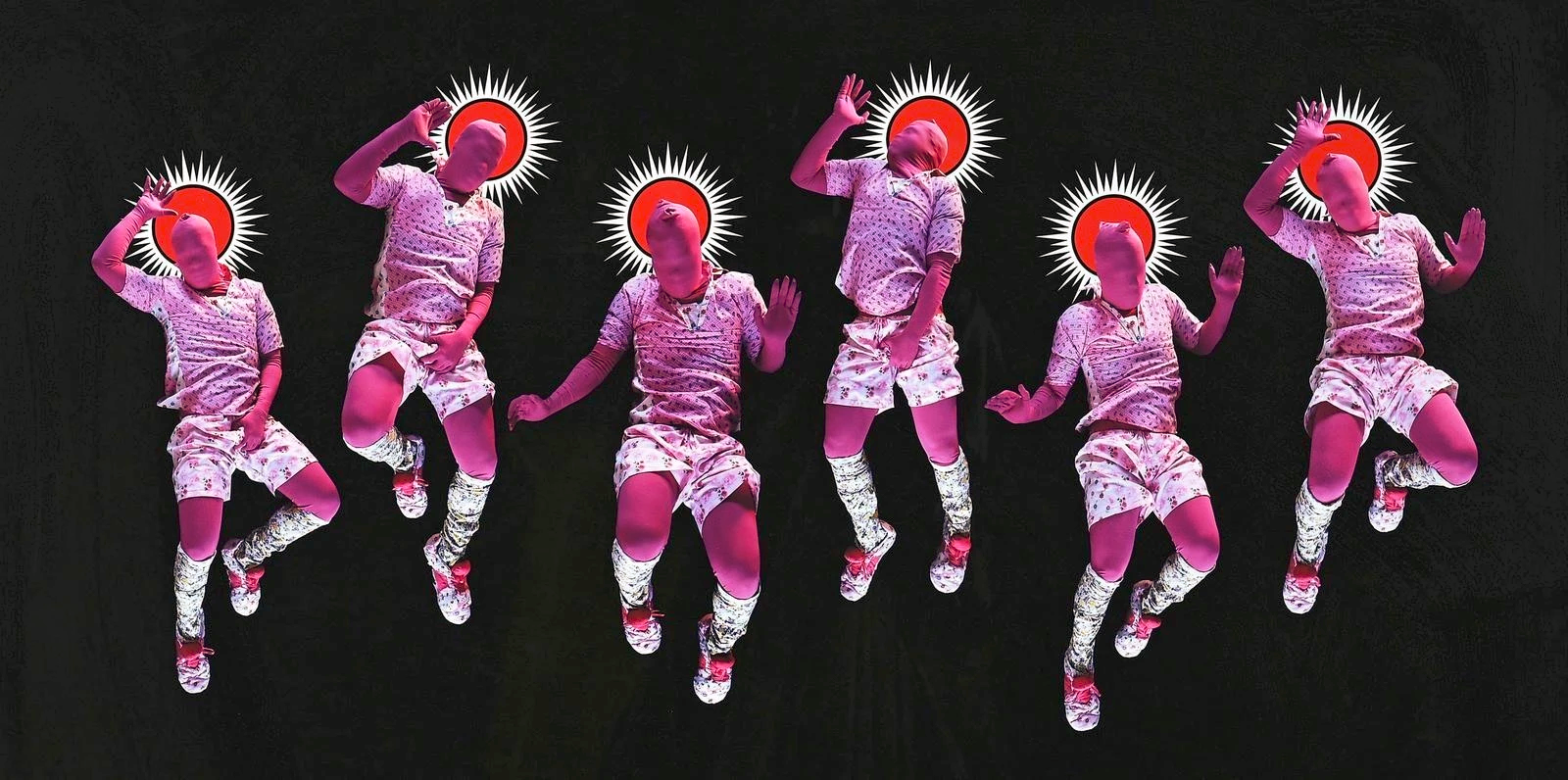 It was the second month of lockdown and the spring stretched before me like Arabic ice cream. My dad announced that he would be out all day, so I put two tabs of acid in a water bottle and headed out to the garden. A perfect time to pretend to enjoy solitude and figure out the riddles of the universe. I pulled out a big picnic blanket, sat beneath the shade of a young apple tree and waited for the new blooms of the cactus flower to speak.
 Wages have been stagnant for most Americans for decades. Inequality has increased sharply. Globalization and technology have enriched some, but also fueled job losses and impoverished communities.
 “Negro folklore is not a thing of the past,” Zora Neale Hurston wrote. “It is still in the making.”
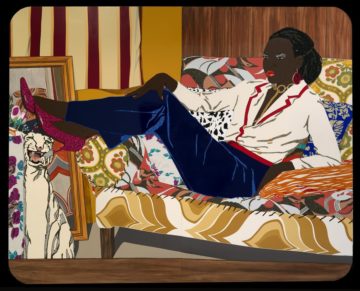 SAAM: SAAM’s website and physical spaces hold artworks and resources aplenty to take a deep dive into the presence and impact of African American artists on our world. In honor of Black History Month, here are a few of our favorite videos of artists speaking about their life, work, and inspiration.
 Central banks have started reacting to inflation. In February, the Bank of England
  Scientists say that urine diversion would have huge environmental and public-health benefits if deployed on a large scale around the world. That’s in part because urine is rich in nutrients that, instead of polluting water bodies, could go towards fertilizing crops or feed into industrial processes. According to Simha’s estimates, humans produce enough urine to replace about one-quarter of current nitrogen and phosphorus fertilizers worldwide; it also contains potassium and many micronutrients (see ‘What’s in urine’). On top of that, not flushing urine down the drain could save vast amounts of water and reduce some of the strain on ageing and overloaded sewer systems.
 Artificial intelligence is everywhere around us. Deep-learning algorithms are used to classify images, suggest songs to us, and even to drive cars. But the quest to build truly “human” artificial intelligence is still coming up short. Gary Marcus argues that this is not an accident: the features that make neural networks so powerful also prevent them from developing a robust common-sense view of the world. He advocates combining these techniques with a more symbolic approach to constructing AI algorithms.
 A few decades ago the Stanford professor Ronald Howard
 T
T One Sunday, Malcolm X was our guest. He strode into the studio, tall, handsome, bearing his famous ironic grin. The show’s producer, the late Jimmy Lyons, suggested that the topic be Black History. This was my opening. “Of course,” I said, “Mr. X would say that Black History is distorted.” “No,” he fired back. “I’d say that it was cotton patch history.”
 Years ago, when I was still a budding fiction writer, I published an essay about how hard skateboarding is to write about. I focused on a few novelists who had skater characters in their books but who clearly didn’t skate themselves, as they got it completely wrong. But even for someone like me, who has skated for nearly 30 years, the intricacies of tricks, the goofy and convoluted terminology, and the nuanced hierarchy of difficulty all conspire to make skateboarding one of the most challenging subjects I’ve ever tackled.
 The
The  Misperceptions threaten to warp mass opinion and public policy on controversial issues in politics, science, and health. What explains the prevalence and persistence of these false and unsupported beliefs, which seem to be genuinely held by many people? Though limits on cognitive resources and attention play an important role, many of the most destructive misperceptions arise in domains where individuals have weak incentives to hold accurate beliefs and strong directional motivations to endorse beliefs that are consistent with a group identity such as partisanship. These tendencies are often exploited by elites who frequently create and amplify misperceptions to influence elections and public policy. Though evidence is lacking for claims of a “post-truth” era, changes in the speed with which false information travels and the extent to which it can find receptive audiences require new approaches to counter misinformation. Reducing the propagation and influence of false claims will require further efforts to inoculate people in advance of exposure (for example, media literacy), debunk false claims that are already salient or widespread (for example, fact-checking), reduce the prevalence of low-quality information (for example, changing social media algorithms), and discourage elites from promoting false information (for example, strengthening reputational sanctions).