Tuesday Poem

Geese

That day the sun rose as if
it was the most natural thing
in the world; as if the long lake
glaciers had dug in the hard

bed of a withered sea
would keep the sea’s salt
buried forever like treasure;
as if the least you could expect

was for geese to swim through
blue air in a luminous shoal,
a great white mesh hauled
from the deep blue of the lake;

as if snow itself had hatched
a flock of fat flakes on the ground
and taught them how to fly
under their own steam; or as if

it should come as no surprise
to find yourself amazed,
between the salt and the sunlight,
catching snow-geese with your bare eyes.

by Robert Travers
from
The Yale Review

Wounded Women: The feminism of vulnerability

Jessa Crispin in Boston Review:

Last May, after the Isla Vista shooter’s manifesto revealed a deep misogyny, women went online to talk about the violent retaliation of men they had rejected, to describe the feeling of being intimidated or harassed. These personal experiences soon took on a sense of universality. And so #yesallwomen was born—yes all women have been victims of male violence in one form or another.

I was bothered by the hashtag campaign. Not by the male response, which ranged from outraged and cynical to condescending, nor the way the media dove in because the campaign was useful fodder. I recoiled from the gendering of pain, the installation of victimhood into the definition of femininity—and from the way pain became a polemic.

The campaign extended beyond Twitter. At online magazines such as ImposeThe Hairpin, and The Toast, writers from Emma Aylor to Roxane Gay told similar stories in 2,500 words rather than 140 characters. Suddenly women writers were being valued for their stories of surviving violence and trauma. Bestsellers such as Leslie Jamison’s The Empathy Exams portrayed women as inherently vulnerable. The New York Times Book Review recently proclaimed “a moment” for the female personal essayist.

No longer are the news or male commentators telling women they are at risk in the big, bad world, a decades-old manipulative ploy to keep us “safe” at home where we belong. Women are repeating this story for a different effect: women are a breed apart—unified in our experience and responses, distinct from those of men.

This emotional segregation is not good for us. I am worried about the implications of throwing the label “women’s pain” around individual experiences of suffering, and I am even more uncomfortable with women who feel free to speak for all women. I worry about making pain a ticket to gain entry into the women’s club. And I worry that the assumption of vulnerability threatens to invigorate just the sexist evils it aims to combat by demanding that men serve as shields against it.

More here.

Did Cars Rescue Our Cities From Horses?

Brandon Kiem in Nautilus:
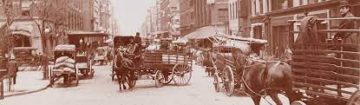
In the annals of transportation history persists a tale of how automobiles in the early 20th century helped cities conquer their waste problems. It’s a tidy story, so to speak, about dirty horses and clean cars and technological innovation. As typically told, it’s a lesson we can learn from today, now that cars are their own environmental disaster, and one that technology can no doubt solve. The story makes perfect sense to modern ears and noses: After all, Americans love their cars! And who’d want to walk through ankle-deep horse manure to buy a newspaper? There’s just one problem with the story. It’s wrong.

For a recent telling, you can turn to SuperFreakonomics, the best-selling 2009 book by economist Steven D. Levitt and journalist Stephen J. Dubner. The authors describe how, in the late 19th century, the streets of fast-industrializing cities were congested with horses, each pulling a cart or a coach, one after the other, in some places three abreast. There were something like 200,000 horses in New York City alone, depositing manure at a rate of roughly 35 pounds per day, per horse. It piled high in vacant lots and “lined city streets like banks of snow.” The elegant brownstone stoops so beloved of contemporary city-dwellers allowed homeowners to “rise above a sea of manure.” In Rochester, N. Y., health officials calculated that the city’s annual horse waste would, if collected on a single acre, make a 175-foot-tall tower.

“The world had seemingly reached the point where its largest cities could not survive without the horse but couldn’t survive with it, either,” write Levitt and Dubner. A main solution, as they portray it, came in the form of cars, which, compared to horses, were a godsend, their adoption inevitable. “The automobile, cheaper to own and operate than a horse-drawn vehicle was proclaimed an ‘environmental savior.’ Cities around the world were able to take a deep breath—without holding their noses at last—and resume their march of progress.” To Levitt and Dubner, this historical turnabout teaches that technological innovation solves problems, and if it creates new problems, innovation will solve those, too.

It’s far too simplistic an interpretation. Cars didn’t replace horses, at least not in the way we usually think, and it was social as much as technological progress that solved the era’s pollution problems. As we confront our current car troubles—particulate and greenhouse gas pollutions, accidents and deaths, wasteful swaths of the landscape dedicated to automobiles—these are lessons we’d do well to recall.

More here.

Sunday, November 14, 2021

Discovering the Oldest Figural Paintings on Earth

Morgan Meis in The New Yorker:

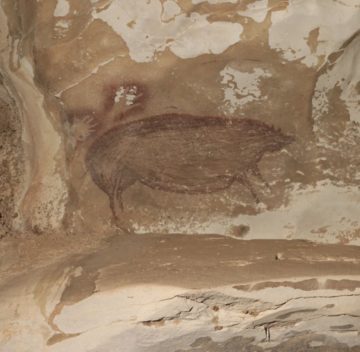
Gazing with recognition at this pig, Burhan also noticed the painted silhouettes of two human hands toward its rear. The over-all look of the art work suggested to Burhan that it was very old—but how old?
Thus began a long process of trying to give the cave art a proper date. Experts were brought in from Griffith. Maxime Aubert, an archeologist and geochemist, decided to use a method called uranium-series dating. He removed some of the calcite on the surface of the painting, which archeologists sometimes call “cave popcorn,” and then analyzed it. Anything under the calcite layer had to be at least as old as what was on the surface. A number of problems arose with the machine that actually did the dating—the Nu Plasma Multi Collector Inductively Coupled Plasma Mass Spectrometer. Like “a Formula One race car,” Aubert said, it requires a team of highly trained engineers just to keep it going. Still, months later, a date was handed down: the painting of the warty pig was at least 45,500 years old. This makes it the oldest known example of figurative cave art in the world.

More here.

Non-Cognitive Skills For Educational Attainment Suggest Benefits Of Mental Illness Genes

Scott Alexander in Astral Codex Ten:

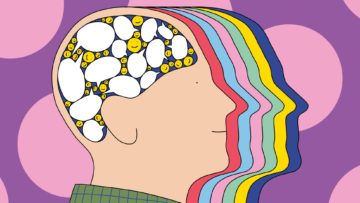
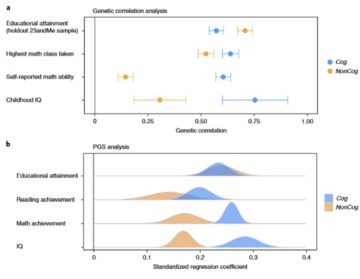
Educational attainment is closely correlated with intelligence, but not perfectly correlated. How far you go in school depends not just on your IQ, but on other skills: how hard-working and motivated you are, how well you can cope with adversity – and arguably also less desirable qualities, like whether you so desperately seek societal approval that you’re willing to throw away your entire twenties on a PhD with no job prospects at the end of it. “Genes for educational attainment” will be a combination of genes for intelligence, and genes for this other stuff.
At some point, some geneticists just did the hard thing and found some actual genes for actual intelligence, separate from educational attainment. And if you have both the educational attainment genes and the intelligence genes, you can subtract the one from the other to find the non-intelligence-related genes that affect educational attainment in other ways.

More here.

Hollywood Orientalism is not about the Arab world

Hamid Dabashi at Al Jazeera:

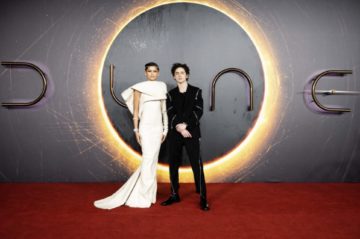
“Arabs” are not real people in these works of fiction. Arrakis in Dune are not Iraqis in their homeland. They are figurative, metaphoric and metonymic. They are a mere synecdoche for a literary historiography of American Orientalism. They are tropes – mockups that are there for the white narrator to tell his triumphant story.

The world at large will fall into a trap if we start arguing with these fictive white interlocutors, and telling them we are really not what they think we are. It is not just a losing battle. It is a wrong battle. This is not where the real battle-line is.

You do not fight Hollywood with critical argument. You fight Hollywood with Akira Kurosawa, Satyajit Ray, Abbas Kiarostami, Elia Suleiman, Nuri Bilge Ceylan, Moufida Tlatli, Ousmane Sembène, Yasujirō Ozu, Guillermo del Toro, Mai Masri, ad gloriam. You do not battle misrepresentation. You signal, celebrate, and polish representations that are works of art.

More here.

Things We Do Not Tell the People We Love by Huma Qureshi – tales of everyday tragedy

Holly Williams in The Guardian:

Huma Qureshi has the perfect title for her short story collection. Things We Do Not Tell the People We Love strikingly encapsulates a major theme of the book: the inability to communicate honestly with the most important people in your life. Qureshi’s stories keenly identify the everyday tragedies of feeling profoundly unknown or unheard, of holding secrets and misunderstandings.

Formerly a writer for the Observer and the Guardian, Qureshi published a memoir, How We Met, earlier this year about dating men her parents considered marriage material, before falling in love with a white British man. Her own story could slot neatly into this, her first fiction anthology. Qureshi’s stories feature a cast of – mostly – youngish women of Pakistani heritage, often struggling with overbearing, judgmental and oppressive mothers, blindly insensitive male partners, or both. These tales vividly capture the experience of feeling constrained by family expectations, but also of not quite fitting the norms of British culture either.

The terrain can get repetitive; this dilemma is usually felt by women who’ve left behind immigrant communities for a white, middle-class London milieu; there are many writers and journalists. Pressure points recur, too: in several stressful holidays, tolerable relationships become intolerable. And occasionally, the responses to monstrous mothers tip into melodrama; although it won the Harper’s Bazaar 2020 short story prize, I didn’t quite buy the murderous intent in The Jam Maker.

More here.

No One Cares!

Arthur C. Brooks in The Atlantic:

A friend of mine once shared what I considered a bit of unadulterated wisdom: “If I wouldn’t invite someone into my house, I shouldn’t let them into my head.” But that’s easier said than done. Social media has opened up our heads so that just about any trespasser can wander in. If you tweet whatever crosses your mind about a celebrity, it could quite possibly reach the phone in her hand as she sits on her couch in her house.

The real problem isn’t technology—it’s human nature. We are wired to care about what others think of us. As the Roman Stoic philosopher Marcus Aurelius observed almost 2,000 years ago, “We all love ourselves more than other people, but care more about their opinion than our own,” whether they are friends, strangers, or enemies.

This tendency may be natural, but it can drive us around the bend if we let it. If we were perfectly logical beings, we would understand that our fears about what other people think are overblown and rarely worth fretting over. But many of us have been indulging this bad habit for as long as we can remember, so we need to take deliberate steps to change our minds.

More here.

Sunday Poem

Taos Mountain

“Though the mountains fall into the sea”
describes the faith of some, but the mountains do not move
whatever we say, whatever saints and shamans do.
It is their indifference to us that makes them sacred.

On the edge of this flat town, beyond the pueblo,
the black mountain rises, a reference point
to every human moment, utterly silent.
No one climbs this mountain, there are no trails,
because the place is holy: it does not exist to serve us,
it is not meant to please us, it simply is,
and in this way it is a god.

Mountains do not move, and that is their mountainness.
Geologists can say they have moved over time,
but not in human time. This mountain outside my window
has always been there: when the pueblo was built,
when the Spanish came and were driven away,
when the missionaries returned, then Americans and Apache.
The mountain abides. That is its power
in imagination and worship. Were it to respond
to our prayers and dances it would cease to be itself.

Its silence is what we listen to, and the reason
it is a source of strength. I will not pretend
it whispers secrets to me or that I have pleased it.
The mountain is black even in sunlight or capped with snow.
It may have its back turned to the human
like an inscrutable mother in a shawl.
There are no signs given us to read
and any language to describe it is our own.
The fact of the mountain is our bare and only creed.

by Stephan Hollaway
from
The Ecotheo Review

Saturday, November 13, 2021

The Zemmour Effect

Adam Shatz in the LRB’s blog:

‘The American writer in the middle of the 20th century has his hands full in trying to understand, describe, and then make credible much of the American reality,’ Philip Roth wrote in Commentary in 1961. ‘It stupefies, it sickens, it infuriates, and finally it is even a kind of embarrassment to one’s own meagre imagination. The actuality is continually outdoing our talents, and the culture tosses up figures almost daily that are the envy of any novelist.’

When Donald Trump was elected president, many people were struck by the eery prescience of Roth’s 2004 novel The Plot Against America, an alternative history in which the right-wing isolationist Charles Lindbergh defeats Franklin Roosevelt in the 1940 presidential election, imposing a reign of terror. But the Roth of 1961 had it right. Trump provided a humbling reminder that fiction is no match for what Roth called ‘the American berserk’.

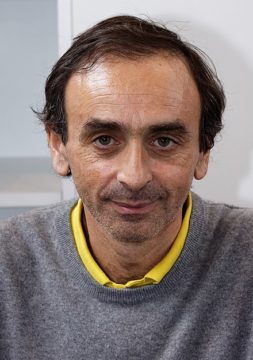
America is hardly alone. The most hysterical – and also the most articulate, and therefore dangerous – manifestation of what might be called the French berserk is the journalist and potential presidential contender Éric Zemmour. His emergence has thrown into relief the ‘meagre imagination’ even of Michel Houellebecq, whose 2015 novel Soumission told the story of a Muslim businessman of Tunisian origin who becomes France’s president and imposes sharia. The reality is no less wild: the rise of a North African Jewish intellectual who calls for the rehabilitation of Pétain and Vichy, while depicting immigrants and Islam as mortal threats to the Republic.

More here.

Growth Towns

Ho-fung Hung in Phenomenal World:

The ongoing crisis for Chinese property developer Evergrande has made the giant company the focal point of global concern. Creditors, investors, contractors, customers, and employees of Evergrande within and outside China have watched anxiously to see whether the Chinese government would decide that Evergrande was too big to fail. If Evergrande were to collapse, the repercussions for both the financial system and construction supply chains are impossible to predict. Reportedly, the central government in Beijing has issued a warning to local governments to brace for the possible social and political fallout.

Even if Evergrande were salvaged through government intervention, the Chinese state would continue to face new dilemmas. Evergrande is just one of many troubled property development firms that face potential default. As housing prices in China fall, the crisis has already spread to other property developers, such as Kaisa. The US Federal Reserve explicitly warned that China’s housing crisis could spill over to the US and global economy.

The crisis of Evergrande and China’s large property sector is a manifestation of the crisis of China’s growth model. The limits of that model can be seen in ghost towns across the country; China’s empty apartments are estimated to be able to house the entire population of France, Germany, Italy, the UK, or Canada. How could such development sustain high-speed growth for so long, and why has it failed now? To understand the ongoing crisis, we need to understand how property—and fixed investment more broadly—is connected to other moving parts of the Chinese and global economies.

More here.

What’s Happening With the U.S. Economy?

Matthew Klein and Cardiff Garcia over at Klein’s Substack:

Last week I had the chance to collaborate with longtime friend and former colleague Cardiff Garcia by appearing as the guest on The New Bazaar podcast. I encourage you to listen to the whole thing using your preferred platform.

We had a lot of fun and we covered a ton of ground. (We also recorded the podcast on November 4, which means that we didn’t have the October jobs or inflation data yet.) But while we kept our conversation as grounded as possible, there were a lot of numbers getting thrown around. So we both thought that it would be helpful to provide a set of charts to help listeners follow along with our conversation.

There won’t be much text in this piece, but there will be lots of useful visualizations for anyone trying to understand what’s happening right now in the U.S. economy. The charts are presented in the order in which we covered each subject.

Are We Producing More than Before the Pandemic?

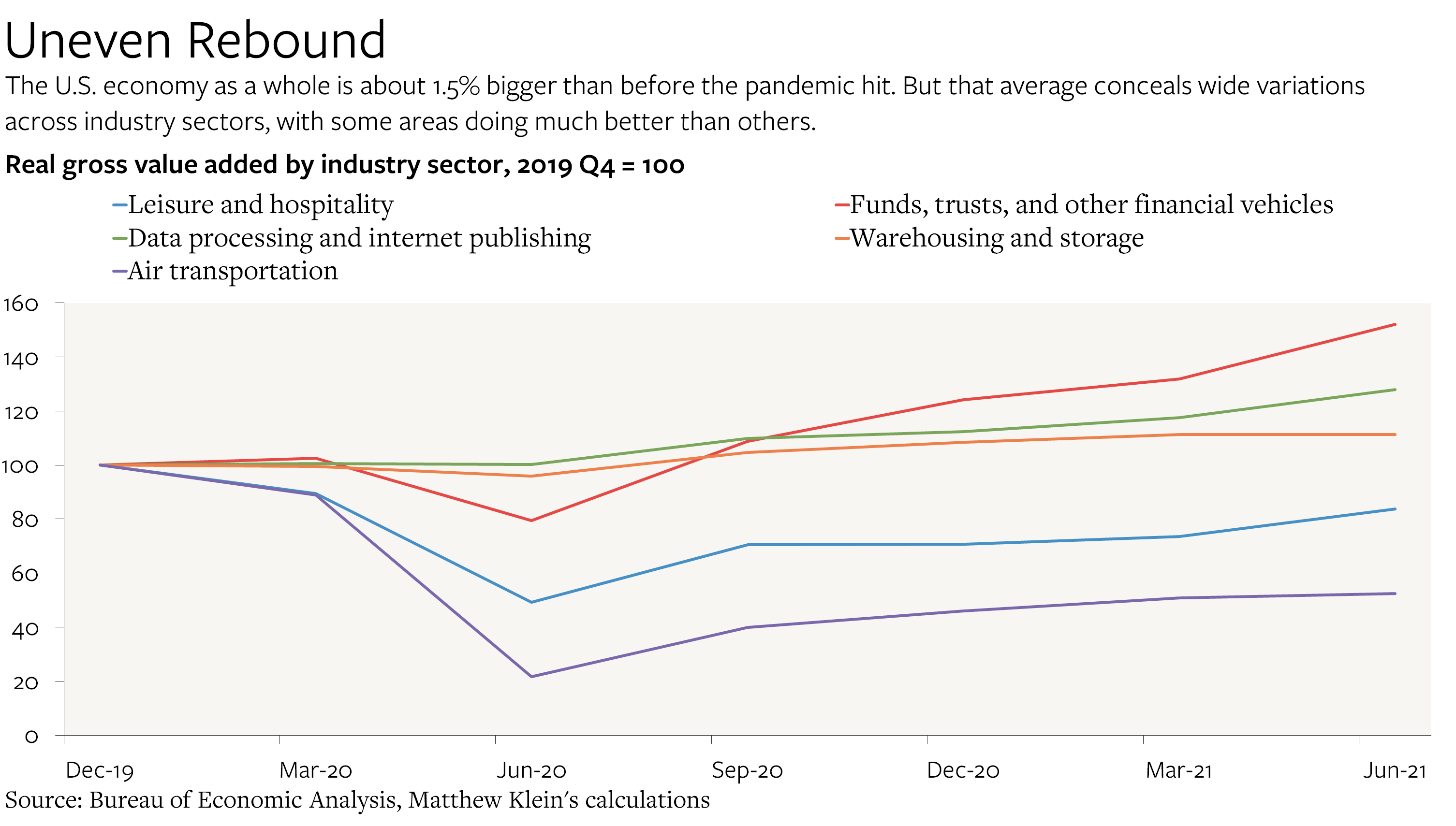
Yes! About 1.5% more in July-September 2021 than in October-December 2019, on a seasonally-adjusted basis. That’s pretty remarkable considering the death, devastation, and disruption that’s occurred since the end of 2019.

But these aggregate measures of production mask big differences across sectors. Businesses involved in cloud storage, asset management, retail brokerage, and warehousing have done phenomenally well, offsetting the continued depression in sectors such as leisure, hospitality, and passenger transportation.

More here.

Patricia Highsmith Lived Extravagantly, and Took Copious Notes

Dwight Garner at the New York Times:

The future author of “Strangers on a Train,” the Ripley series and many other novels was learning to mediate between her intense appetite for work — few writers, these diaries make clear, had a stronger sense of vocation — and her need to lose herself in art, gin, music and warm bodies, most of them belonging to women.

There are a lot of late-night taxi rides in these journals. And necking in restaurant bathrooms (a bonus for same-sex couples). And stealing kisses from married women. And running down to Chinatown to get tattoos. Highsmith’s first was her own initials in Greek lettering on her wrist, small, in green ink.

She was always half-broke. When you date women, she joked, there’s no man to grab the check. She liked to be out. If you are made nostalgic by the mention of defunct Manhattan bars and restaurants, this book will be like reading the liner notes to a Billie Holiday or Frank Sinatra album at midnight through a glass of bourbon.

more here.

On Jonathan Richman’s Song “Roadrunner.”

Alex Abramovich and Joshua Clover at the Paris Review:

I didn’t choose “Roadrunner” because its recording timeline and its image of a person literally circulating through the night allowed me to discuss these things. I chose it because it’s magic. I have felt its magic for a long time but never had a good story about it. And because I couldn’t figure out a path to a book about “Tell Me Something Good,” a song at least as magical. That book goes “Something something—wait! Did you know that Chaka Khan got the name ‘Chaka’ when she joined the Black Panther Party for Self-Defense in Chicago?” And I am not sure I know how to tell that story in a way that does justice to Chaka, and Rufus, and the BPPSD, and Chairman Fred. So there I was with “Roadrunner.” And once I set out along Route 128, there was no way for me not to situate it within what is for me the true metanarrative of the U.S. present: the catastrophic trajectory of capitalism.
more here.

Let’s talk about Cecily Strong’s game-changing “clown abortion” skit

Aja Romano in Vox:

There’s an idea, particularly popular with some comedians, that the very point of comedy is to say the unsayable, to push boundaries and envelopes by articulating uncomfortable truths. Dave Chappelle embodied this recently in his controversial Netflix comedy special The Closer, his sixth for the streaming giant in which he (once again) takes up the question of how we should treat trans people and concludes (once again) that the answer is “none too carefully.” Saying the presumably unsayable is often the milieu of male comics such as Joe Rogan (whose 2016 Netflix special was called Triggered) or Bill Burr (whose last special was titled Paper Tiger). For the most part, comedy titan Saturday Night Live has sidestepped that tendency, sticking to its long-running habit of doing straightforward comedic imitations and letting the real-life, absurdist politics speak for themselves under cover of parody — until this past weekend.

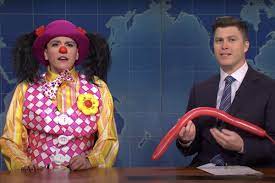
Cast member Cecily Strong’s recent “clown abortion” sketch for “Weekend Update” — in which she plays “Goober the Clown,” a red-nose-wearing balloon-animal maker under pressure to discuss her abortion thanks to Texas’s debilitating ban on abortions after six weeks — may well go down as one of the starkest political critiques in the show’s recent history. What becomes clear over the course of the bit is that this may well be Strong’s own personal anecdote, too. As it’s related between clown gags, it’s a reminder that some things do go unsaid in American life, but they might not be the ones we hear the usual suspects yell about.

More here.