
Enjoying the content on 3QD? Help keep us going by donating now.
Category: Recommended Reading
Monday, December 8, 2025
Why We All Make Sacrifices to the Human-Created God Called “The Economy”
Sven Beckert at Literary Hub:
 We live in a world created by capitalism. The ceaseless accumulation of capital forges the cities we inhabit, determines the way we work, allows an extraordinarily large number of people to engage in unprecedented levels of consumption, influences our politics, and shapes the landscapes around us. It is impossible to look at Earth and miss the world‑historical force of capitalism.
This is true as much for the greatest structures we inhabit as for the most intimate parts of our lives, as much for the world’s geology as for the ways we think about ourselves. To start, we acquire almost all goods and services we consume through markets, something that would have been unimaginable for most of human history. We sell our labor through markets—again, unimaginable for most of human history. Some of us might trade in stocks, either as a full‑time vocation or to safeguard something called retirement; most people at most times would have considered this trading deeply sacrilegious, more like sorcery than a legitimate way to gain wealth.
More here.
Enjoying the content on 3QD? Help keep us going by donating now.
What Are Lie Groups?
Leila Sloman in Quanta:
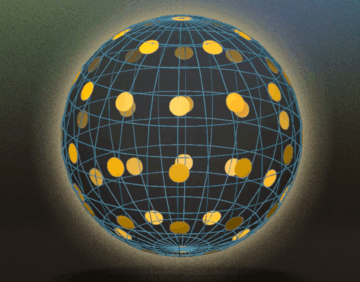 In mathematics, ubiquitous objects called groups display nearly magical powers. Though they’re defined by just a few rules, groups help illuminate an astonishing range of mysteries. They can tell you which polynomial equations are solvable, for instance, or how atoms are arranged in a crystal.
And yet, among all the different kinds of groups, one type stands out. Identified in the early 1870s, Lie groups (pronounced “Lee”) are crucial to some of the most fundamental theories in physics, and they’ve made lasting contributions to number theory and chemistry. The key to their success is the way they blend group theory, geometry and linear algebra.
In general, a group is a set of elements paired with an operation (like addition or multiplication) that combines two of those elements to produce a third. Often, you can think of a group as the symmetries of a shape — the transformations that leave the shape unchanged.
More here.
Enjoying the content on 3QD? Help keep us going by donating now.
How Paul Dirac uncovered the anti-universe
Enjoying the content on 3QD? Help keep us going by donating now.
Crick: A Mind in Motion – the charismatic philanderer who changed science
Sophie McBain in The Guardian:
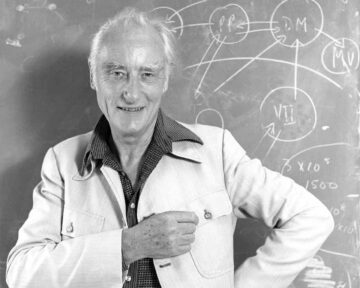 Most people could tell you that Francis Crick, together with James Watson, discovered the double helix structure of DNA, and shaped our understanding of how genes work. Fewer know that Crick also played a key role in modern neuroscience and inspired our continuing efforts to understand the biological basis of consciousness.
Crick once said the two questions that interested him most were “the borderline between the living and the non-living, and the workings of the brain”, questions that were usually discussed in religious or mystical terms but that he believed could be answered by science. In his new biography of the Nobel prize-winning scientist, Matthew Cobb, emeritus professor of zoology at the University of Manchester, does an admirable job of capturing the rare thinker who not only set himself such ambitious goals but made remarkable progress in achieving them, radically remaking two scientific disciplines in the process.
More here.
Enjoying the content on 3QD? Help keep us going by donating now.
Putting the U in quantum
Zack Savitsky in Science Magazine:
 Standing in a garden on the remote German island of Helgoland one day in June, two theoretical physicists quibble over who—or what—constructs reality. Carlo Rovelli, based at Aix-Marseille University, insists he is real with respect to a stone on the ground. He may cast a shadow on the stone, for instance, projecting his existence onto their relationship. Chris Fuchs of the University of Massachusetts Boston retorts that it’s preposterous to imagine the stone possessing any worldview, seeing as it is a stone. Although allied in their belief that reality is subjective rather than absolute, they both leave the impromptu debate unsatisfied, disagreeing about whether they agree.
Such is the state of theoretical quantum mechanics, scientists’ deepest description of the atomic world. The theory was developed 100 years ago on Helgoland, where a 23-year-old Werner Heisenberg retreated to escape a bout of hay fever—and to reimagine what an atom looks like.
More here.
Enjoying the content on 3QD? Help keep us going by donating now.
How Tehran got into water bankruptcy
Ali Mirchi, Amir AghaKouchak, Kaveh Madani, and Mojtaba Sadegh in The Conversation:
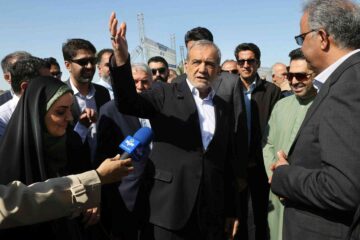 Fall marks the start of Iran’s rainy season, but large parts of the country have barely seen a drop as the nation faces one of its worst droughts in decades. Several key reservoirs are nearly dry, and Tehran, the nation’s capital, is facing an impending “Day Zero” – when the city runs out of water.
The situation is so dire, Iranian President Masoud Pezeshkian has revived a long-debated plan to move the capital from this metro area of 15 million people.
Previous administrations have floated the idea of moving the capital but never implemented it. Tehran’s unbridled expansion has created a host of problems, ranging from chronic water stress and land subsidence to gridlocked traffic and severe air pollution, while also heightening concerns about the city’s vulnerability to major seismic hazards.
This time, Pezeshkian has framed relocation as a mandate, not a choice. He warned in November 2025 that if nothing changes, the city could become uninhabitable.
More here.
Enjoying the content on 3QD? Help keep us going by donating now.
Sunday, December 7, 2025
Sheinbaum’s Mission
Edwin F. Ackerman in New Left Review:
Claudia Sheinbaum took the helm a year ago riding a high wave. With 60 per cent of the vote and a supermajority for her party MORENA in both chambers, the Mexican President entered office in October 2024 with an approval rating of around 70 per cent – a figure she has not only sustained but during some months surpassed, reaching the 80s, making her among the most popular leaders in the world. With a clear mandate, Sheinbaum has pushed through a slew of constitutional reforms, expanded welfare programmes and successfully navigated a fraught relationship with the Trump administration. Sheinbaum – whose tenure as mayor of Mexico City (2018-2023) saw a 40 per cent drop in the murder rate – has also made inroads into the country’s notorious problem with organised crime: although regional violence remains high and the recent murder of Carlos Manzo, mayor of Uruapan, has dampened any triumphalism, Sheinbaum’s government can boast a 37 per cent reduction in homicides.
The political cycle which began with the 2018 election of Sheinbaum’s predecessor and political mentor, Andrés Manuel López Obrador, has been distinguished by significant democratic legitimacy. According to the recently released OECD Trust Survey 54 per cent of Mexicans have a high or moderately high trust in the federal government, well above the average of 39 per cent.
More here.
Enjoying the content on 3QD? Help keep us going by donating now.
COP30 Without the USA
Catherine Osborn in Polycrisis:
Last month, the humid Amazonian rainforest city of Belém, Brazil was alive with all the usual signs of a United Nations climate summit except one: a US negotiating team. Tens of thousands of participants from more than 190 countries and dozens of Indigenous groups staged two weeks of meetings, protests, and negotiations during this year’s summit, known as COP30. Though no US diplomats were present, a handful of conference-goers weaved through the crowds with white-and-green “Make Science Great Again” hats. California Governor Gavin Newsom made a defiant appearance.
This year’s conference was the first since Donald Trump returned to the White House and triggered the United States’ second exit from the 2015 Paris Agreement. This time, Trump had gone beyond withdrawing from international climate diplomacy and was actively working to undermine it. Sanctions threats in October against envoys from countries on the verge of reaching a landmark deal to limit global shipping pollution succeeded in blocking the agreement.
The threat of potential US sabotage hung over Belém as countries negotiated if and how they would speed up climate action. Trump’s pressure offered potential political cover to delegations that were already dragging their feet on climate issues for any number of reasons. Saudi Arabia, for example, had moved in lockstep with the United States to torpedo the shipping pollution deal.
Against this adverse political backdrop, a key pillar of Brazil’s approach to COP30 was what some climate strategists have called “coalitions of the doing.” Rather than waiting for absolute consensus among UN member states, Brazil tried to move in smaller groups to push action forward and emphasize how climate action can lead to economic development. By conventional metrics of COP summits, this one yielded incremental progress rather than any big breakthrough—showing the UN climate regime is surviving, but only barely.
More here.
Enjoying the content on 3QD? Help keep us going by donating now.
Risk, uncertainty, and democracy
Suzanne Schneider in the International Review of Applied Economics:
Though routinely invoked in far-ranging contexts – from national security and healthcare to insurance, banking, and the climate crisis – risk is a remarkably slippery term. We perceive risk as carrying at least three, often overlapping, meanings. The most common definition remains exposure to potential harm or reward – though the latter association is notably muted today outside of the world of finance. For most segments of the booming risk management industry, risk connotes doom and gloom, not opportunity. Second, risk in the twenty-first century is a style of governance that surveils, measures, and manages both humans and nature with an eye on predictability and control. Risk in this sense has become an epistemic framework and associated set of institutions that normalize – and indeed create – a tendency to see the world through the lens of vigilance. Finally, risk is an affective phenomenon. Whether we look at risk appetite or the sense of anxiety induced by a terrorist attack, risk is a ‘political emotion’, to borrow from philosopher Martha Nussbaum. Across the globe we find that invocations of safety, danger, and security do heavy ideological and political lifting – shaping perceptions of risk along the way.
More here.
Enjoying the content on 3QD? Help keep us going by donating now.
Frank Gehry (1929 – 2025) Architect
Enjoying the content on 3QD? Help keep us going by donating now.
Frank Gehry, the Disrupter, Opened Their Imaginations
Sam Lubell in The New York Times:
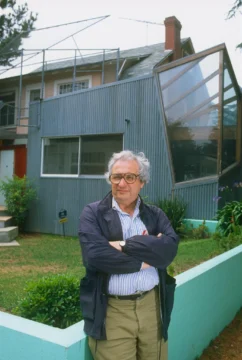 Like his buildings, the legacy of Frank Gehry, who died on Dec. 5, at age 96, is exceptionally complex: radical, shifting, multifaceted and often misunderstood. It’s easy to reduce his structures to their superficialities, shapes and materials. But they’re far deeper and expansive — as has been Gehry’s impact on people, buildings, cities and the culture in general. He helped disrupt architecture and art — worlds reluctant to change. But he also changed how we see the world, shifting our perspective and our sense of what we were open to. Here are insights from some of the people he touched during his eight-decade career.
When he came into his own in the 1960s and ’70s, Gehry — an outsider with a chip on his shoulder — shook up an elitist, dogmatic architecture establishment with an approach based on artfulness, irreverence and intuition that employed cheap, utilitarian materials to create original forms.
More here.
Enjoying the content on 3QD? Help keep us going by donating now.
Hannah Arendt Is Not Your Icon
Jennifer Szalai in The New York Times:
 On the evening of Dec. 4, 1975, Hannah Arendt was sitting in her living room on Riverside Drive in Manhattan when she suddenly slumped over in the presence of her dinner guests. Less than two months before, she had celebrated her 69th birthday; now, she was dead from a heart attack. Arendt certainly had her share of readers and admirers, but as one of her contemporaries later put it, at the time of her death “she was scarcely considered to be a major political thinker.”
In the decades since, Arendt has become such a revered figure that it can be hard to recall how controversial she was during her lifetime. The historian Tony Judt, writing in 1995, noted her “curious and divided legacy.” Arendt specialized in the big political questions that would naturally preoccupy a German Jew who had fled Europe during World War II — totalitarianism, violence, the problem of evil. Some of her Anglo-American critics dismissed her as too, well, European. Arendt preferred “metaphysical musings upon modernity” (Judt’s words) to the empirical data that has long been an obsession of American political scientists. But for Arendt’s admirers, the United States was in dire need of such “metaphysical musings.” They saw her as a teller of hard truths: someone who could teach a self-identified liberal democracy, flush with confidence in its superiority and resilience, about the modern ills it too often tried to ignore.
More here.
Enjoying the content on 3QD? Help keep us going by donating now.
Steve Cropper (1941 – 2025) Legendary Guitarist
Enjoying the content on 3QD? Help keep us going by donating now.
David Pryce-Jones (1936 – 2025) Author and Historian
Enjoying the content on 3QD? Help keep us going by donating now.
Sunday Poem
On the Beach at Night Alone
On the beach at night alone,
As the old mother sways her to and fro singing her husky song,
As I watch the bright stars shining, I think a thought of the clef of the universes and of the future.
A vast similitude interlocks all,
All spheres, grown, ungrown, small, large, suns, moons, planets,
All distances of place however wide,
All distances of time, all inanimate forms,
All souls, all living bodies though they be ever so different, or in different worlds,
All gaseous, watery, vegetable, mineral processes, the fishes, the brutes,
All nations, colors, barbarisms, civilizations, languages,
All identities that have existed or may exist on this globe, or any globe,
All lives and deaths, all of the past, present, future,
This vast similitude spans them, and always has spann’d,
And shall forever span them and compactly hold and enclose them.
By Walt Whitman
Enjoying the content on 3QD? Help keep us going by donating now.
Friday, December 5, 2025
Francis Crick: A Mind in Motion
Sophie McBain in The Guardian:
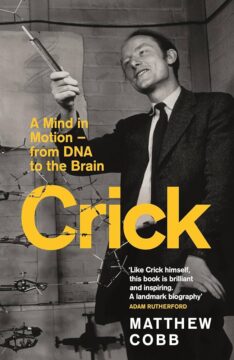 Most people could tell you that Francis Crick, together with James Watson, discovered the double helix structure of DNA, and shaped our understanding of how genes work. Fewer know that Crick also played a key role in modern neuroscience and inspired our continuing efforts to understand the biological basis of consciousness.
Crick once said the two questions that interested him most were “the borderline between the living and the non-living, and the workings of the brain”, questions that were usually discussed in religious or mystical terms but that he believed could be answered by science. In his new biography of the Nobel prize-winning scientist, Matthew Cobb, emeritus professor of zoology at the University of Manchester, does an admirable job of capturing the rare thinker who not only set himself such ambitious goals but made remarkable progress in achieving them, radically remaking two scientific disciplines in the process.
Surprisingly, perhaps, Crick was not a child prodigy. He began life as an “averagely bright student”, born in 1916 to a provincial middle-class family: his father ran a shoe company.
More here.
Enjoying the content on 3QD? Help keep us going by donating now.
A Pathology in Knowledge Transmission
Eric Drexler at AI Prospects:
 Complex ideas often require conditions and qualifiers to remain true. When these ideas are rounded off to something simpler (as always happens when ideas spread), the effects vary: Sometimes, a concept rounds to a simplification that still pushes beliefs toward truth.1 Sometimes, a concept rounds to something thoroughly false yet memetically fit — and toxic. And sometimes, the false version replaces the original,2 and true lends credibility to the false, or the false discredits the true.
This pattern — ideas that are “rounded to false” — breaks societal learning. In the past, ideas rounded to false have led to large-scale death and misery through misguided actions and missed opportunities.3 When toxic rounding happens today, we lose both insights and the ability to recognize what we’ve lost. Understanding this pattern gives us tools for recognition and defense. It also flags a warning for gatekeepers
As we’ll see, rounding to false is a particular problem when exploring ways forward in a time of transformative change.
More here.
Enjoying the content on 3QD? Help keep us going by donating now.
AI Expert Stuart Russell: Six People Are Quietly Deciding Humanity’s Future
Enjoying the content on 3QD? Help keep us going by donating now.
Love and Death: Elegies for Poets
Enjoying the content on 3QD? Help keep us going by donating now.