
Sasha Frere-Jones in Bookforum:
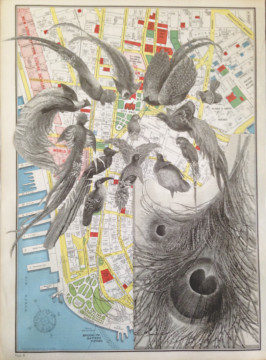 IN 1998, Lucy Sante published The Factory of Facts, a memoir of her childhood in Belgium and the Sante family’s stuttering moves back and forth (and finally forth) to the States—ultimately, to Summit, New Jersey—when she was eight, in 1962. Toward the end of the memoir, she marks her story as a displacement, “as if I were writing about someone else.” Sante is talking, here, about the French of her youth contrasted with the English of America, and how “languages are not equivalent one to another.” Something else is in play, though. The eight-year-old boy that Sante speaks for would need to translate her English words, written much later in America, “and that would mean engaging an electrical circuit in his brain, bypassing his heart.”
The heart could be the same in both languages, yes? But this is not the case. In French, the young Sante feels “naked,” and putting on English is a betrayal. Young Sante pledges that she “would never become one of them,” the Americans who “eat soft white bread” and drink Budweiser. Sante goes on to make a list of what the family lost in the move: friends, connections, habits, belongings. But there is another loss, “a gulf inside me, with a blanketed form on the other side that hadn’t been uncovered in decades.” Sante has reinvented herself and “become a sort of hydroponic vegetable, growing soil-free,” while feeling “self-loathing and rage.” This sounds like more than just an aversion to American football. “Maybe some of what I thought I had lost was merely hidden.”
More here.
 I
I 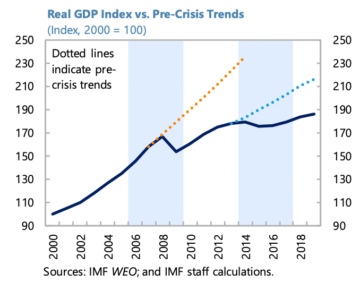 Adam Tooze over at his substack:
 Maya Adereth and Neil Warner interview Michael Mann in Phenomenal World (image León Ferrari,
  Francis Fukuyama in the Financial Times (photo by Harry Mitchell):
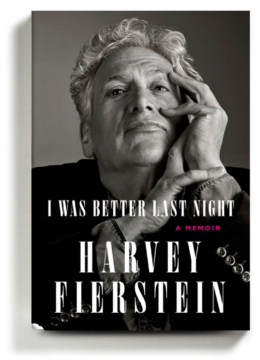 The actor, writer and consummate New Yawker Harvey Fierstein is assuredly a man of many talents. Who knew needlework was one of them?
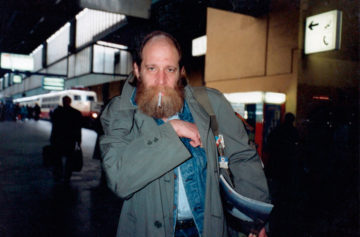 FEATURING HIS SELF MADE SAILOR’S HAT until his last days, Lawrence Weiner never tired of reminding us that WE ARE SHIPS AT SEA NOT DUCKS ON A POND, apparently sharing Otto Neurath’s moral imperative. The necessity of citing Weiner verbatim in the very first sentence (and in nearly every paragraph) of this homage already signals the extent to which his work contested—if not disqualified—the legitimacy of critical and historical ekphrasis. Every single one of his statements aimed at dismantling linguistic conventions (of plasticity, of poetry, of metaphor, of metaphysical thinking) and disputed the conciliatory potential of cultural practices. In a 1969 interview, Leo Castelli, an early admirer of Weiner who became his dealer after the artist parted ways with Seth Siegelaub, presciently identified the work—both literally and figuratively—as “the writing on the wall,” rightfully sensing the terminal radicality of its innate anti-aesthetic.
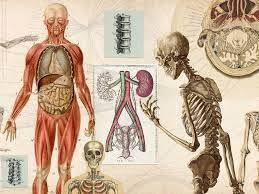 Bones: They hold us upright, protect our innards, allow us to move our limbs and generally keep us from collapsing into a fleshy puddle on the floor. When we’re young, they grow with us and easily heal from playground fractures. When we’re old, they tend to weaken, and may break after a fall or even require mechanical replacement. If that structural role was all that bones did for us, it would be plenty.
 It’s a rare Washington memoir that makes you gasp in the very second sentence. Here’s the first sentence from
 In announcing that Russia would intensify its eight of years aggression against Ukraine in the interests of “denazification” and protecting oppressed Russian speakers (read: pro-Moscow separatists), Vladimir Putin has offered the thinnest pretext for cross-border war since the 2003 U.S. invasion of Iraq. And yet, the
  S
S